





 Portuguese
  English
  Spanish
  5 min of reading
  0 comments


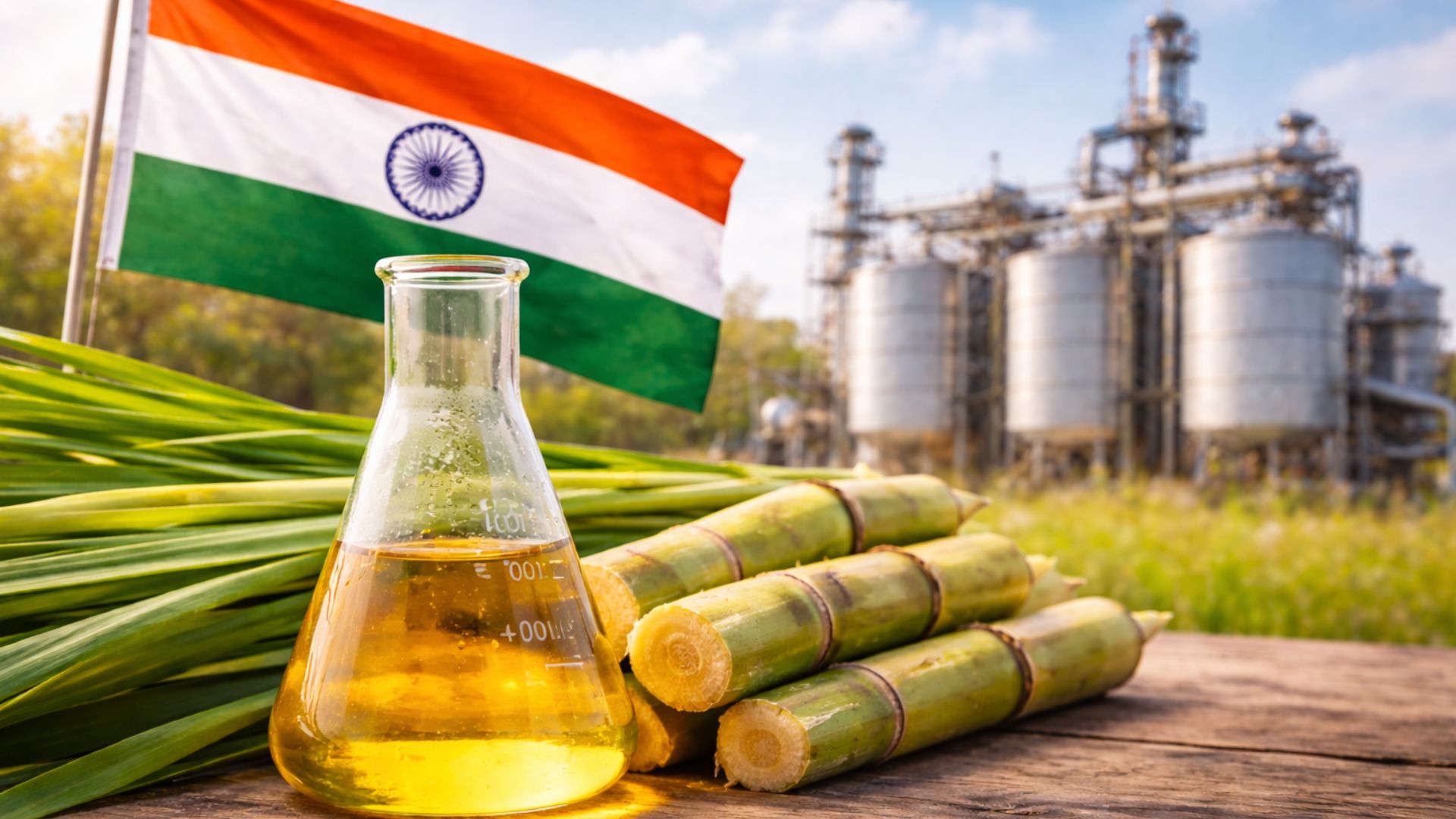
India Advances in Biofuel Expansion with New Ethanol Plant in Uttar Pradesh, Investment of 250 Million Rupees and Capacity of 120,000 Liters Per Day, Strengthening Sugarcane Farmers’ Income.
The India has confirmed the expansion of its industrial capacity in the biofuel sector with the establishment of a new ethanol plant at the Pipraich Sugar Mill, located in Uttar Pradesh. The distillery will have a production capacity of 120,000 liters per day (120 kLPD) of ethanol, strengthening the state’s energy infrastructure and supporting the national ethanol blending program in gasoline.
According to a report published by Jornal Cana on February 18, the project is financially supported by the state government, which allocated 250 million rupees in the 2026–2027 budget to facilitate the construction of the unit. The initiative aligns with the national policy of India to increase the share of ethanol in the fuel matrix, reduce oil imports, and strengthen the rural economy through the sugar-energy chain.
India Expands Biofuel Infrastructure with New Ethanol Plant in Uttar Pradesh
The new ethanol plant represents, at the same time, an industrial, energy, and social strategy, generating local jobs, stabilizing revenues in the sugar industry, and ensuring faster payments to sugarcane producers.
-
Brazil accelerates hydrogen and biofuel projects to consolidate the fuel of the future and reduce dependence on oil by 2026.

-
CNPE strengthens policy and prevents imported biodiesel from being mixed with diesel, aiming to strengthen the Brazilian industry and protect jobs by reducing external dependence amid tensions in the global market.

-
Revolution in public transport: Goiânia puts into circulation the first articulated buses powered by biomethane in Brazil and promises to drastically reduce pollution on the Anhanguera Corridor.

-
From the field to the pipelines: Mato Grosso do Sul accelerates the energy transition and consolidates a new axis in renewable energy with the arrival of a giant biogas plant.


The expansion of biofuel production in Uttar Pradesh occurs at a strategic moment for India. The country has been accelerating investments in distilleries attached to sugar mills to diversify revenues and reduce the volatility associated with the sugar market.
The new ethanol plant will be installed on the premises of the Pipraich Sugar Mill, a historical unit in the region. With a designed capacity of 120,000 liters per day, the distillery will allow for the direct conversion of cane juice into ethanol, adding value to the agricultural product.
According to information released by Chemical Industry Digest, the Uttar Pradesh government approved an investment of 250 million rupees to expedite the construction and commissioning of the unit. The goal is to ensure that operations begin as soon as possible, increasing the supply of biofuel in the state.
State Financial Support Strengthens the Sugar-Energy Chain in Uttar Pradesh
The public investment reinforces the strategic importance of the new ethanol plant for the regional economy. Uttar Pradesh is one of the largest sugarcane producers in India, concentrating a significant portion of national production.
By allocating 250 million rupees in the 2026–2027 state budget, the government signals its commitment to modernizing the industry and stabilizing the agricultural sector. Productive diversification through biofuel reduces exclusive dependence on sugar and enhances the financial predictability of the mills.
Historically, the sugar-energy sector faces challenges related to delays in payments to sugarcane producers. The increase in revenue from the new ethanol plant is likely to improve cash flow for companies, contributing to faster payments and reduced default rates. This effect is particularly significant in rural areas of Uttar Pradesh, where thousands of families rely directly on sugarcane sales.
National Ethanol Blending Target Drives New Projects in India
The expansion of biofuel production capacity is directly connected to the national policy of India regarding ethanol blending in gasoline. The Ethanol Blended Petrol (EBP) program sets progressive targets to increase the percentage of ethanol in fuel sold in the country.
To achieve this goal, India needs to continuously expand its installed capacity for ethanol plants, especially in producing states like Uttar Pradesh. The new unit in Pipraich directly contributes to this national target. Increasing domestic production also reduces the need for fossil fuel imports, strengthening energy security and the country’s trade balance.


Direct Conversion of Cane Juice Increases Added Value of Biofuel
One of the differentials of the new ethanol plant will be the direct conversion of cane juice into ethanol. This production model allows for greater industrial efficiency and better utilization of the raw material.
Instead of relying exclusively on sugar processing, the unit may direct part of the cane for biofuel production based on market conditions. This flexibility enhances the economic sustainability of the operation.
In India, the strategy of allowing the conversion of sugar raw material into ethanol also helps balance supply and demand for sugar in the domestic market. In periods of surplus, the allocation for ethanol avoids stock accumulation and price pressure. In Uttar Pradesh, where cane production is high, the new ethanol plant represents a tool for regional economic stabilization.
Job Creation and Social Impact on Rural Economy of Uttar Pradesh
In addition to energy and industrial effects, the project brings relevant social impacts. The construction of the new ethanol plant is expected to generate temporary jobs during the construction phase, in addition to permanent positions during operation.
The strengthening of the biofuel chain also stimulates indirect activities, such as transportation, industrial maintenance, and logistics services. In Uttar Pradesh, where a large part of the population lives in rural areas, this economic dynamism is significant.
India has sought to integrate energy policies with rural development. By increasing ethanol production, the country creates new sources of income for farmers, industrial workers, and local communities. This positive cycle reinforces the importance of the new ethanol plant as an instrument of regional development, and not merely an energy investment.
India Consolidates Strategic Position in Global Biofuel Market
The continuous expansion of ethanol plant infrastructure strengthens India‘s position among the leading global ethanol producers, alongside major international references in the sector.
In recent years, national production has more than doubled, driven by policies of incentives, financing, and purchase guarantees from energy companies. States like Uttar Pradesh play a central role in this advancement.
The growth of biofuel supply is also aligned with the climate commitments made by India in international forums. Although ethanol does not completely eliminate emissions, its use reduces carbon intensity compared to pure gasoline. The strategy combines energy security, rural income generation, and transition to renewable sources.
New Ethanol Plant in Uttar Pradesh Strengthens Integration Between Clean Energy and Agricultural Income
The establishment of the new ethanol plant in Pipraich symbolizes a broader movement by India towards a more diversified and sustainable energy matrix. The investment of 250 million rupees demonstrates the alignment between state government and federal policy on biofuel expansion.
With a capacity of 120,000 liters per day, the unit will increase ethanol supply, support the national blending target, and strengthen the rural economy of Uttar Pradesh. By diversifying revenues, the sugar industry reduces financial risks and improves sector stability.
The strategy adopted by India shows how public policies, agriculture, and industry can operate in an integrated manner. The new ethanol plant not only increases biofuel production but also creates conditions for greater economic predictability, job creation, and strengthening agricultural income.
By consolidating this model, Uttar Pradesh positions itself at the center of India’s energy transformation, reinforcing the role of the sugar-energy sector as a pillar of sustainable development in the country.









Seja o primeiro a reagir!