





 Portuguese
  English
  Spanish
  6 min of reading
  1 comment


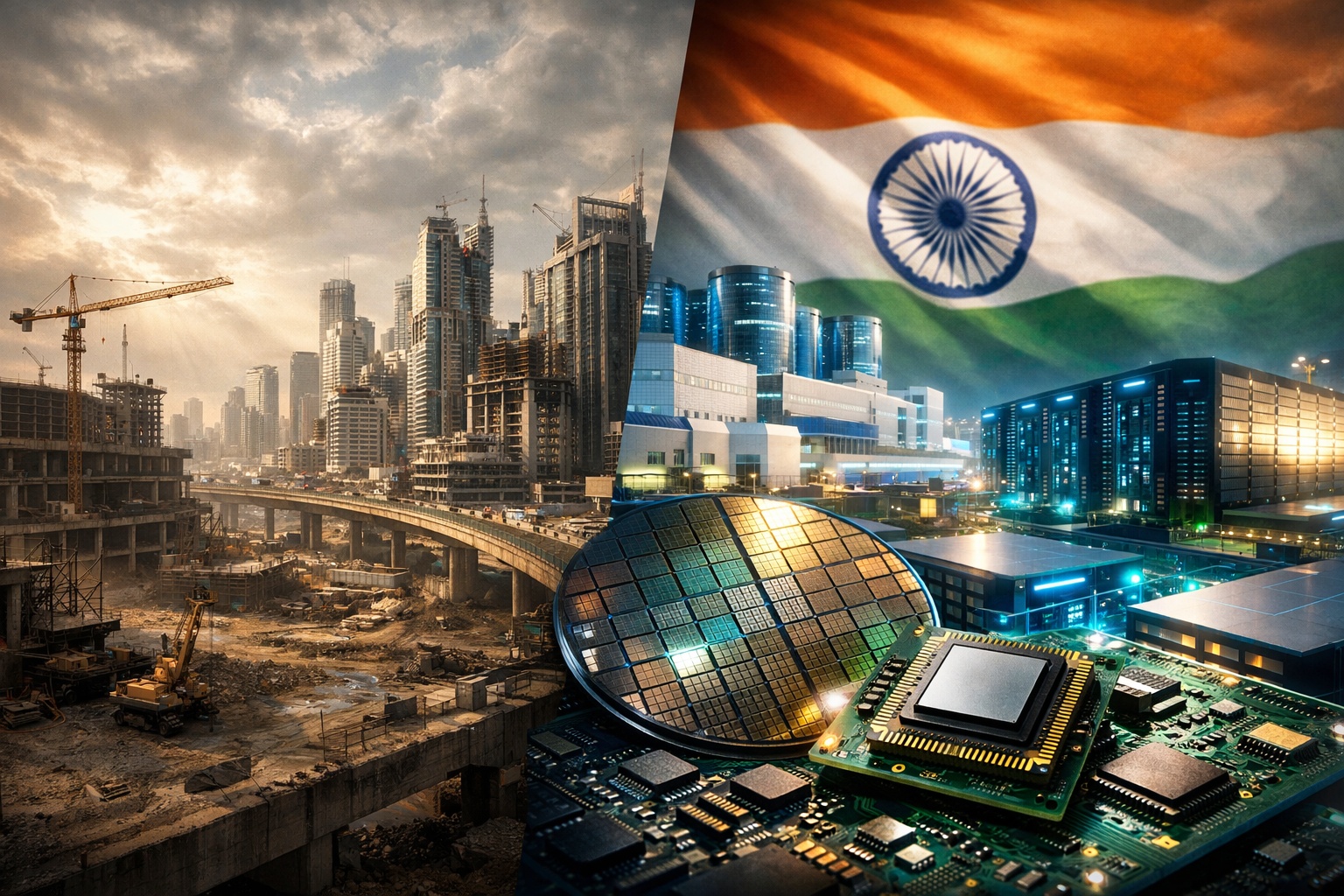


From Microsoft In Hyderabad To Megacamps In Mumbai And Chennai, India Accelerates Data Centers And Faces The Bottleneck: Energy, Water And Heat.
In New Delhi, India, on December 9, 2025, Microsoft officially announced that it will establish the “Microsoft Cloud Region” in Hyderabad, in the state of Telangana, with expected availability in mid-2026, integrating three availability zones and expanding the digital infrastructure presence in the country. The information was shared by Microsoft itself in an institutional statement about its investments and cloud expansion in India.
This type of announcement is not an isolated event: it is the most recent portrait of a larger change. India has entered a phase where data centers have ceased to be “just technology” and are now treated as strategic infrastructure, because they support everything at once: digitized public services, payments, banking, e-commerce, streaming, industry, cyber defense, and, mainly, the explosion of AI, which consumes energy and computational capacity like few sectors before.
The point is that the race is real, but the price is also: land, reliable energy, cooling water and reliable power grid have become the “critical minerals” of the digital world. And what is happening now in India is the attempt to build this “new oil” on a continental scale.
-
Motorola launched the Signature with a gold seal from DxOMark, tying with the iPhone 17 Pro in camera performance, Snapdragon 8 Gen 5 that surpassed 3 million in benchmarks, and a zoom that impresses even at night.

-
Satellites reveal beneath the Sahara a giant river buried for thousands of kilometers: study shows that the largest hot desert on the planet was once traversed by a river system comparable to the largest on Earth.

-
Scientists have captured something never seen in space: newly born stars are creating gigantic rings of light a thousand times larger than the distance between the Earth and the Sun, and this changes everything we knew about stellar birth.

-
Geologists find traces of a continent that disappeared 155 million years ago after separating from Australia and reveal that it did not sink, but broke into fragments scattered across Southeast Asia.

The New Geography Of The Cloud: Why Hyderabad, Mumbai And Chennai Became The Axis
When you see Microsoft placing a cloud region in Hyderabad, it often indicates a very pragmatic logic: creating a hub with redundancy, low latency for major centers, and room for growth without being stuck with the cost of ultra-competitive land.
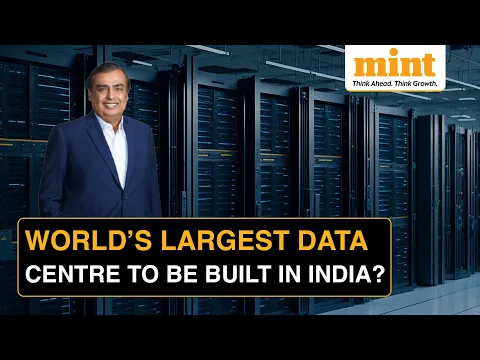

Meanwhile, on the “ground” side of infrastructure, some markets continue to concentrate the bulk of the installed power. A survey cited by the press based on a report from Colliers India indicates that data center capacity in India was at 1,263 MW in April 2025, and that Mumbai and Chennai accounted for nearly two-thirds of this total.
In the same vein, a report echoed by The Economic Times (with data attributed to Knight Frank) describes Mumbai as India’s “capital” of data centers, citing a share of around 40% of the country’s capacity and highlighting the volume of projects in operation, under construction, and in the pipeline in the region.
Here’s an important detail: data centers don’t just “spring up” because there is demand. They depend on a rare combination: large volume energy, connectivity (cables, backbones), licensing, logistics, security, and construction time. That’s why the hubs are repeated.
The Numbers That Explain The Race: Megawatts, Billions And Industrial Scale
The discussion about data centers becomes abstract when it is only “investment.” The real way to see it is to look at IT MW (power used for computing) and area/campus, because that reveals the physical scale.
Some numbers that help understand the magnitude of the change:
- US$ 20–25 billion in projected additional investments to bring India to over 4,500 MW by 2030, according to Colliers India, in an article echoed by the Economic Times.
- Capacity would have grown over four times in about 6–7 years and was at 1,263 MW (April 2025), according to the excerpts from the report cited by the press.
- Previous projections also indicated dozens of new data centers and strong expansion by 2025, with a significant concentration in Mumbai and Chennai, according to material from IBEF citing a market report.
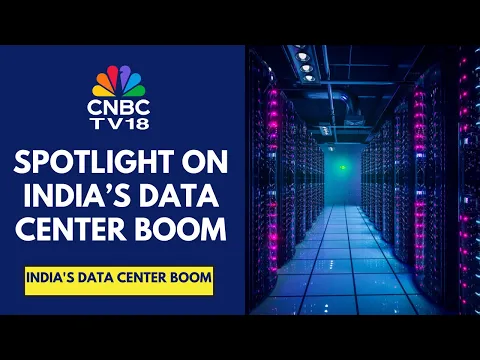
In other words: what is at stake is not a “growing sector.” It is a national infrastructure undergoing an aggressive expansion phase, as if it were a cycle of ports, railways, and power plants, only in digital form.
The Bottleneck That Defines Who Wins: Constant, Cheap And Clean Energy
There is no hyperscale without reliable energy. And reliable energy, in practice, means: availability, predictability, quality (without fluctuations) and planned expansion. That’s why states and governments are starting to connect data center issues to energy matrices and new agreements.
A clear example of this connection appeared in a news article from Times of India about the signing of a memorandum between the state-owned power generation company of Maharashtra (Mahagenco) and NPCIL (Nuclear Power Corporation of India Ltd), at an event associated with the state government. In the text, the then head of the state government, Devendra Fadnavis, relates the need for clean and reliable energy to the fact that Maharashtra is a hub for data centers and that this increases the demand for robust supply.
Here comes an “invisible rule” of the sector: the data center is a factory that cannot stop. For this, it buys redundancy in layers:
- reinforced power grid,
- dedicated substations,
- generators and UPS,
- energy contracts,
- and, increasingly, strategies to reduce carbon footprint (not just for image, but for cost and risk).
When AI enters the game, the pressure goes up another notch: computing loads for training and inference require even more power and, often, greater density per rack. This pulls cooling and also raises the “water debate.”
The Sensitive Point That Almost No One Talks About: Water, Heat And Cooling Policy
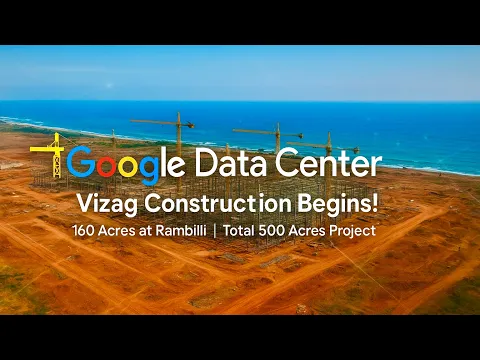
A data center is not just “servers.” It is, in practice, an industry of:
- energy conversion into processing,
- and heat dissipation.
India, due to its climate and regional variations, experiences the challenge of heat more intensely during many periods of the year. This makes cooling more expensive and forces technical choices: chillers, free cooling where possible, water cooling in some projects, hybrid solutions, and optimization to reduce PUE.
It is at this point that the sector becomes a political issue, because when it grows too fast, it starts to compete for:
- water with urban areas,
- energy with industries and residences,
- and well-located land with logistics and housing.
The result is that the data center becomes a “state issue” not by trend, but because it has touched real infrastructure.
Why The Announcement From Microsoft In Hyderabad Matters More Than It Seems
When a company like Microsoft announces a cloud region, it is not just talking about “more servers.” It is talking about:
- three availability zones (physical redundancy),
- capacity for critical services,
- and attraction of an ecosystem (partners, software, local and multinational companies).
In the case of India, the announcement on December 9, 2025 positions Hyderabad as part of a global cloud map, with a delivery window in mid-2026, and this usually has a domino effect: companies that need low latency and compliance become more inclined to operate and host data in the country.
In practice, when the cloud “lands” in a territory, that territory begins to compete better for:
- P&D centers,
- AI hubs,
- digital financial services,
- and software chains.
That’s when the story shifts from “IT” to economy.
The Real Dispute Is Not Just With China: It Is For Digital Routes And Data Sovereignty
Many people try to summarize everything as “India vs China.” However, the more concrete competition is for routes and capacity:
- who can receive and distribute data with stability,
- who has energy and connectivity,
- and who can offer infrastructure with regulatory predictability.
At this point, India is trying to gain ground as an alternative at scale, with a giant internal market and strong demand for cloud, streaming, payments, and AI. The reports projecting multiple billions in investments and thousands of megawatts by 2030 indicate that there is real appetite for building and expansion.
What Can Halt The Explosion: Cost, Power Grid And Licenses
Two scenarios can block data centers in any country:
- energy doesn’t keep up,
- licensing and urban infrastructure become bottlenecks.
When this happens, expansion does not stop but changes form:
- it goes to secondary cities,
- creates more remote “clusters,”
- and forces projects to buy more expensive energy or invest heavily in substations and redundancy.
And that’s why the debate in India is becoming more “infrastructure-focused”: without reliable electricity and planning, the boom becomes stress.
What recent announcements and capacity reports make clear is simple: India is building a digital infrastructure belt comparable to a cycle of major works.
The difference is that, instead of steel and concrete appearing on the horizon, what appears are megawatts, cables, substations, and ultra-controlled warehouses where the “product” is uptime.







I Think (Eu acho !) India has Many options to generate Energy Power. For Example : Sun , Wind, Wave , Biomass (By Sugar Carne etc); Nuclear Power; Biodiesel; Litlle bit Hidroeletrics; Bombing Hidroeletric Systems (From Stabilization of grid) so Many sources ! A Índia tem várias opções de produção de energia elétrica. A sua área tbm é grande e pode aumentar + o seu potencial territorial com acordos com Bangladesh; Myanmar; Sri Lanka etc … Uma área que pode chegar tranquilamente a muito próximo ou um pouco mais de 4 milhões de kms2 isto sem contar a possibilidade de Estações Flutuantes no Indico.