





 Portuguese
  English
  Spanish
  5 min of reading
  0 comments


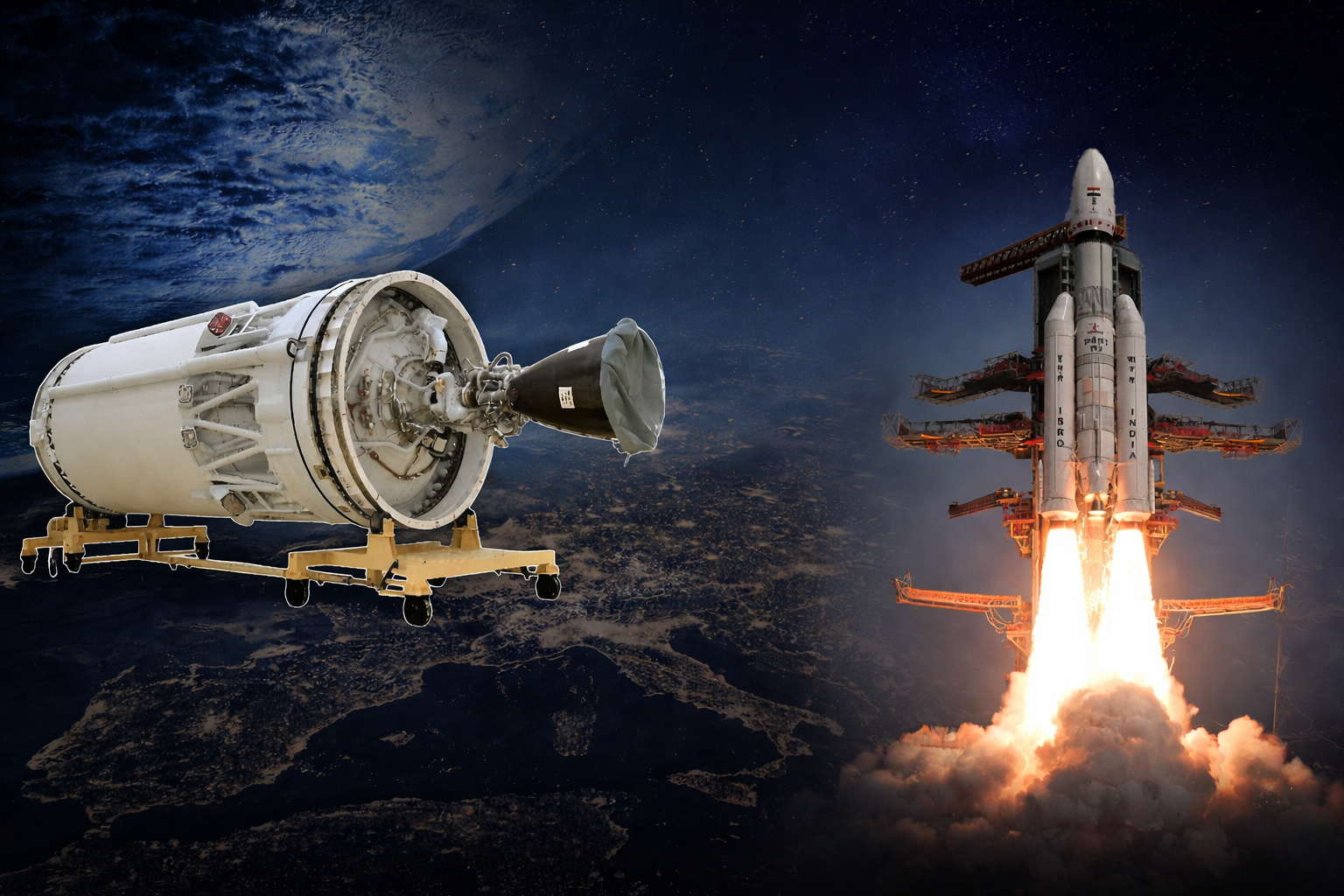
U.S. Sanctions Blocked Agreement Between ISRO and Glavkosmos in 1991, But India Developed Its Own Cryogenic Engine That Assured Space Independence.
In January 1991, the Indian Space Research Organization (ISRO) signed a strategic contract with the Soviet space agency Glavkosmos to acquire cryogenic propulsion technology, the most complex component of any modern orbital rocket. The agreement called for the provision of ready-made engines and, crucially, the transfer of technical know-how for US$ 132 million. This amount was dramatically lower than the price charged by the French Arianespace and far from the US$ 800 million demanded by the American General Dynamics. The Indian decision was pragmatic: mastering cryogenic propulsion meant independence in launching heavy satellites and access to the global commercial market.
Four months later, Washington reacted. The United States imposed sanctions on ISRO and Glavkosmos on the grounds of violating the Missile Technology Control Regime (MTCR). The American Senate approved measures pressuring Moscow, with an explicit threat to cut US$ 24 billion in economic aid to Russia if the contract was fully executed.
Russia, newly emerged from the Soviet collapse and financially dependent on the West, backed down. It invoked a force majeure clause and canceled the technology transfer. India received only seven assembled engines. No manuals. No technical drawings. No engineering transfer.
-
Motorola launched the Signature with a gold seal from DxOMark, tying with the iPhone 17 Pro in camera performance, Snapdragon 8 Gen 5 that surpassed 3 million in benchmarks, and a zoom that impresses even at night.

-
Satellites reveal beneath the Sahara a giant river buried for thousands of kilometers: study shows that the largest hot desert on the planet was once traversed by a river system comparable to the largest on Earth.

-
Scientists have captured something never seen in space: newly born stars are creating gigantic rings of light a thousand times larger than the distance between the Earth and the Sun, and this changes everything we knew about stellar birth.

-
Geologists find traces of a continent that disappeared 155 million years ago after separating from Australia and reveal that it did not sink, but broke into fragments scattered across Southeast Asia.

What should have been a technological acquisition turned into a strategic blockade.
The Technical Logic of the Embargo and the Debate About the MTCR
The American argument held that cryogenic engines could be adapted for intercontinental ballistic missiles.
India responded with an equally technical counter-argument: cryogenic engines use liquid hydrogen at -253°C and liquid oxygen at -183°C, requiring preparation cycles that can take 24 hours or more. They are systems of extremely high thermodynamic efficiency, but impractical for immediate tactical military use. The controversy, therefore, was not purely technical.
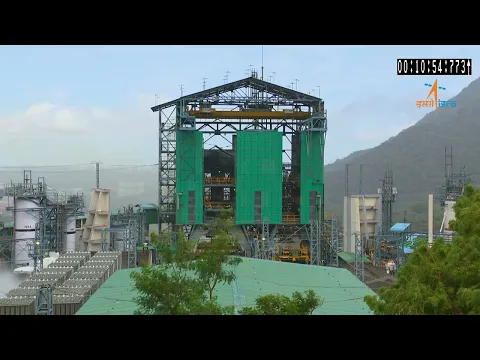

What worried Washington was the commercial and geopolitical impact. ISRO was already operating with significantly lower launch costs than those practiced by the United States and Europe. Complete mastery of cryogenic technology would allow India to compete directly in the heavy satellite launch segment.
The blockade did not only prevent hardware transfer. It aimed to halt India’s rise in the commercial space market.
The Nambi Narayanan Case and Internal Impact on the Space Program
In July 1993, the chief scientist of the Indian cryogenic program, Nambi Narayanan, was arrested on espionage charges. The arrest took place in the state of Kerala. He was held for 50 days and subjected to intense interrogations.
Later, the CBI (Central Bureau of Investigation) concluded that the charges were false. Decades later, the Supreme Court of India declared the arrest illegal and ordered compensation. The damage, however, had already been done.
The cryogenic program lost two critical years, and its main engineer was sidelined at a decisive moment. The interruption represented not only technical delays but psychological impact on a team facing international technological isolation.
The Strategic Decision: Develop a Cryogenic Engine from Scratch
Without access to Russian technology, ISRO announced in July 1993 that it would develop its own cryogenic engine.
The initial approved budget was 280 crores of rupees — around US$ 90 million at the time. The development was distributed between the Liquid Propulsion Systems Center (LPSC), responsible for design and engineering, and the ISRO Propulsion Complex (IPRC), responsible for assembly and testing.
The challenges were extraordinary. Liquid hydrogen requires storage close to absolute zero. Any sealing failure or contamination can cause catastrophic combustion. The turbopump needs to operate at tens of thousands of revolutions per minute in contact with ultra-cold fluids. The combustion chamber must withstand pressures exceeding 6 megapascals.
No dominant country was willing to share expertise. The project became a matter of technological sovereignty.
The CE-20 and the Consolidation of Indian Cryogenic Propulsion
After multiple test and review cycles, the CE-20 emerged as the definitive operational version of the Indian cryogenic engine. In April 2015, the CE-20 performed a static test of 635 seconds with parameters within expectations.
It is a gas-generator engine, burning liquid hydrogen and liquid oxygen with a nominal thrust of 200 kN and specific impulse of 442 seconds in vacuum, a value that places it among the most efficient engines in its category.
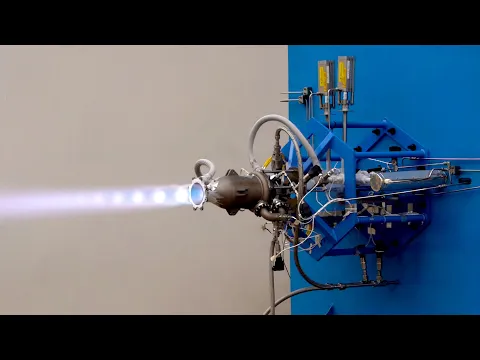
The specific impulse of 442 seconds represents thermodynamic efficiency superior to most conventional liquid propellant engines, which operate between 260 and 320 seconds.
In June 2017, the LVM3 conducted an orbital flight with the CE-20 operating for 640 seconds without deviations. The cryogenic stage C25, powered by the CE-20, carries 28 tons of propellant and is responsible for the final orbital insertion.
Human Qualification and Performance Evolution
The CE-20 underwent human qualification for the Gaganyaan program. In January 2022, it underwent a continuous test of 720 seconds with no parameter deviations — an essential requirement for crewed missions.
Subsequently, ISRO increased the thrust to 21.8 tons and then to 22 tons without structurally altering the rocket.
In February 2025, the CE-20 demonstrated reignition capability in simulated vacuum, expanding its use for missions with multiple orbital insertions. This capability is strategic for complex launches and interplanetary missions.
Industrialization: From Research to Mass Production
The production of the CE-20 was transferred to Hindustan Aeronautics Limited (HAL), at the Integrated Cryogenic Engine Manufacturing Facility (ICEMF), inaugurated in 2023 in Bengaluru.
The creation of the ICEMF marked the transition of the cryogenic engine from scientific design to industrial production. The LVM3 has accumulated nine launches with 100% success by December 2025.
Among the missions are:
- Chandrayaan-2 (2019)
- Chandrayaan-3 (2023, first landing on the lunar south pole)
- Commercial launches for OneWeb
OneWeb contracted two flights for approximately US$ 240 million, about US$ 120 million per mission carrying 36 satellites. The price is significantly lower than that practiced by the European Ariane 5. The full development of the LVM3 and the CE-20 cost approximately US$ 530 million.

For comparison, NASA’s SLS rocket consumed about US$ 24 billion in development. ISRO achieved cryogenic autonomy with less than 3% of that budget.
What Comes Next: SE-2000 and CE-20U
ISRO is developing the semi-cryogenic engine SE-2000, with a thrust of 2,000 kN, using kerosene and liquid oxygen. In March 2025, the system successfully tested at IPRC.
The CE-20 will receive the CE-20U version, with multiple reignitions and increased thrust to 22 tons, integrating into the future stage C32. The LVM3 will be fully adapted for the crewed Gaganyaan program.
Thirty Years Later: The Reverse Effect of the Embargo
The American embargo aimed to prevent the transfer of cryogenic technology. The result was the construction of a complete industrial ecosystem in India.
The engine that was not sold now equips the rocket that Europe contracts to launch its own satellites. The blockade did not interrupt the Indian space program. It made it autonomous.
Thirty years after the sanctions and three decades after the internal crisis, the CE-20 symbolizes something greater than a cryogenic engine: it represents technological sovereignty consolidated under international pressure.








Seja o primeiro a reagir!