





 Portuguese
  English
  Spanish
  4 min of reading
  6 comments


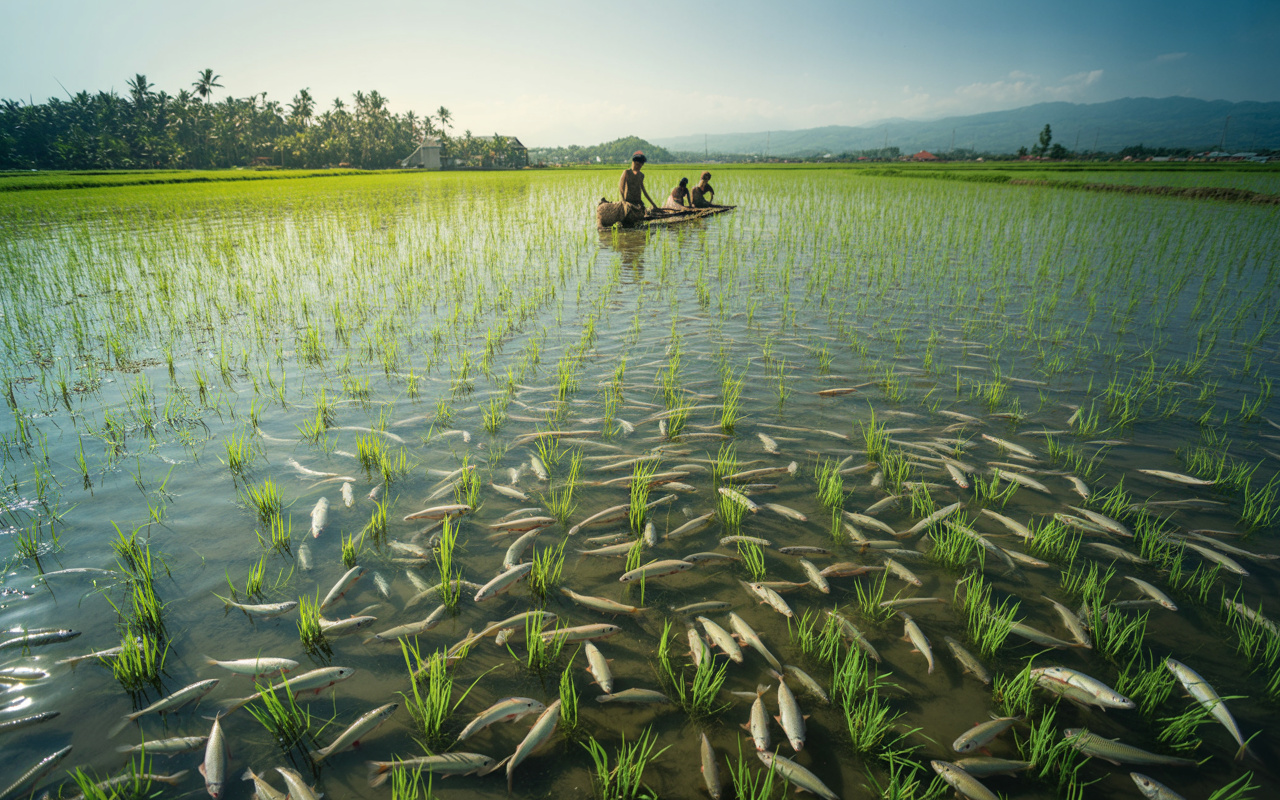


Indonesia Integrates Millions Of Fish Into Flooded Rice Fields To Control Pests, Reduce Pesticides, And Increase Agricultural Productivity Based On Ecology.
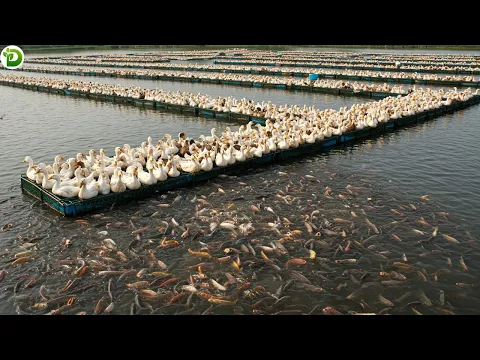
Indonesia’s agriculture hosts one of the world’s most emblematic experiences of integration between food production and environmental balance. Instead of relying exclusively on chemical pesticides and synthetic fertilizers, the country bets on a traditional method that has been scaled up in modern terms: fish farming within the flooded rice fields themselves. Known locally as mina padi, the system currently involves over 5 million fish per harvest, distributed across irrigated areas in different provinces, transforming rice cultivation into a productive and functional ecosystem.
This model did not emerge as a recent experiment. It combines ancestral knowledge with technical support from institutions such as FAO and the International Rice Research Institute (IRRI), being adopted especially in densely agricultural regions like Java, Sumatra, and Bali. The result is a system that naturally controls pests, improves soil quality, and increases productivity without resorting to aggressive chemical products.
How The Fish System Works Within The Rice Fields
In the mina padi system, the rice fields remain flooded for a significant part of the production cycle. In this environment, fish such as carp, tilapia, and catfish are introduced at calculated densities based on the area and available water volume.
-
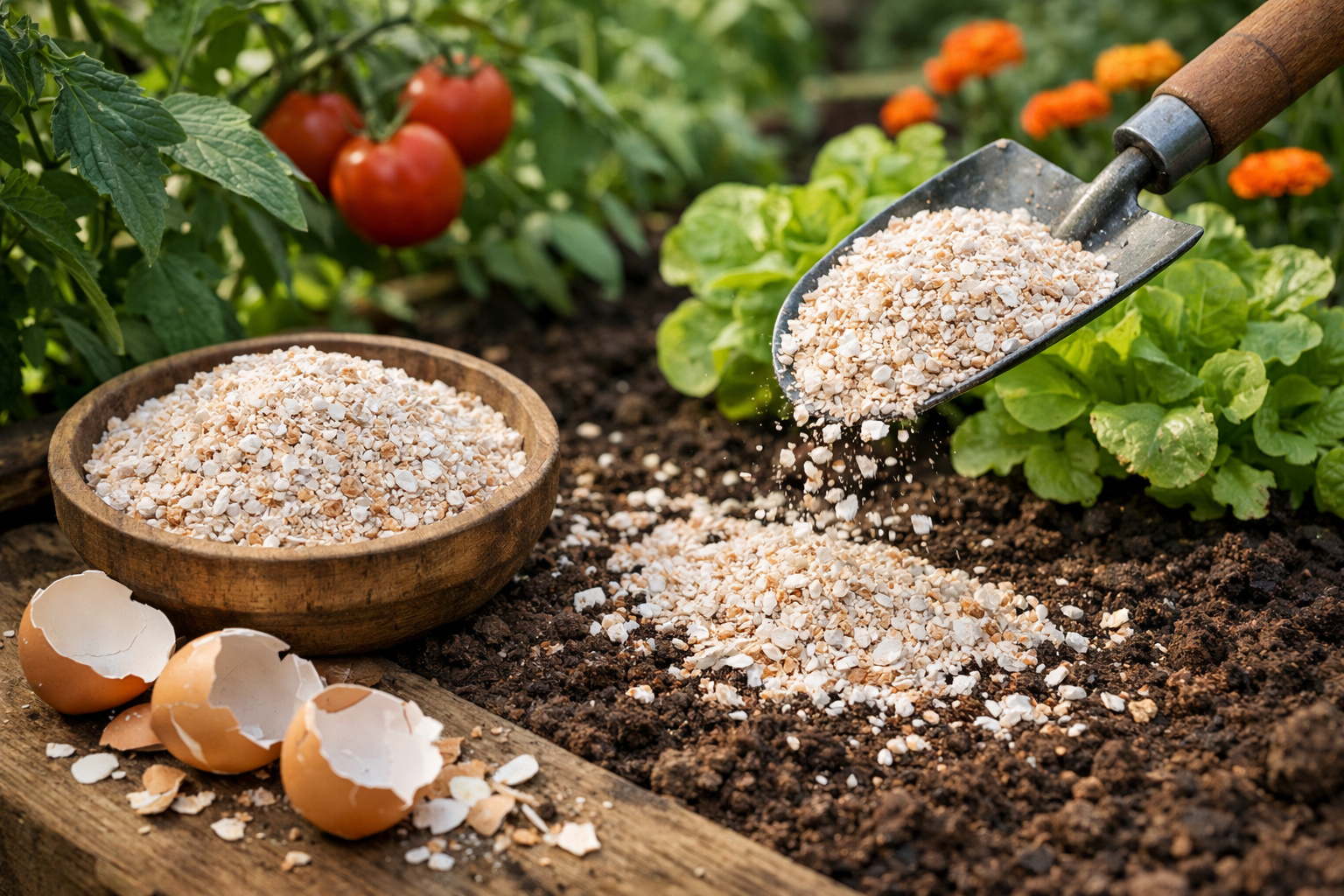
The eggshell that almost everyone throws away is made up of about 95% calcium carbonate and can help enrich the soil when crushed, slowly releasing nutrients and being reused in home gardens and vegetable patches.
-
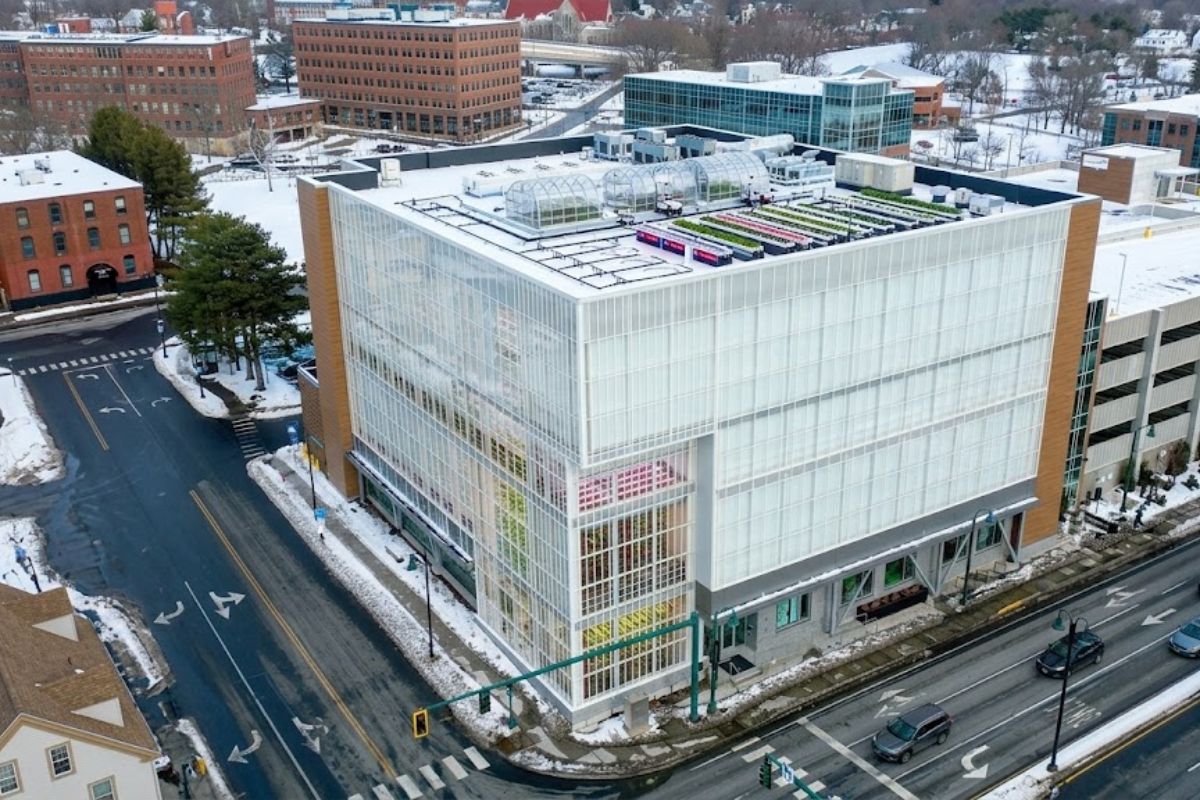
This farm in the United States does not use sunlight, does not use soil, and produces 500 times more food per square meter than traditional agriculture: the secret lies in 42,000 LEDs, hydroponics, and a system that recycles even the heat from the lamps.
-
The water that almost everyone throws away after cooking potatoes carries nutrients released during the preparation and can be reused to help in the development of plants when used correctly at the base of gardens and pots, at no additional cost and without changing the routine.

-
The sea water temperature rose from 28 to 34 degrees in Santa Catarina and killed up to 90% of the oysters: producers who planted over 1 million seeds lost practically everything and say that if it happens again, production is doomed to end.


On average, each hectare can accommodate hundreds of fingerlings, which explains how the total number easily reaches millions when the participating areas are summed up.
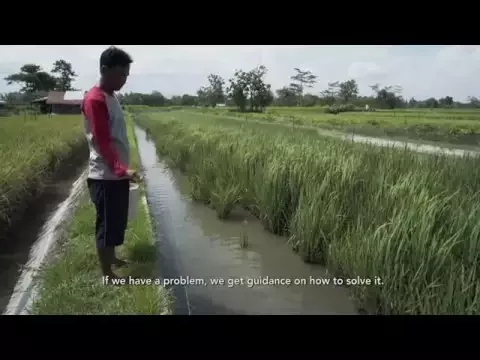

The fish move freely among the rice plants, feeding on insects, larvae, and small organisms that would normally attack the crops. This behavior drastically reduces the presence of agricultural pests, replacing the use of chemical insecticides with continuous and natural biological control.
Pest Control Without Pesticides
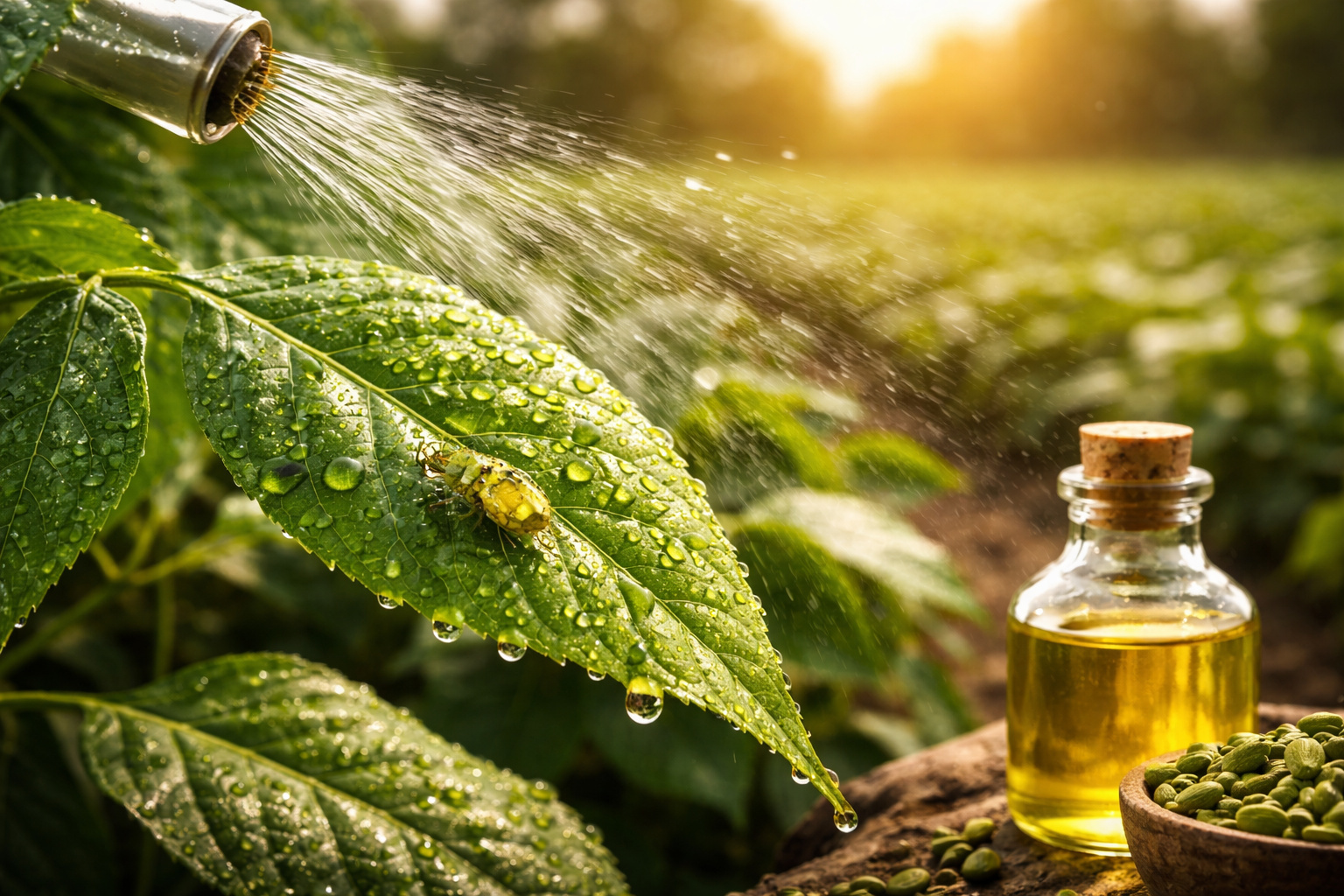
One of the greatest benefits of the system is the significant reduction in pesticide use. Insects that attack rice, such as aquatic larvae and small crustaceans, become part of the fish’s diet. As a result, farmers reduce or eliminate the need for chemical spraying, leading to direct environmental gains.
Less pesticide means lower water contamination, reduced impact on non-target organisms, and lower risks to human health. In regions where mina padi is continuously adopted, studies indicate a significant decrease in pesticide use, without harming and often with gains — in rice productivity.
Soil Recovery And Agricultural Fertility
In addition to pest control, fish play a fundamental role in recovering and maintaining soil fertility. Their organic waste acts as a natural fertilizer, enriching the water and sediment of the rice field with essential nutrients.
The constant movement of fish also helps oxygenate the flooded soil, reducing compaction and favoring the development of rice roots. This process improves the physical structure of the soil over time, making the system more resilient and less dependent on external inputs.
Increased Productivity And Income Diversification
The economic impact of the system is one of the factors explaining its expansion. At the end of the harvest, farmers harvest rice and fish in the same space, without needing to expand the cultivated area. This increases overall productivity per hectare and creates an additional source of protein and income.
In many regions of Indonesia, fish cultivated in the rice fields are destined for both local consumption and sale in regional markets. This diversification reduces the economic vulnerability of small producers, especially in years of climatic instability or agricultural price fluctuations.
National Scale And Approximate Numbers
Although there is no single consolidated number for the entire country, regional data allow estimating that over 5 million fish are integrated into Indonesian rice fields with each production cycle. This figure is considered conservative when observing the extent of the irrigated areas involved and the average fish density used per hectare.
The model is supported by government programs and rural extension initiatives that encourage farmers to adopt practices with low environmental impact. In some provinces, the system is already treated as public policy for sustainable agriculture.
Why The Model Draws International Attention
Indonesia’s case has been observed by other rice-producing countries because it demonstrates that it is possible to produce more, spend less on chemicals, and still recover the agricultural environment. In a global scenario of pressure for food and sustainability, mina padi offers a concrete answer based on natural processes.
By integrating millions of fish into rice fields, Indonesia shows that effective agricultural solutions do not always depend on sophisticated technology or costly inputs, but on redesigning the production system to work in favor of nature.
The result is a clear example of how agriculture, aquaculture, and ecology can coexist in the same space, transforming flooded rice fields into true productive ecosystems — efficient, resilient, and sustainable.






Isso me faz lembrar a história de joio e trigo ambos cresciam juntos depois na época de colheita cada séri vai no devido lugar
Planta feijão tbm que já colhe a refeição completa 😂
e se os peixes comerem o arroz?
Aí, você já pode comer o peixe com arroz.
Excelente resposta ao shr.Gustavo
Se os peixes fossem um perigo para os arrozais, por certo nem seriam cogitados para servirem ao propósito, não é mesmo?