





 Portuguese
  English
  Spanish
  5 min of reading
  0 comments


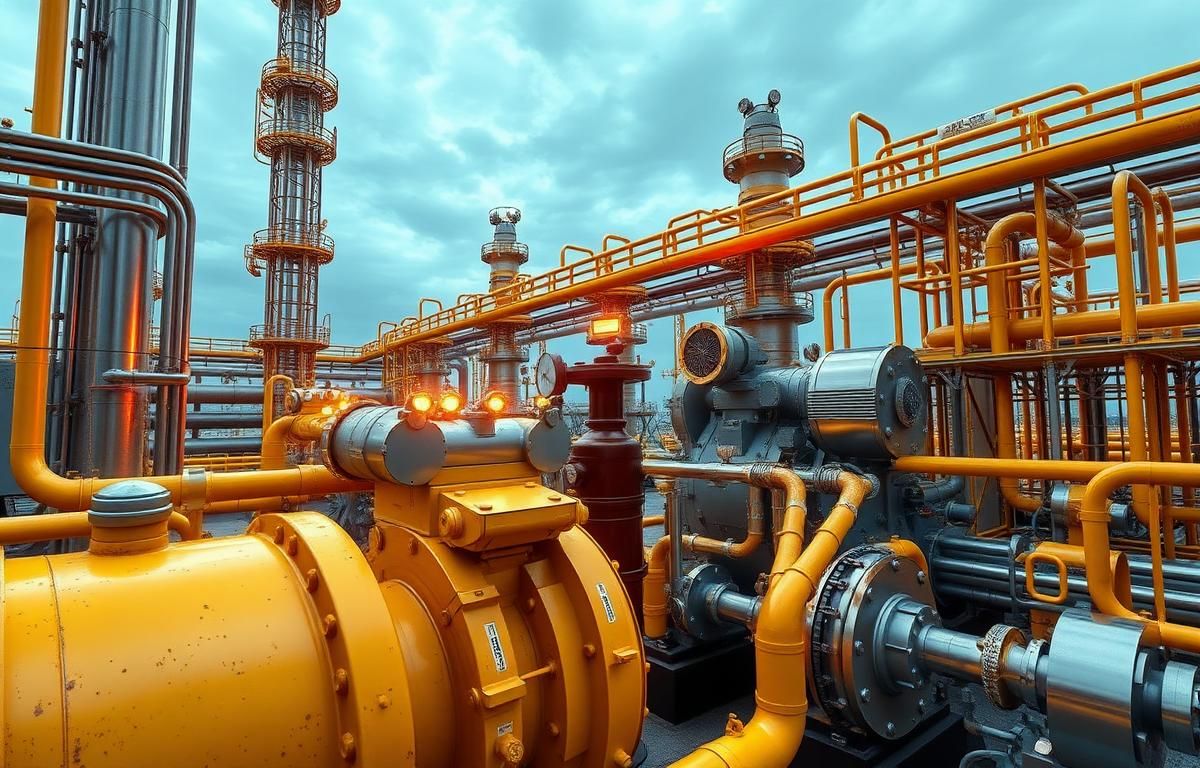
Technologies in Asset Maintenance, Such as SCADA and Digital Twins, Revolutionize the Oil and Gas Sector Through Predictive Maintenance and ESG.
Industrial maintenance is undergoing a radical transformation with the advent of new technologies. Tools like SCADA and Digital Twins play a crucial role in predictive maintenance, ensuring that equipment operates at maximum efficiency. Since the 1990s, the introduction of these technologies has significantly reduced downtime and increased operational safety. With a focus on the concept of Industry 4.0, there is a growing emphasis on the digitalization and automation of processes, which translates into more reliable operations. This technological revolution is not just a trend; it is redefining maintenance standards globally.
Specifically in the oil and gas sector, the application of these innovations has intensified since 2010, allowing for real-time monitoring and better asset management. Mineral exploration greatly benefits from predictive capabilities, as operators can take preventive action. This proactive approach not only reduces risks but also enhances sustainability, aligning with ESG objectives. However, technology alone is not enough; investment in training is essential to empower teams to utilize these tools. By 2025, the sector is expected to reach new levels of efficiency and safety, as reported by the Brazilian Association of Maintenance and Asset Management (ABRAMAN).
The Impact of Industrial Maintenance 4.0 on Sustainable Exploration
With the implementation of these technologies, the extractive industry has witnessed a significant reduction in accidents and failures, resulting in safer working conditions. Digital maintenance solutions offer new ways to predict and mitigate problems before they occur, enabling substantial savings in financial and natural resources. In 2018, a Deloitte study highlighted how technology 4.0 not only boosts productivity but also enhances the viability of mining operations. This is particularly crucial during times of increasing demand for minerals, driven by the global energy transition.
-
Petrobras evaluates suspension of sales to distributors and considers canceling the cooking gas auction following guidelines from the Federal Government.
-
Lula reveals a masterstroke by Petrobras to undo a deal made by Bolsonaro, which involves the return of an important refinery that currently produces less than half of what was expected and makes Brazil dependent on international diesel.
-
A study confirms that the natural gas sector will reduce greenhouse gas emissions in Brazil by 0.5% and accelerate the energy transition by 2026.

-
Petrobras implements a severe adjustment and confirms a 55% increase in the price of aviation kerosene with a proposal for installment payments for the companies.


The transition to these innovations requires a coordinated effort among governments, industries, and educational institutions. Between 2020 and 2025, collaborative initiatives are expected to trigger an increase in the development of specialized skills in digital technology for mining. The University of São Paulo (USP) is at the forefront of this movement, promoting courses that integrate concepts of industrial maintenance 4.0 with the use of artificial intelligence.
Therefore, the synergy between technology and maintenance strategy is vital for sustaining continuous growth in mining. By adopting these new and robust solutions, the mining industry will not only prosper economically but also contribute to a more sustainable future.
In recent years, asset maintenance has experienced an unprecedented revolution, thanks to advancements in technologies dedicated to this field. Since the 2000s, there has been a notable increase in investments directed toward preventive approaches. The implementation of computerized systems, such as Supervisory Control and Data Acquisition (SCADA), has proven crucial, bringing considerable improvements to asset maintenance in the industrial sector.
Impacts of Technologies on Asset Maintenance
Despite this, the benefits provided by technologies in asset maintenance go far beyond the day-to-day operations of companies. Remarkable stories over the years have shown that the lack of effective asset maintenance can culminate in tragedies, both economic and social. Cases like the Gulf of Mexico spill by BP’s Deepwater Horizon platform in 2010; the Texas City refinery accident, also by BP, in 2005; the Piper Alpha disaster by Occidental Petroleum in 1988; and the explosion of Petrobras’s P-36 platform in 2001 serve as impactful evidence.
Innovations in Industrial Maintenance and Their Reflections
In addition to the colossal human losses, these incidents resulted in financial damages amounting to billions for the companies involved, demonstrating the direct relationship between asset management and safety and sustainability aspects. The implementation of predictive and preventive maintenance, facilitated by technological resources, has significantly improved the safety of both equipment and workers. Organizations in this segment can now perform more accurate industrial planning, reduce costs, and extend the lifespan of their machinery.
In the current landscape, as revealed in 2022 by the Brazilian Institute of Oil and Gas (IBP), about 29% of companies in the field are focused on investing in the operation and management of assets, solidifying industrial maintenance as a strong trend. The digitalization of the process, which has been occurring for decades, has been accelerated by the marriage of new innovations with traditional tools already in use.
New Frontiers in Industrial Maintenance 4.0
One of the main changes has come with sensors based on Internet of Things (IoT), which collect real-time data to monitor indicators such as temperature, pressure, and vibration, and the analysis of large volumes of data with Artificial Intelligence (AI). The latter offers the ability to predict failures, recognize patterns, and optimize maintenance plans. According to the IBP, 34% of companies are already using smart IoT instrumentation, and 41% plan to do so soon.
In this context, other developments include the virtual replica of assets, the Digital Twins, and the creation of advanced maintenance management software (CMMS), enabling predictive simulations and better performance. These elements, along with technologies in asset maintenance, promote not only data efficiency but also mobility and remote access. Field teams, even out of internet reach, can access what they need to ensure effective operations.
Challenges and Opportunities in Technological Implementation
Technology now transforms data flow into specific preventive actions. Risk identifications, such as leaks and overheating, now adhere to strict standards. A consolidated view of assets, from subsea valves to turbines, is vital in high-risk areas, allowing managers to decisively prioritize resources based on technical and financial information. However, the modernization of machinery and the adoption of new digital solutions raise questions about costs, qualifications for operation and interpretation, protection against cyberattacks, and integration with existing software.
Moreover, industrial maintenance 4.0 directly supports Environmental, Social & Governance (ESG) objectives by reducing emissions and waste, preserving the safety of employees and communities, and ensuring transparency and efficiency. Investments in such technologies in the oil and gas sector increase asset reliability, contributing to a more strategic management of costs and resources.
Future Perspectives on Technology in Asset Maintenance
Combinations of technologies such as IoT, AI, and predictive and preventive analytics address challenges in this sector, from reducing the need for emergency corrective actions to compliance with regulations, avoiding sanctions and unforeseen downtime. These innovations transform maintenance management into a strategic environment, balancing the needs for clean energy, competitiveness, and risk reduction while accelerating the energy transition and elevating operational resilience.
Finally, the proper use of tools that reinforce the evolution of asset management is a crucial differentiator. Companies seeking to align with ongoing innovations in industrial maintenance in the oil and gas industry, adopting 4.0 maintenance and comprehensive solutions that combine advanced software, AI, IoT devices, and robust integrations, will gain a competitive advantage and ensure more sustainable and lasting businesses than those that remain reactive and without reliable data.
Source: FRACTTAL BRAZIL Press









Seja o primeiro a reagir!