





 Portuguese
  English
  Spanish
  5 min of reading
  1 comment





With 90% Of Residents Living In Gated Communities, Santana de Parnaíba Became An “Invisible City,” A Symbol Of Urban Isolation And Private Security.
There is a city in the interior of Greater São Paulo that seems straight out of a fiction about the future of metropolises. With almost deserted streets, empty squares, and an impressive number of 90% of the population living within gated communities, Santana de Parnaíba is a snapshot of a Brazilian urban phenomenon: the rise of “invisible cities,” designed for security, comfort, and exclusivity, but marked by an almost total separation from public space.
The municipality, which hosts the neighborhood of Alphaville, is today one of the richest and safest territories in the country — and also one of the most curious. At first glance, everything seems perfect: tree-lined streets, condominiums with houses valued in millions of reais, bilingual schools, private hospitals, and a 24-hour security system. But behind the walls that stretch for miles, experts see an urbanism model that redefines the concept of a city and raises dilemmas about coexistence, inequality, and the future of urban life in Brazil.
The Birth of Alphaville and the Walled City Model
What is now a symbol of luxury started as an engineering and real estate marketing project in the 1970s. The Alphaville neighborhood was created by the construction company Albuquerque & Takaoka with the goal of offering the Paulist elite an alternative to the chaos of the capital: to live in tranquility, security, and first-world infrastructure, but away from the city.
-
The Argentine government celebrates the lowest poverty rate in 7 years, but experts warn that the methodology has changed, real wages have fallen, unemployment has risen, and the number of people on the streets of Buenos Aires has increased by 57% since Milei took office.

-
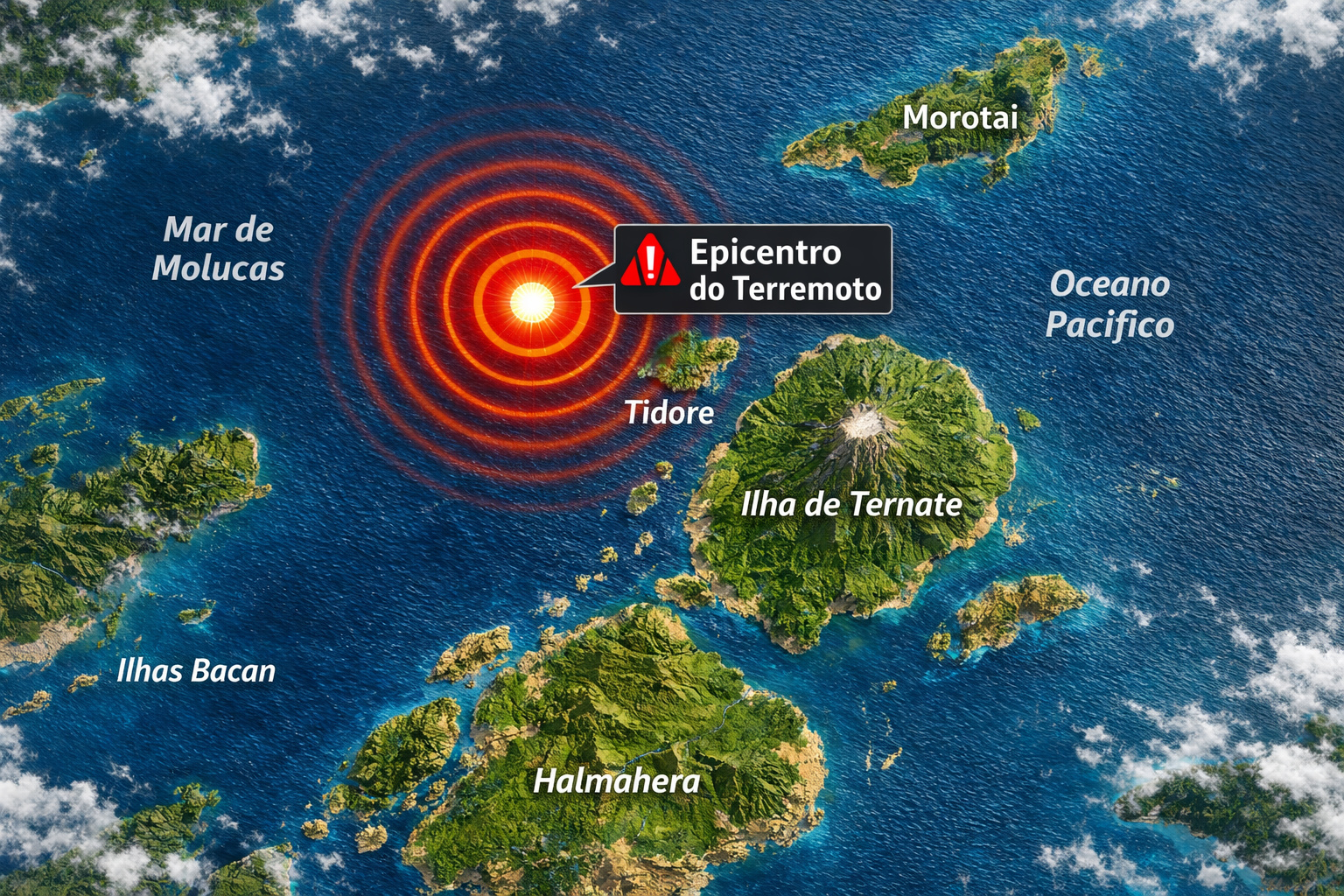
7.8 magnitude earthquake in Indonesia frightens the population, triggers tsunami alert, and hits an island with over 200,000 inhabitants this Thursday.
-
Google will finally let you change that embarrassing Gmail address you created in your teenage years without losing any accounts, logins, or old emails: the feature is already available in the United States.

-
Heading to Brazil in a Bonanza F33 single-engine aircraft: a couple departs from Florida on a visual flight, makes technical stops in the Caribbean to refuel and organize paperwork, and begins the staged crossing until they reach the country.




The project worked so well that it became a model exported throughout the country. In 1980, Alphaville expanded into Santana de Parnaíba, the neighboring municipality of Barueri, and found fertile ground to grow. By 2024, according to the Municipal Government and the Master Plan, more than 200 gated communities occupy almost the entire urban area.
These condominiums operate like small autonomous cities: they have their own surveillance systems, waste collection, leisure facilities, and even internal schools and gyms. Outside the walls, there is little movement. Most social and economic life takes place within these private borders.
Total Security and the Cost of Isolation
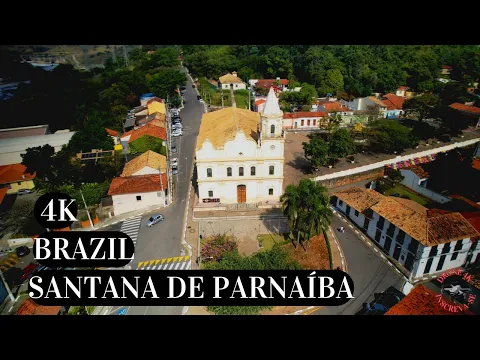
Santana de Parnaíba has one of the lowest crime rates in Brazil. According to the Atlas of Violence 2023, the homicide rate is practically zero — a rare reality in the country. For residents, this is the main attraction.
With an average income exceeding R$ 8,000 per month and per capita income of R$ 7,400, according to the IBGE, the city boasts a high standard infrastructure reminiscent of international luxury enclaves.
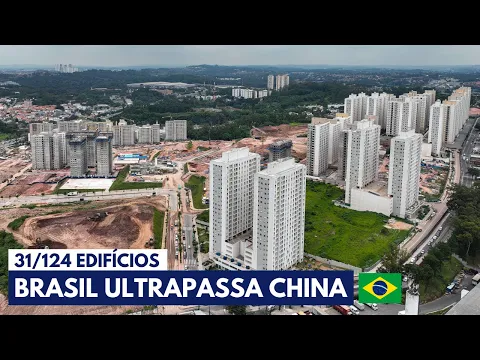
The local HDI is 0.862, which would place Santana de Parnaíba among the most developed countries in the world if it were an independent nation.
But this level of security and comfort comes at a price: urban isolation. Researchers from the University of São Paulo (USP) and PUC-SP classify Alphaville and Santana de Parnaíba as examples of privatized urbanism — a model in which public space loses relevance, and the city becomes an archipelago of gated communities.
In an interview with BBC Brasil, urban planner Raul Juste Lores defines the phenomenon as “the triumph of fear over coexistence.” He explains that Alphaville is, at the same time, a symbol of economic success and a new social segregation, where coexistence between different realities practically disappears.
Deserted Streets and Life Behind Walls
A simple walk through Santana de Parnaíba reveals the paradox. The main avenues, wide and clean, are almost always empty. The few pedestrians are workers commuting by bus to serve the condominiums.
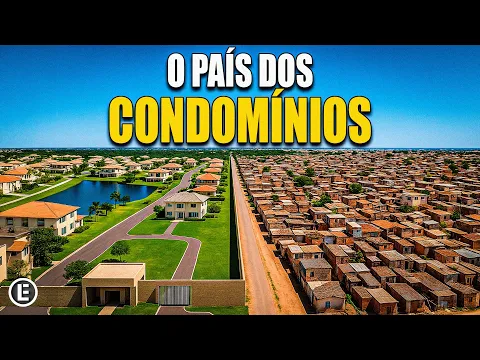
Inside the walls, however, there is a vibrant city: clubs, gyms, internal squares, cinemas, and commercial centers exclusive to residents.
Sociologist Teresa Caldeira, author of the book “City of Walls”, considers Alphaville the most emblematic case of “privatization of urban space” in Latin America. She describes these territories as “invisible cities” that maintain physical and symbolic distance from the rest of the metropolis.
For many inhabitants, this is the ideal trade-off — security and quality of life in exchange for diversity and public life. But, according to urban planners, in the long run, this model reduces social integration and widens the gap between the rich and the poor, generating a type of city that is both wealthy and fragmented.
An Economic and Social Bubble
The economy of Santana de Parnaíba is strongly supported by the service sector, technology, and the luxury real estate market. The Property Tax and Tax on Services account for over 90% of municipal revenue, according to the Seade Foundation.
The city hosts condominiums with properties valued between R$ 3 million and R$ 20 million, many occupied by businesspeople, executives, and digital influencers. Alphaville also hosts one of the largest concentrations of corporate headquarters and high-end offices in Greater São Paulo.
Interestingly, despite all this wealth, public life is almost nonexistent. There are few street shops, the squares are seldom used, and cultural events almost always occur within the residential complexes themselves.
“It is a city where the citizen is a client and the urban space is a product,” defines architect Ciro Pirondi, former director of the Escola da Cidade.
The Portrait of Brazil With High Walls
The case of Santana de Parnaíba and Alphaville is just the most visible example of a national phenomenon. According to the IBGE, the number of gated communities in Brazil has grown by more than 300% in the past two decades.
It is estimated that over 11 million Brazilians currently live in walled communities, a trend that reflects the search for security, but also a crisis of trust in open cities.
For specialists, this is a portrait of the country: metropolises marked by inequality push those who can afford to live behind walls, while public space deteriorates and loses vitality. The result is a country where each social group lives in distinct territories, without coexistence or real interaction.
The City That Hides Within Itself
Santana de Parnaíba is, paradoxically, an almost invisible city. Its wealth does not appear in bustling avenues or skyscrapers.
It is hidden behind walls, guardhouses, and automatic gates. Inside, there is comfort, technology, and security. Outside, silent streets and an urban void that symbolizes contemporary Brazil — a country that, in trying to protect itself, ended up dividing.
The “invisible city” is more than a curiosity: it’s a mirror. It shows how fear, inequality, and the search for exclusivity shape the space we live in. And it may foreshadow the future of many other Brazilian cities — fragmented, protected, and increasingly distant from themselves.










Estão certíssimo! Se eu fosse rica também moraria isolada, nos bairros não podemos sair a noite, chegar, e quando estamos dentro de casa, som alto e funk e motos estralando noite a dentro. E tem quem defenda ****.