





 Portuguese
  English
  Spanish
  5 min of reading
  2 comments


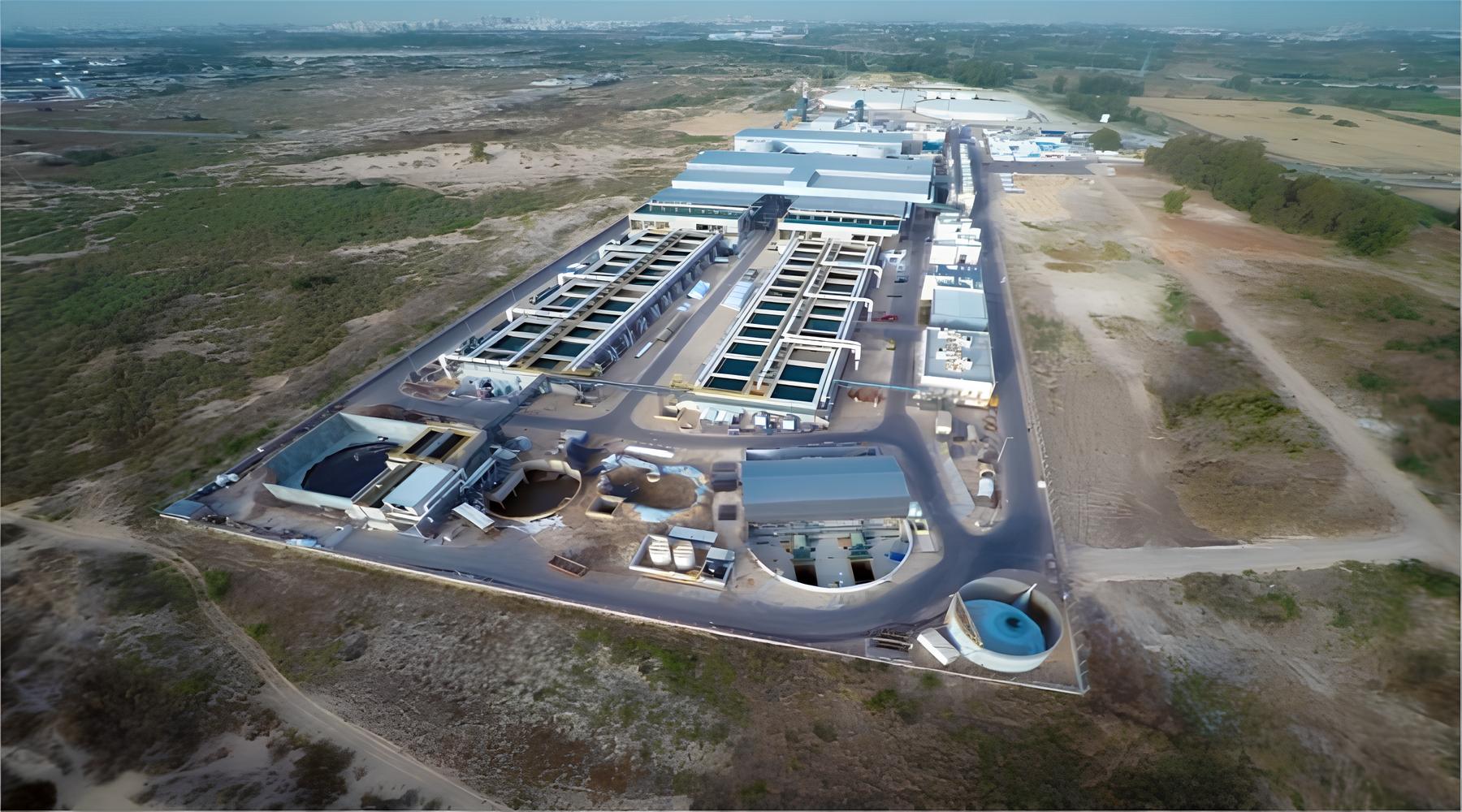


Desalination Plant of Sorek Produces 624 Thousand m³ Per Day and Sells Water at US$ 0.58/m³, Making Israel the World Leader in Economically Viable Desalination.
The Sorek desalination plant rises above sandy terrain about 15 kilometers south of Tel Aviv, on the shores of the Mediterranean Sea. Inaugurated in 2013 after an investment of US$ 500 million, it produces 624 thousand cubic meters of drinking water per day — equivalent to 624 million liters daily or 7.23 cubic meters per second. This capacity is enough to supply a city with over 2 million inhabitants and represents alone about 20% of the domestic consumption of all Israel.
But the most impressive feat is not just the volume: Sorek has managed to break the economic barrier that historically made desalination prohibitive. The plant sells water to the Israeli government for US$ 0.58 per cubic meter — or approximately US$ 0.70 per thousand liters when distribution costs are included. This price represents half of the cost charged a decade ago and places Israel at the global forefront of economically viable desalination.
Raphael Semiat, chemical engineer and desalination expert at the Technion – Israel Institute of Technology in Haifa, summarizes: “This is really the cheapest seawater desalination produced in the world. We do not have to fight for water, as we did in the past.”
-
Motorola launched the Signature with a gold seal from DxOMark, tying with the iPhone 17 Pro in camera performance, Snapdragon 8 Gen 5 that surpassed 3 million in benchmarks, and a zoom that impresses even at night.

-
Satellites reveal beneath the Sahara a giant river buried for thousands of kilometers: study shows that the largest hot desert on the planet was once traversed by a river system comparable to the largest on Earth.

-
Scientists have captured something never seen in space: newly born stars are creating gigantic rings of light a thousand times larger than the distance between the Earth and the Sun, and this changes everything we knew about stellar birth.

-
Geologists find traces of a continent that disappeared 155 million years ago after separating from Australia and reveal that it did not sink, but broke into fragments scattered across Southeast Asia.

Technological Innovation in Reverse Osmosis That Reduced Desalination Costs by 50%
The cost revolution achieved by Sorek results from a series of technological innovations implemented by IDE Technologies, the Israeli company responsible for the project. The most significant was the use of pressure vessels twice the size of conventional models.
In reverse osmosis, the technology employed by Sorek, seawater is forced at high pressure through semipermeable membranes that retain salt and impurities. The larger the pressure vessels housing these membranes, the more efficient the process becomes per unit of energy consumed. IDE developed vessels with a 16-inch diameter, arranged vertically, compared to the standard 8-12 inches in previous plants.


This geometric change had a dramatic impact: the larger vessels allow for more membranes to be installed per unit, reduce pressure losses, and optimize hydraulic flow. The result is one of the lowest energy consumptions in the world for large-scale desalination plants.
In addition to the enlarged vessels, Sorek incorporates highly efficient pumps and advanced energy recovery devices.
When the concentrated saline water (brine) is rejected after passing through the membranes, it is still under high pressure. Recovery systems capture this residual pressure and transfer it to the incoming seawater. At Sorek, the energy recovery rate exceeds 90%.
Public-Private Partnership (PPP) Model That Transformed Water Financing in Israel
Sorek does not belong to the Israeli government. It was built and is operated by IDE Technologies through a Public-Private Partnership (PPP) model.
The State did not invest the US$ 500 million in construction; it signed a long-term contract committing to buy all the water produced at a fixed price of US$ 0.58 per cubic meter.
After 25 years of operation, ownership of the plant will be transferred to the Israeli State. During this period, IDE assumes all construction, operation, maintenance, and financing risks, while the government guarantees stable demand through take-or-pay type contracts.
This model reduced fiscal risk, attracted private capital, and created incentives for maximum efficiency. The experience has been replicated in other plants across the country.
Five Desalination Plants Ensure Up to 80% of Israel’s Domestic Consumption
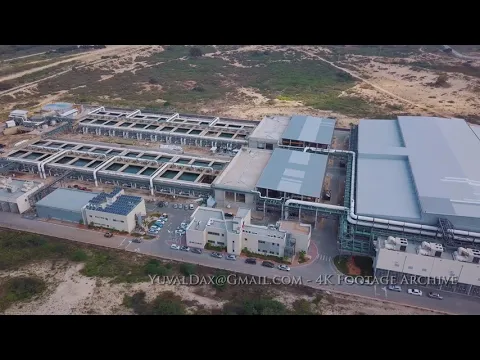
Sorek was the third large desalination plant built in Israel, after Ashkelon (2005) and Hadera (2009). Subsequently, Palmachim and Ashdod (2015) were built, and Sorek 2 is under construction.
Together, the five plants convert approximately 2 million cubic meters of seawater into fresh water daily, over 700 million m³ per year. This represents 70-80% of Israel’s domestic consumption.
The country currently produces 20% more water than it needs, creating a safety margin for dry periods.
Desalination Costs Versus Natural Water: Hydric Security Above Price
Large reverse osmosis plants in Israel produce water for about US$ 0.54 per cubic meter, a cost higher than natural freshwater estimated at US$ 0.10, but competitive internationally.
Israel pays more per cubic meter, but purchases supply security even during severe droughts, in a region increasingly impacted by climate change.
Sorek 2 set a new record with a price of US$ 0.41 per cubic meter, an additional 30% reduction.
Water Reuse: 87% of Treated Sewage Returns to Agriculture
Desalination is just part of the Israeli water strategy. Approximately 94% of sewage is collected and treated, and 87% is reused, mainly in agriculture — the highest reuse rate in the world.
The Shafdan plant, near Tel Aviv, processes about 370 million liters per day. This water is treated and sent to the Negev desert for irrigation.
Israel has also developed the drip irrigation system, which delivers water directly to the roots with minimal waste. Strict loss control in the network keeps waste at only 7%, one of the lowest rates on the planet.
From the Water Crisis of 2005 to Self-Sufficiency and Reverse Pumping from the Sea of Galilee
The major turning point occurred after the drought that began in 2005. The Sea of Galilee (Lake Kinneret) reached critical historic levels. Israel faced an imminent water collapse.
With the expansion of desalination and the commissioning of Sorek in 2013, the country reduced its consumption of natural sources from 513 million m³ per year to just 25 million — a drop of 95%.
In 2023, Israel inaugurated a reverse pumping system that allows for filling the Sea of Galilee with excess desalinated water. For the first time, the country is replenishing its main natural reservoir.
Export of Israeli Desalination Technology and Water Management
The Israeli model combines large-scale desalination, massive reuse, efficient irrigation, and strict loss control.
Israel offered partnership to Brazil to install a pilot plant in the Northeast, a region that suffered severe drought between 2012-2015.
International delegations regularly visit Sorek to study the model.
Environmental Impacts of Desalination and Energy Challenges
The hypersaline brine discharged can affect marine ecosystems. Israel is working with controlled dilution, environmental monitoring, and research for the extraction of minerals like lithium, magnesium, and bromine.
The energy consumption of the plants ranges between 3 and 4 kWh per cubic meter, totaling millions of kWh daily. Israel is gradually integrating solar energy to reduce its carbon footprint.
The UN predicts that nearly 2 billion people will live in water-scarce regions in 10 years. Reports warn of a potential global deficit of 40% by 2030.
Israel has shown that by combining cutting-edge technology, innovative financial models, integrated management, and long-term planning, it is possible to transform an arid country into a global reference for water security.








Apenas uma observação: os produtores desta “água” não bebem dela nenhuma gota. Mas, bem, para que serve a palavra “importação”? Vou comprar água importada que é melhor.
Leia atentamente e saiba para que tipo de utilização serve esta “agua”. Não se transforma em água potável!!!ou melhor água para beber .