





 Portuguese
  English
  Spanish
 5 min of reading
  1 comment


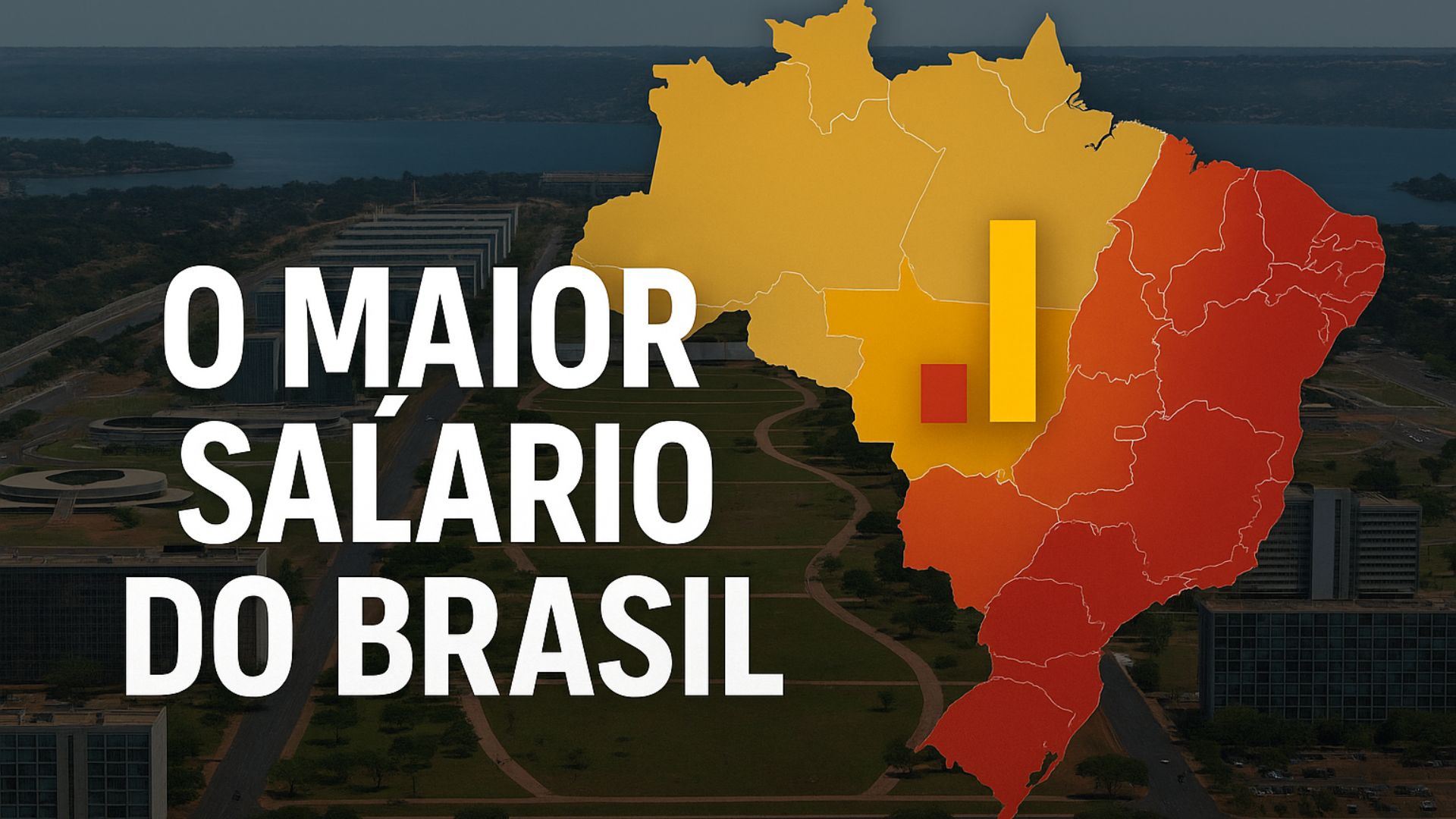


Average Earnings of Work Reveals Striking Contrasts Between Brazilian Regions and Reinforces Persistent Inequalities in the Country.
The worker with the highest average income in the country is not in São Paulo, but in the Federal District.
According to the most recent data from the Continuous Pnad of IBGE, the average earnings of all jobs for employed people in Brazil reached R$ 3,208 in 2024, while in the Federal District it reached R$ 5,037, the highest value among the Federation units.
In São Paulo, the average was R$ 3,884, while the lowest values were found in Maranhão (R$ 2,051) and Ceará (R$ 2,053).
-
Mothers and daughters come together, create an ‘express’ beauty salon and turn the idea into a network with 21 units, revenue of R$ 16.7 million and 12,000 subscribers.

-
End of the 6×1 schedule: how the reduction of hours can affect service companies, industry, and agribusiness.

-
Brazil Ignores Trump’s threats to BRICS, Buys 42 tons of gold and reduces the Dollar’s share by 6.45% in international reserves.

-
Havan buys historic football land in Blumenau for a million-dollar amount protected by a confidentiality clause and is already planning to change even the layout of streets to build a megastore in half-timbered style costing 80 million reais.


These numbers consider the average monthly earnings of all employed people, adding up all the jobs each one holds, a calculation method used by IBGE to compare the states.
The value of R$ 3,208 represents an advance compared to 2023, when the average was R$ 3,094, and marks the highest level in the historical series that began in 2012.
Salary Differences Between States
The difference between the extremes of the ranking is greater than R$ 3,000.
While a worker employed in the Federal District earns, on average, just over R$ 5 thousand per month, those in Maranhão or Ceará do not exceed around R$ 2 thousand.
São Paulo ranks second, with R$ 3,884, followed by states in the Southeast and South, such as Rio de Janeiro, Paraná, Santa Catarina, and Rio Grande do Sul, all with average values close to or above R$ 3,600.
At the other end, besides Maranhão and Ceará, other states in the North and Northeast also register earnings well below the national average, reinforcing the regional cut of income inequality.
In the North and Northeast regions, the average monthly earnings of all jobs were R$ 2,450 and R$ 2,229, respectively.
These values correspond to 76.4% and 69.5% of the national average, highlighting that, even with the advances in income in the country, the salary map remains quite unequal.
Earnings in Main Job

When looking only at the job considered main by the worker, the average earnings also increased.
IBGE points out that the real usual income of the occupied population in the main job rose from R$ 3,002 in 2023 to R$ 3,108 in 2024, a 3.5% increase in real terms.
For the period of 2023 and 2024, the real gain reaches 10.8%.
This movement reflects, among other factors, the combination of a more heated job market, increased employment, and the effects of income transfer policies and minimum wage appreciation, although IBGE does not attribute the results to specific causes in its reports.
Occupations with Highest Earnings
The data by occupational group shows that the average income can more than double the national average in some positions.
In 2024, the three groups with the highest usual earnings were:
Directors and managers, with R$ 8,721 monthly.
Members of the armed forces, police, and military firefighters, with R$ 6,749.
Professionals in sciences and intellectuals, with R$ 6,558.
These functions usually require higher qualifications, management responsibilities, or careers typical of the State.
They are mainly concentrated in the wealthiest regions and large urban centers, which also helps explain why the Federal District and São Paulo appear among the Federation units with the highest average earnings.
Racial Income Inequality
Even with the advance in average income, racial differences remain striking.
According to the most recent data from IBGE, the white employed population received, on average, 65.9% more than the black or mixed-race population in 2024.
In practice, this means that white workers have an average income close to R$ 4,119, while blacks and browns earn around R$ 2,484.


The average real hourly earnings were R$ 24.60 for whites, against R$ 15.00 for blacks and browns, a difference that reaches almost 64%.
The inequality persists even in the highest-paying positions.
In positions of directors and managers, black or brown individuals earn, on average, 34% less than white individuals in the same position.
Income Differences Between Men and Women
The gender perspective also reveals disparities.
In 2024, the earnings received by men were 27.2% higher than those of women.
This pattern is repeated in almost all occupational groups and education levels.
Even when men and women have similar education and work in comparable professional categories, the average earnings of men tend to remain above those of women.
IBGE highlights that this difference is persistent throughout the historical series and is associated with factors such as occupational segregation, barriers to access to leadership positions, and a greater concentration of women in caregiving and lower-paying service activities.
Poverty and Extreme Poverty on the Decline
Alongside the increase in average income, the country recorded a decline in poverty and extreme poverty rates.
Between 2023 and 2024, the proportion of the Brazilian population in extreme poverty fell from 4.4% to 3.5%, which represents 1.9 million fewer people in this condition.
In the same period, the poverty rate fell from 27.3% to 23.1%, a reduction of 8.6 million people living below the poverty line as defined by the World Bank.
According to IBGE, these rates are the lowest in the historical series that began in 2012, for both poverty and extreme poverty.
Despite this, the differences between population groups remain substantial.
The data shows that blacks and browns continue to be overrepresented among the poorest.
In 2024, 25.8% of black individuals and 29.8% of brown individuals were poor, while this proportion was 15.1% among whites.
Extreme poverty also has a strong racial mark.
About 3.9% of black individuals and 4.5% of brown individuals were in this condition, compared to 2.2% of white individuals.
Income Growth and Persistent Inequalities
Bringing all this information together, the picture that emerges is of a country where average income is growing and reaching records, but remains unequally distributed among regions, races, and genders.
States like the Federal District and São Paulo concentrate higher salaries, while Maranhão, Ceará, and other states in the North and Northeast continue to have earnings well below the national average.
At the same time, the gap between whites and blacks or browns and between men and women is still significant, even in a scenario of declining poverty and extreme poverty.
In this context, how do you see the salary reality around you: closer to the top of the ranking or to the reality of the states with the lowest average earnings?







Certamente consideraram a renda apenas dos moradores do plano piloto, sudoeste, noroeste, lagos sul e norte. Não computaram a renda de quem mora na periferia (regiões administrativas, antigas cidades satélites). Daí a obtenção de resultado.