





 Portuguese
  English
  Spanish
  2 min of reading
  0 comments


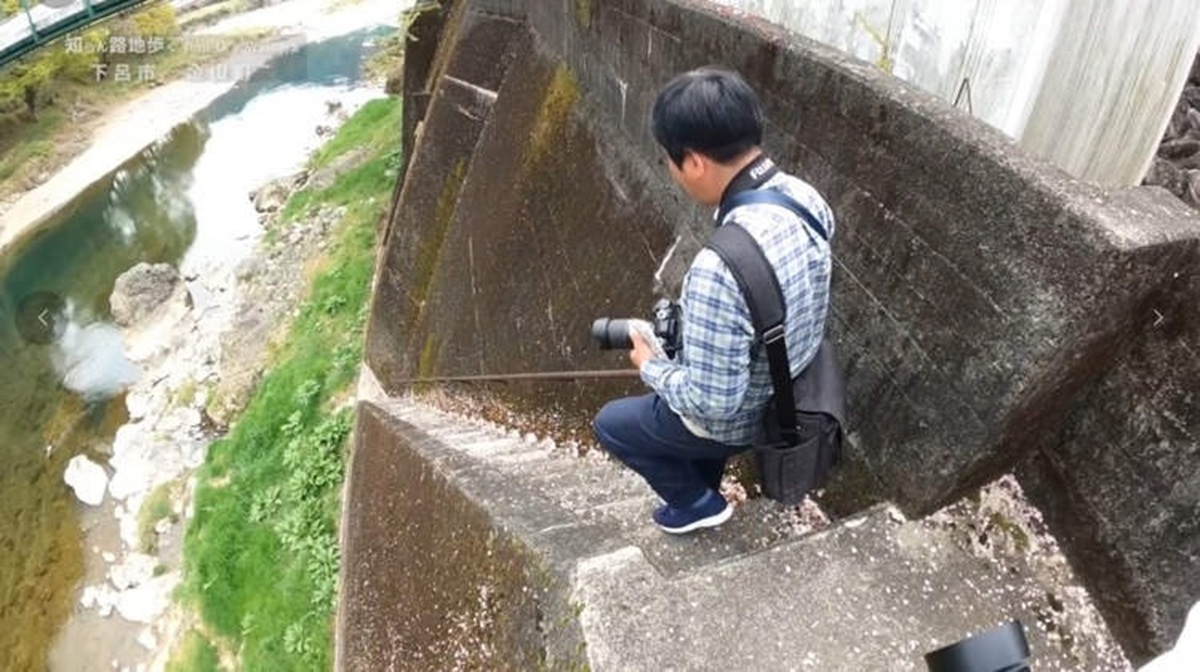
Carved Into a 10-Meter High Embankment in the Kanayamacho District of Gero, the Staircase Built in the Early 1960s Has Returned to the Center of Debate After Going Viral on Social Media, Raising Concerns About Safety, Project Origin, and Real Accident Risks
The so-called “scariest staircase” in Japan, carved into a 10-meter embankment in the Kanayamacho district of Gero, gained attention on social media after recent photos, raising alerts about safety, the project’s origin in the 1960s, and real usage risks.
Origin of the Structure and Historical Context
The staircase dates back to the early 1960s, a period when local authorities built a concrete embankment to protect the Kanayamacho district from recurring floods. The work altered access to the Maze River.
After the embankment’s completion, residents complained about the difficulty of reaching the banks of the Maze River to fish. In response, the staircase was later added as a solution for direct access.
-
He started running at 66 years old, broke records at 82, and is now a subject of study for having a metabolic age comparable to that of a 20-year-old, in a case that is intriguing scientists and inspiring the world.

-
Oldest tree on the planet reappears after 130 years of searches: Wattieza, 385 million years old, was 10 meters tall and had no leaves or seeds; Gilboa fossils in New York solved the mystery in 2007.

-
A 48-square-meter house assembled in hours with 4,000 bricks made of recycled plastic that does not absorb moisture, has natural thermal insulation, and costs less than 90,000 reais in a complete kit.

-
Luciano Hang revealed that Havan’s air fleet has already accumulated more than 20,000 landings, 10,000 flight hours, and 6 million kilometers traveled, and he says that without the planes, the company would never have grown so quickly.


Technical Features and Unusual Slope
From certain angles, the staircase appears almost vertical. The steps are extremely narrow, making it difficult to support one’s feet, and there is only one rusty railing available for support during ascent or descent.
The steep slope results from a 1:1 ratio between tread and riser, different from the more common 2:1 standard. There has been no official explanation released for this design choice.
Possible Economic Motivation for the Project
Although the authorities have not presented a formal justification, it is believed that adopting this ratio was an attempt to minimize costs during the construction of the staircase on the embankment.
This technical decision resulted in a functional structure, but with clear safety limitations, especially when viewed from angles that accentuate its almost vertical appearance and difficulty of traversal.
Risks, Online Circulation, and Official Position
Photos and videos of the staircase have been circulating for weeks, but the Gero tourism association avoids promoting it as an attraction due to the risk of injuries, especially during the descent down the steps.
According to a spokesperson quoted by Mainichi Shimbun, it cannot be stated that the staircase is safe, and visitors must assume responsibility for potential accidents.
Descending the staircase is considered even more dangerous than ascending. The dizzying incline, narrow steps, and presence of moss significantly increase the risk of slips and falls.








-

Uma pessoa reagiu a isso.