





 Portuguese
  English
  Spanish
  4 min of reading
  6 comments


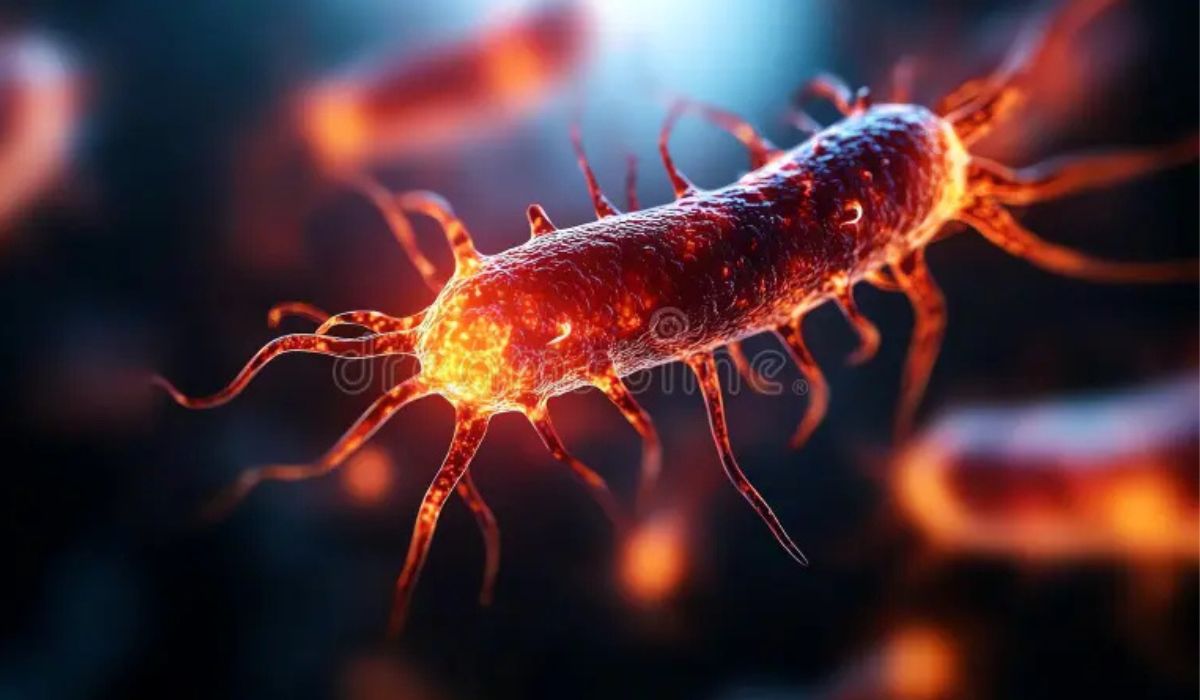


Researchers have identified a bacterial protein that responds to ultraviolet light by generating electric current, without chemical additives or metals, in laboratory tests, opening new avenues for research in bioelectronics and human-compatible sensors.
Researchers from the Institute of Nanoscience and Technology (INST), in Mohali, India, have identified that a bacterial-origin protein can generate electric current when exposed to ultraviolet light, without the need for dyes, metals, or an external energy source in the experiment.
The finding was described in a scientific study and announced by the country’s Ministry of Science and Technology, highlighting potential applications in wearable and implantable sensors.
-
With a cost per shot close to zero, the DragonFire laser could change naval warfare in 2027 and provide British ships with nearly unlimited defense against drones.

-
A British startup creates tires that generate electricity in electric vehicles when passing over potholes, speed bumps, and cracks.

-
Scientists have created robots made with living cells that have their own nervous system, swim on their own, explore the environment, and self-organize without any genetic engineering, and now they want to do the same with human cells.

-
Students create a solar-powered ambulance that operates without a plug, without fuel, and still keeps medical equipment running in remote areas.


Although the discovery has been simplified in reports, the study does not describe a bacterium that produces electricity autonomously in the environment.
What scientists observed was the electrical behavior of films formed by bacterial proteins, which, when organized into specific structures, respond to light by generating a detectable electrical signal.
Nanoscience Research Reveals Unexpected Electrical Behavior
During the research, scientists were analyzing structural proteins known for their ability to self-organize into microscopic layers.
These proteins, found in the so-called “shell” of bacterial microcompartments, form highly ordered surfaces, with internal patterns that influence the movement of electric charges.
When subjected to ultraviolet light, the researchers measured the emergence of electric current along the surface of the material.
According to the official study description, the effect occurred without the addition of external chemical substances and without complex industrial processes, such as high temperatures or the deposition of conductive metals.
The results were published in the scientific journal Chemical Science, from the Royal Society of Chemistry.
In the article, the authors report electrical measurements and structural analyses supporting the semiconductor behavior of these proteins under controlled laboratory conditions.

How Ultraviolet Light Activates Bacterial Protein
The explanation provided by the researchers relates to the chemical composition of the analyzed proteins.
They contain tyrosine, an amino acid that can release electrons when stimulated by light.
When the protein is organized into an appropriate structure, these electrons can move along the film’s surface.
In a statement, the team explained that the coordinated movement of electrons and protons results in the generation of an electrical signal, comparable, in functional terms, to the basic principle of a solar cell on a microscopic scale.
According to the scientists, the effect directly depends on the internal organization of the protein and not on synthetic additives.
The study emphasizes that this behavior was not observed in proteins lacking the same level of structural organization.
This indicates that the phenomenon is not just in the presence of tyrosine, but in how the molecules are arranged in the material analyzed.

Bacterial Protein and New Approaches in Bioelectronics
According to the authors, a central point of the work is to demonstrate that biological materials can exhibit intrinsic semiconductor properties, provided they are organized in a specific manner.
Compared to other bioelectronic systems described in the literature, the studied material does not require photoactive dyes or artificial structures to induce an electrical response.
The official announcement of the study also mentions that these proteins can self-organize, which, in theory, could reduce manufacturing steps in future devices.
However, this possibility is presented as a research perspective, not as a validated industrial process.
Applications in Medical Sensors and Wearable Devices
The applications mentioned by the researchers appear as potential future uses, still dependent on further testing.
Examples cited include implantable medical sensors, wearable devices for monitoring biological signals, and stickers capable of detecting ultraviolet radiation on the skin.
According to the institutional communication, the interest in these uses is related to the biological nature of the material, which could be more compatible with human tissues than some conventional electronic components.
Still, the authors themselves emphasize that the transition from laboratory to practical applications requires additional studies on stability, safety, and performance.
Also mentioned, in an exploratory manner, are temporary or disposable environmental sensors, which could degrade after use.
The study, however, does not present specific tests on biodegradation in real environments nor on the durability of the material outside the described experimental conditions.
Limits and Scope of Scientific Results
When the research is described as “wireless” or “chemical-free,” the statement refers to the fact that the analyzed material generates electric signal under ultraviolet light without external chemical additives.
This does not eliminate the need for additional electronic components to capture, process, or transmit this signal in a functional device.
The researchers themselves indicate that the work is in its early stages and that medical or commercial applications would depend on significant adaptations, such as integration with conventional electronic systems and evaluation of functionality under different lighting conditions.
In this context, the study broadens knowledge about bioelectronic materials and points to new research possibilities, without indicating timelines or ready products.






Da para comprar a bactéria? Respondam e 1mes
Em caso de um paralítico, poderia haver melhoras em atividades, porém teria sempre fibromialgia.
Está bactéria causa dor muscular e AVC.Nada a combate no plasma. Surgiu como infecção hospitalar.