





 Portuguese
  English
  Spanish
  3 min of reading
  5 comments


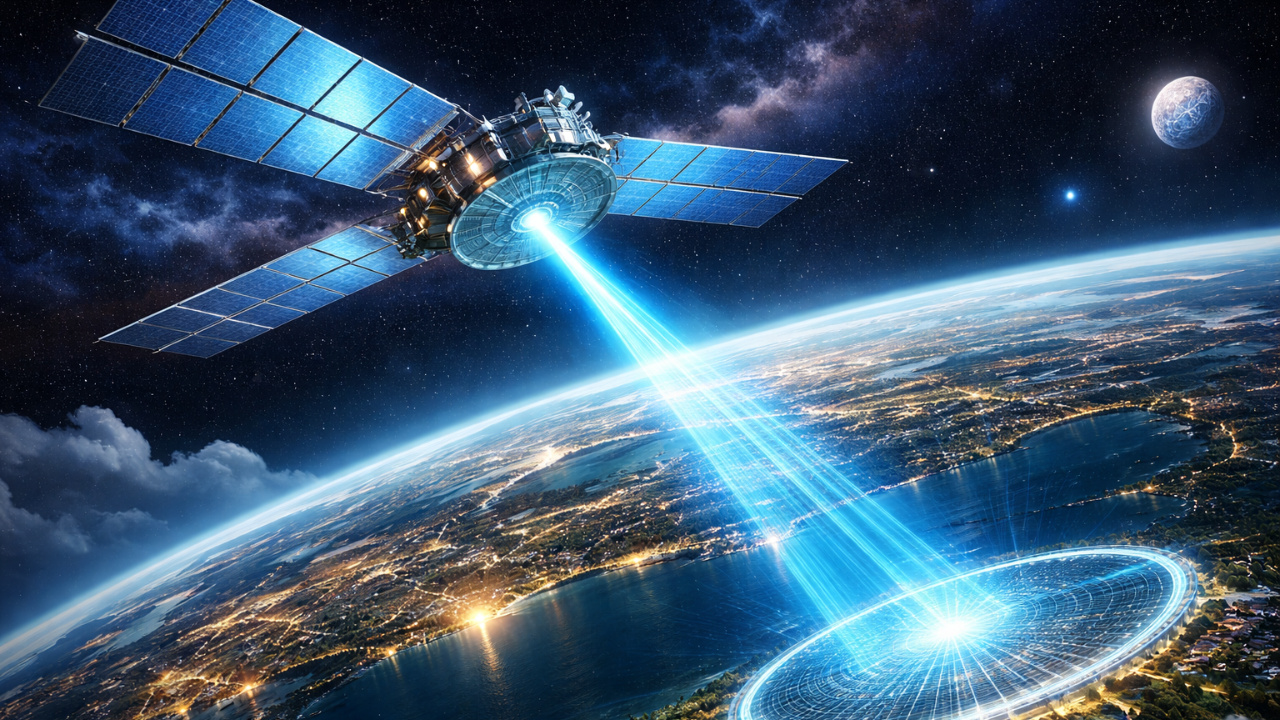


Japanese Space Solar Energy Project Aims to Transmit Electricity from Space to Earth and May Change the Future of Clean Energy Worldwide.
The race for solar energy has just taken on a new and bold chapter. Japan is preparing to attempt something no other country has achieved so far: generating electricity in space and sending it directly to Earth.
The plan involves a satellite called OHISAMA, which is scheduled for launch in fiscal year 2026.
If all goes well, the project could change the way the world produces and consumes clean energy.
-
Seagri’s headquarters invests in solar energy with Neoenergia Coelba and promises to cut electricity costs, highlighting a strategic advance in sustainability and energy efficiency within state public administration.

-
Solar Pyramid draws attention by converting solar energy into million-dollar savings and repositioning the City Hall of Curitiba as an example of innovation, sustainability, and intelligent use of public resources.
-
Europe records strong euro economy with solar energy in March and sparks curiosity about which country leads growth that redefines the energy market and reduces costs.

-
Piauí reaches a historic milestone in energy transition: State records nearly 160,000 households powered by solar energy and leads growth in the Northeast.

This comes at a time when the search for more stable and less polluting sources is intensifying.
OHISAMA Satellite Aims to Convert Sunlight into Electricity
OHISAMA will be the first satellite in the world to attempt to provide usable solar energy to a location on Earth. Unlike previous tests that only detected weak signals, the goal now is to transmit real energy capable of being converted into electricity.
The satellite will travel aboard the Kairos 5 rocket from the Japanese company Space One. In space, it will capture sunlight, convert it into electricity, and then send it wirelessly to a ground station.
The energy will be transmitted primarily through microwaves. In some cases, lasers may also be used. When the signal reaches Earth, it will be converted back into electricity and sent to the grid.
Space Solar Energy Overcomes Climate Limitations
Space solar energy, or SBSP, aims to solve problems that affect traditional solar energy. On Earth, clouds, rain, and the day-night cycle reduce production. In space, this does not occur.
The panels in orbit receive sunlight almost all the time. Moreover, the power can be adjusted and directed to specific regions, which is useful during disasters or consumption peaks.
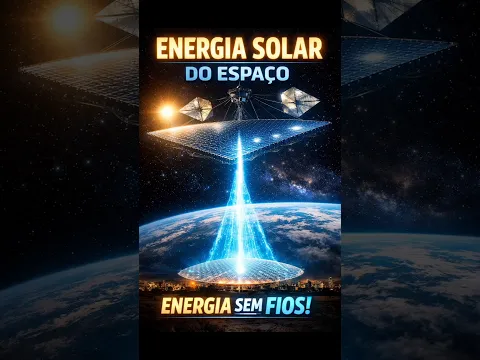

Therefore, the Japanese government considers SBSP a long-term strategic goal within its energy plan.
A model developed by Japan Space Systems envisions impressive structures. The solar panels in orbit would cover 2.5 square kilometers and would be located about 36,000 kilometers from Earth.
The energy would be sent to a ground antenna about 4 kilometers in diameter. According to the project, a single unit could generate 1 gigawatt, enough to meet more than 10% of Tokyo’s annual electricity consumption.
This would elevate space solar energy to another level.
Japan Leads Wireless Transmission Technology
The biggest challenge is to keep the microwave beam focused. To achieve this, the system uses a pilot signal sent from Earth. The satellite adjusts the beam based on this signal.
Japan has been investing in this since the 1980s. Over the decades, it has developed integrated panels, precise beam control, and more efficient energy conversion.
“From a technological standpoint, Japan is a world leader in this area,” said Hiroki Yanagawa from J-spacesystems.
The United States, China, and Europe are also accelerating SBSP projects. The American military is even testing its own satellites.
In 2023, the California Institute of Technology managed to transmit energy in space, but not in a useful volume.
If OHISAMA succeeds in generating real electricity, it will be an unprecedented achievement.
Still, success depends on the Kairos rocket. After two failed launches, the next flight is scheduled for February 25.
“Although foreign rockets were an option, we chose Kairos in accordance with national policy supporting the launch capabilities of the Japanese private sector.”









Old news son. The Museum of the Future in Dubai has a whole scenario set up to show solar collectors on the moon surface with hi intensity laser from the moon to the earth. A solid safe platform showing how we could be powered in the future. I admit, it’s amazing.
Y si el haz de microondas se desvía o lo desvían, qué pasa con lo que recibe las microondas.
No va directo a ninguna persona. Va a un colector que luego lo transforma en electricidad y lo suministra a través de la red eléctrica.
El satélite no puede estar ubicado a 36 kilómetros de la Tierra