





 Portuguese
  English
  Spanish
  5 min of reading
  2 comments


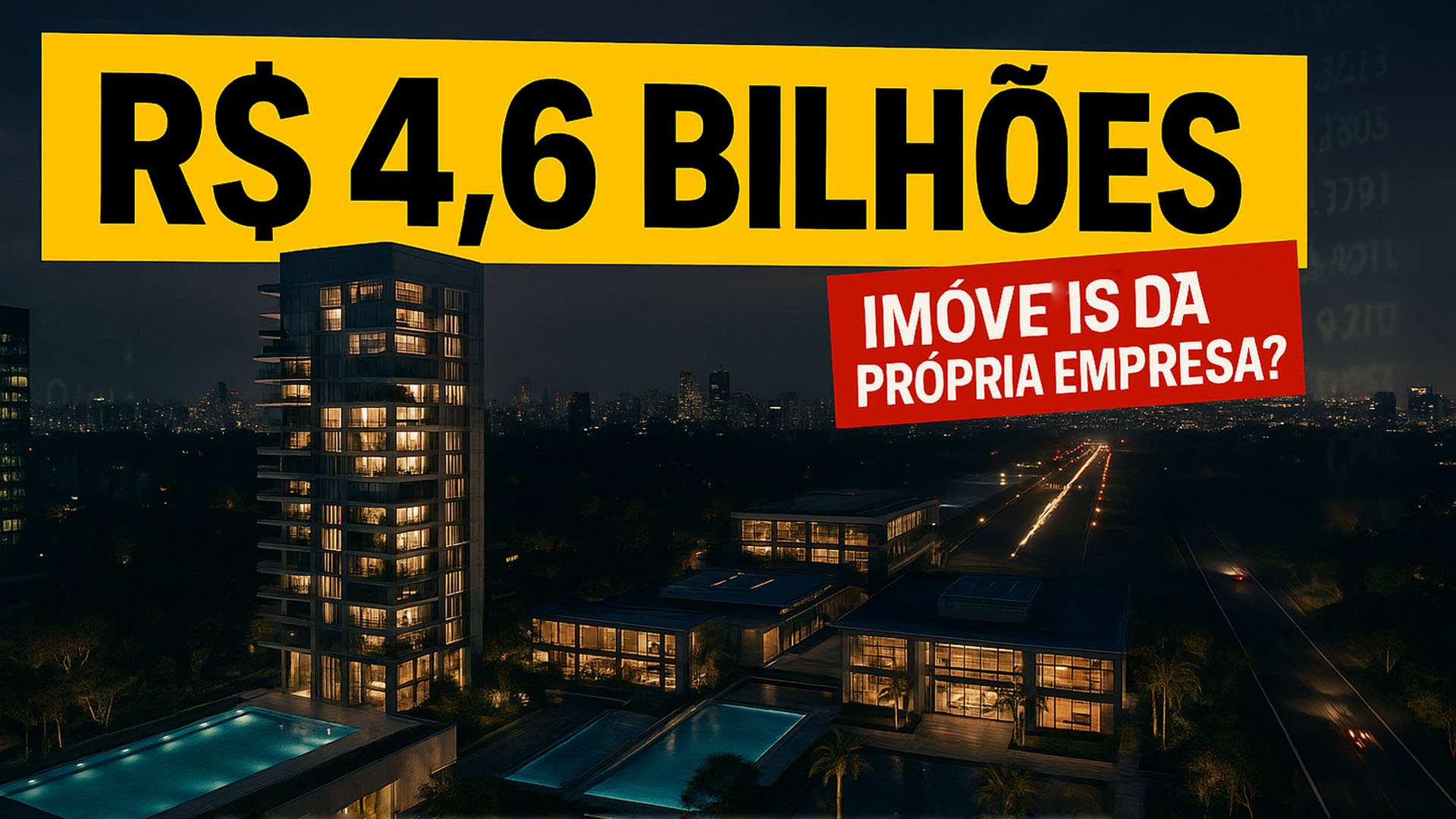

Luxury Company Signs Agreement to Create Investment Vehicle to Market Its Own Assets, in Pioneering Move in the Brazilian Market
JHSF Participações (JHSF3) announced a strategic move that promises to shake up the Brazilian real estate market: the structuring of a investment vehicle worth R$ 4.6 billion for the buying and selling of stocks, lots, and real estate products of the company itself. The amount is even more impressive as it exceeds the company’s market value on the Stock Exchange, which is valued at R$ 3.8 billion.
The operation has firm backing from national and international investors, as well as support from major banks that are underwriting the offer. According to information disclosed by the company in a material fact, this is the largest public offering of a real estate investment vehicle ever made in the Brazilian capital markets.
The announcement prompted an immediate reaction in the financial market. JHSF3 shares soared more than 10% on B3 the day after the disclosure, reflecting the investors’ optimism with the new strategy. By the end of 2025, the shares had already recorded a value increase of over 68% even before the operation.
-
The government requests the Federal Revenue Service for a new system to automate the income tax declaration, reducing errors, time, and bureaucracy for millions of Brazilians.

-
Pix in installments, international Pix, and contactless payment without internet: the Central Bank revealed the new features coming to the tool that is already used by almost every adult in Brazil.

-
Mercado Livre has just started selling medications with delivery in up to three hours to your door, and this move could completely change the way Brazilians buy medicines on a daily basis.

-
In Dubai, rising tensions from the war in the Middle East are causing super-rich individuals to leave the Gulf and direct their fortunes to a new financial refuge in Asia.


Luxury Developments Comprise Billion-Dollar Portfolio
The vehicle will primarily focus on the commercialization of finished and developing assets in the Cidade Jardim and Boa Vista complexes, two of the most exclusive developments in the country. Included projects are Boa Vista Estates, Boa Vista Village, Reserva Cidade Jardim, São Paulo Surf Club Residences (phase 1), and Fazenda Santa Helena (phase 1).
The Reserva Cidade Jardim, for example, occupies a 20,000 m² plot in São Paulo and offers units ranging from 455 m² to 1,300 m², featuring designs by renowned architects such as Sig Bergamin, Murilo Lomas, and Pablo Slemenson. The São Paulo Surf Club stands out for including a wave pool for surfing, in addition to high-standard apartments.
According to market information, JHSF’s land bank reached about R$ 38 billion in Potential General Sales Value by 2025, demonstrating the size of the company’s portfolio and its future expansion possibilities.
Strategy Aims to Modernize Capital Structure
JHSF made it clear that the operation represents a strategic milestone for the company. According to the relevant fact disclosed, the conclusion of the transaction will bring a more dynamic and modern capital structure, allowing current and future real estate development projects to be conducted together with investors’ capital.
The model chosen by JHSF was considered more efficient than a spin-off of the development division, which had been studied by the company. According to NeoFeed’s investigation, the company concluded that the investment vehicle would be the best path, preserving operational integration between the development and recurring income areas.
The company will remain responsible for the development of all projects included in the operation, maintaining control over execution and quality of the developments. This decision aims to preserve the standards of excellence that characterize JHSF’s portfolio.
Financial Impact Could Be Transformative
The numbers reveal the transformative potential of the operation for JHSF’s financial health. In June 2025, the company had a net debt of R$ 1.6 billion, equivalent to 1.8 times its operating profit (Ebitda). With the influx of resources from the investment vehicle, the company will have more cash on hand than debt.
In the second quarter of 2025, JHSF reported a consolidated net profit of R$ 245.8 million, a 45.6% increase compared to the same period the previous year. The results demonstrate the company’s positive moment, particularly boosted by the recurring income area.
It is expected that the transaction will be completed by the end of 2025, allowing the resources to enter the balance sheet in the fourth quarter. This will represent a significant liquidity injection for the company, enabling it to broaden its investments in new projects.
Luxury Market Resists Selic Rate Hike
Despite the Selic rate at 15% per year reducing the attractiveness of offers in the real estate sector in 2024, JHSF moved forward with the project due to firm demand from investors and the resilience of assets classified as “premium,” as reported by specialized publications.
The operation follows practices adopted in the international market, bringing JHSF closer to the standard of real estate funds aimed at buying and selling developments. The relevant fact does not mention the creation of a real estate investment fund (FII), although transactions with these characteristics are often structured in this way.
It is worth noting that the strategy of financing investments with third-party resources is not new to JHSF. The company already has JHSF Capital, a management company with 12 active funds and R$ 2.7 billion in assets under management. Generally, the funds managed by JHSF Capital are single-asset, such as JHSF Capital Cidade Jardim (JCCJ11), which owns only the Cidade Jardim shopping mall.
Recurring Income Remains a Protagonist
While the operation focuses on development assets, JHSF’s recurring income arm continues to be the main financial highlight. This area includes shopping malls, hospitality, gastronomy, JHSF Residences, and Clubs, as well as São Paulo Catarina International Executive Airport.
The recurring income developments were excluded from the investment vehicle. According to market sources, the company identified a greater interest from investors in real estate development businesses, where there is an expectation of appreciation and profit from sales over the years.
Currently, the recurring income division generates approximately 60% of total revenue and 75% of Ebitda for the group, establishing itself as the main driver of JHSF’s results. The company anticipates expansions that could significantly increase its gross leasable area in the coming years.
And you, what do you think about this JHSF strategy? Does this billion-dollar operation really show that the company is worth more than the market prices, or is it a risky maneuver amid rising interest rates? Could this move set a precedent for other developers to follow the same path? Share your opinion in the comments.









Your passion for your subject matter shines through in every post. It’s clear that you genuinely care about sharing knowledge and making a positive impact on your readers. Kudos to you!
I loved as much as youll receive carried out right here The sketch is tasteful your authored material stylish nonetheless you command get bought an nervousness over that you wish be delivering the following unwell unquestionably come more formerly again since exactly the same nearly a lot often inside case you shield this hike