





 Portuguese
  English
  Spanish
  4 min of reading
  0 comments


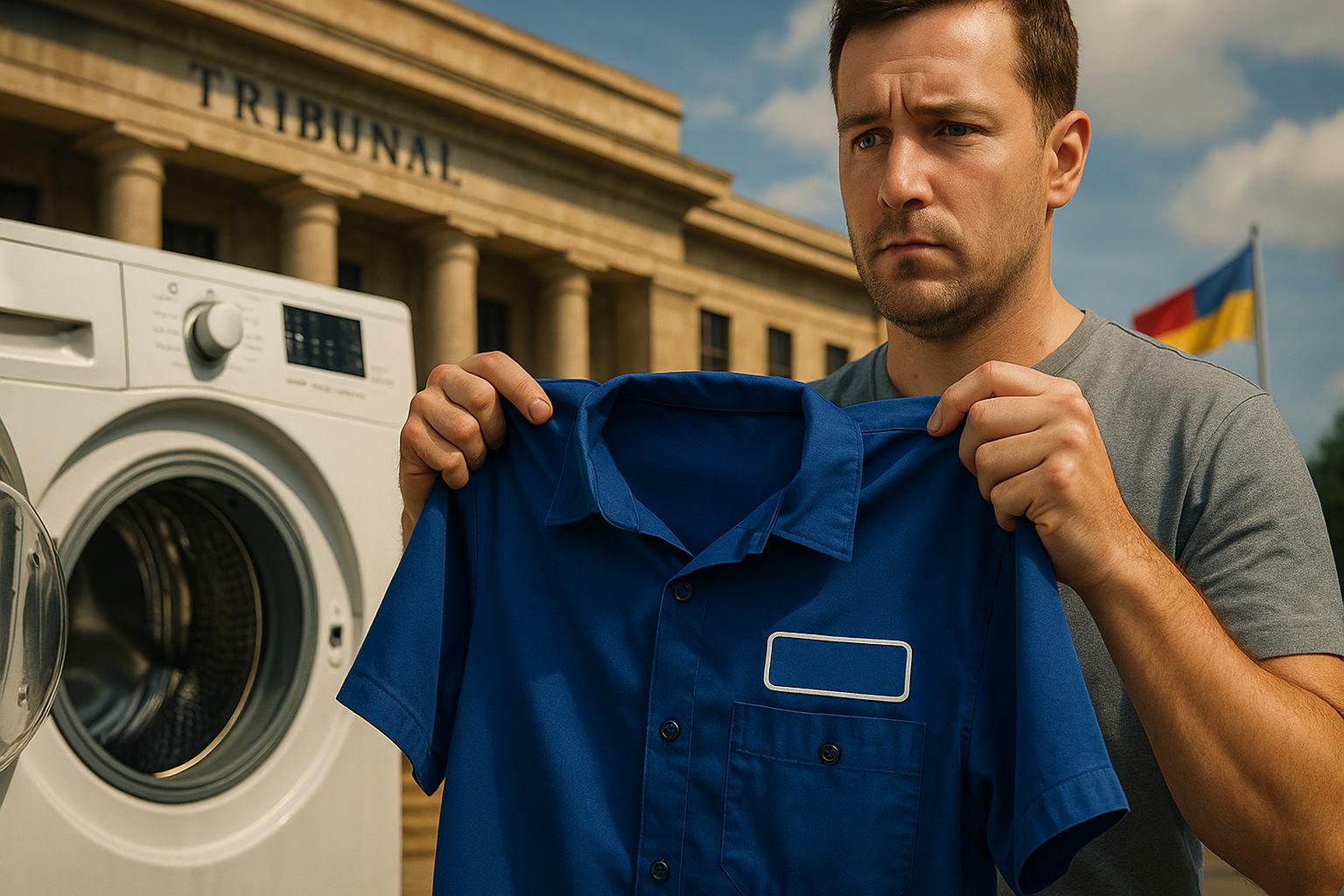
Companies That Require Uniforms With Logos Must Cover Laundry Costs. Justice Understands That Transferring The Expense To Workers Generates Compensation.
The use of uniforms is a consolidated practice in Brazilian companies across different sectors: industry, commerce, health, food, and services. In many cases, it is not merely a formality, but a demand for standardization, hygiene, and visual identity. However, a little-discussed question arises: who pays for the cleaning of this uniform? If the employer requires the use of standardized clothes, with specific colors or logos, Labor Justice has reiterated that the maintenance cost cannot be passed on to the worker.
This interpretation stems from Article 2 of the CLT, which defines that the risks of economic activity are the company’s responsibility. In other words, if the uniform is necessary for the activity, its maintenance is part of the operational cost.
The Logic of “Activity Risk”
The concept of activity risk is central in Labor Law. It determines that all costs necessary for the operation of the business — from machinery to electricity — belong to the employer.
-
Government enacts new law: paternity leave increases from 5 to 20 days with gradual increases until 2029, and Social Security pays the paternity salary; companies no longer bear the absence cost, estimated at R$ 5.4 billion.

-
End of the 1-hour lunch break in the CLT? Current labor law maintains the break, allows for negotiated reductions, and defines rules for working hours and home office in Brazil.

-
Employee Fired After Accumulating 114 Days of Medical Leave in One Year, Labor Court Upholds Company’s Decision

-
Employee Fired While Treating Depression Wins in Court and Vale Is Required to Rehire Him Following Decision Based on the CLT and INSS Benefits


The same reasoning applies to uniforms:
- When the clothing can be washed like any regular piece of clothing, there is no obligation for reimbursement.
- But when there is a logo, specific color, or requirement for specialized cleaning, the employer’s responsibility is established.
Case law reinforces that cleaning is a business burden, especially in activities that require extra care, such as restaurants, hospitals, or supermarkets.
Case Law: How Courts Have Decided
The topic has been analyzed in various rulings in Brazil:
- The TST has recognized in several decisions that transferring laundry costs to the worker constitutes unjust enrichment of the company.
- In 2021, the TRT of the 2nd Region (SP) condemned a restaurant chain to reimburse employees who had to wash uniforms daily due to contact with food.
- In 2023, the TRT of the 3rd Region (MG) decided that a supermarket chain should compensate employees who were required to wash uniforms with logos and special fabrics, understanding that the cost could not be transferred.
- On the other hand, the TRT of the 4th Region (RS) decided that when the uniform is simple and can be washed with regular clothes, the company has no obligation to pay for cleaning.
These cases show that the analysis is case-specific: it depends on the type of uniform and the level of requirement imposed by the employer.
Economic Impact for Workers and Companies
From the worker’s perspective, the obligation to keep the uniform clean can represent significant expenditure.
In some sectors, such as health and food, clothing needs to be washed daily to comply with hygiene standards, generating monthly costs with water, electricity, and cleaning products.
For companies, non-compliance can lead to significant penalties:
- Retroactive reimbursement of employee expenses;
- Compensations for moral damages in cases of abusive charging;
- Class actions filed by unions or the Labor Public Ministry.
Large companies are already opting to offer third-party laundry services or cleaning vouchers to avoid lawsuits and strengthen institutional image.
Rights Ensured By The CLT And Collective Agreements
The CLT does not directly address the washing of uniforms, but Article 2 and the principle of activity risk are the basis for the penalties. Additionally, in many sectors, collective agreements already foresee specific clauses requiring the employer to bear these costs.
In hospitals, for instance, the uniform is considered PPE (personal protective equipment) in certain functions. In this case, there is no doubt: it is the company’s obligation to maintain and clean, as it involves the health and safety of the worker.
Experts Reinforce Protection For Workers
Labor lawyer Ana Paula Pellegrina Lockmann explains: “Uniforms with logos are marketing tools for the company. It is unreasonable to require the worker to pay to keep the employer’s advertisement in proper conditions.”
Labor Law professor Maurício Godinho Delgado states: “The protective principle of Labor Law seeks to balance the relationship. The risk of the activity belongs to the employer. This undoubtedly includes the costs of mandatory uniforms.”
Examples of Million-Dollar Judgments
Large fast-food chains and supermarkets have already been the target of class actions where hundreds of employees claimed reimbursement for laundry expenses.
In these situations, individual amounts may seem small, but multiplied by years of contract and thousands of employees, they resulted in million-dollar compensations.
This risk explains why many companies today prefer to absorb the cost preventively.
Uniform Is The Company’s Identity, Not The Worker’s Cost
The message from the courts is clear: if the uniform carries the company’s identity, the cost of keeping it clean must also be theirs.
Transferring the expense to the employee violates the principle of activity risk and paves the way for penalties.
For the worker, knowing this right is essential to avoid silent losses in the budget. For companies, it is a warning that the cost of a poorly managed uniform can turn into a significant labor liability.









-

Uma pessoa reagiu a isso.