





 Portuguese
  English
  Spanish
  6 min of reading
  0 comments


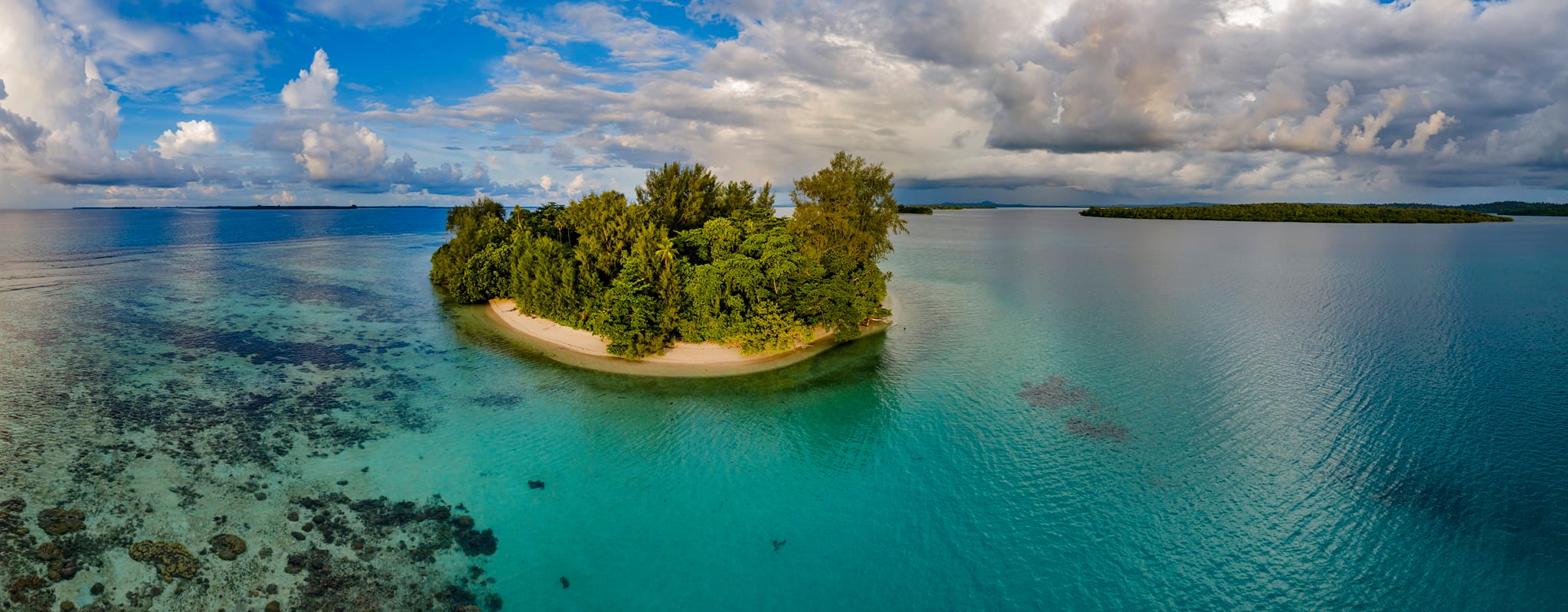
Kitava Island in the Pacific Draws Medical Attention for Low Cardiovascular Rates and a Traditional Diet Based on Whole Foods and Active Routines.
Few people know, but in a small archipelago of Papua New Guinea, there is a population that has become the subject of study for cardiologists, nutritionists, and anthropologists. In Kitava, one of the Trobriand Islands, researchers have observed over decades a rare phenomenon in industrialized societies: extremely low rates of cardiovascular diseases, absence of diabetes reported in local surveys, and a dietary pattern that contradicts many popular ideas about metabolic health. What intrigues science even more is that this population consumes a large portion of its energy in the form of carbohydrates from roots, fruits, and tubers.
Although discussions about diet can lead to oversimplifications or trends, the case of Kitava is studied precisely for the opposite: there exists an ecological, cultural, and metabolic context that cannot be artificially replicated in modern cities. This makes the island an interesting scenario to understand how health, environment, diet, physical activity, and lifestyle interact.
Kitava, Location and the Context of the Trobriand Islands
Kitava is part of the Trobriand Islands in Melanesia, a region of the Pacific known for agriculture based on tubers, horticulture, and artisanal fishing.
-
Friends have been building a small “town” for 30 years to grow old together, with compact houses, a common area, nature surrounding it, and a collective life project designed for friendship, coexistence, and simplicity.

-
This small town in Germany created its own currency 24 years ago, today it circulates millions per year, is accepted in over 300 stores, and the German government allowed all of this to happen under one condition.

-
Curitiba is shrinking and is expected to lose 97,000 residents by 2050, while inland cities in Paraná such as Sarandi, Araucária, and Toledo are experiencing accelerated growth that is changing the entire state’s map.

-
Tourists were poisoned on Everest in a million-dollar fraud scheme involving helicopters that diverted over $19 million and shocked international authorities.


The population lives in villages and relies on locally sourced food, cultivated or harvested directly from the environment. There is no significant industrial production, and monetary income is limited, which helps keep the diet and social structure relatively preserved.


Swedish and Australian researchers studied Kitava mainly in the 1980s and 1990s, when dietary and epidemiological patterns were even less affected by imported products. The surveys collected data on mortality, health status, food consumption, and demographic structure.
What caught attention was the rarity of reports of diseases that are common in urban countries, such as acute myocardial infarction, stroke, and type 2 diabetes.
This scenario does not mean that the population “does not get sick,” but that the disease profile is very different from what is found in modern societies. For example, infections, parasitic diseases, and work-related injuries remain present, as in many rural areas around the globe.
Ancestral Diet, Carbohydrates, and Whole Foods
One of the most interesting findings from studies conducted in Kitava is that most of the energy consumed comes from plant-based carbohydrates.
The menu includes cassava, yam, taro, sweet potato, banana, coconut, various fruits, and coastal fish. These foods are not industrially processed, do not undergo refinement, and do not contain additives like preservatives or hydrogenated vegetable oils.

Although it seems simple, this dietary pattern includes important factors from a medical perspective:
- variety of fibers,
- presence of micronutrients and potassium,
- significant water content,
- extremely low industrial sodium content,
- absence of refined sugars,
- absence of ultra-processed flours.
The debate begins when it is observed that, contrary to what many Western dietary trends defend, this population consumes a significant volume of carbohydrates without showing elevated rates of cardiovascular diseases.
This suggests that human metabolism does not depend solely on isolated macronutrients, but on the total context: quality of food, energy expenditure, environment, lifestyle, absence of smoking, and minimal presence of ultra-processed foods.
The researchers who visited the island also reported that fat consumption exists, but mainly comes from coconut and fish, which includes both unsaturated and saturated fatty acids from natural sources. By the time of the study, there were no significant records of industrial oils in the diet.
Physical Activity, Daily Routines, and Energy Expenditure
A characteristic often observed in Kitava is physical activity not as “exercise,” but as part of social organization. Agricultural work, gathering, fishing, and natural mobility generate energy expenditure distributed throughout the day, without long periods of sedentarism.
This affects parameters such as insulin sensitivity, body composition, and blood circulation. It is not about structured workouts, but a way of life where movement is continuous. Modern science has increasingly discussed the role of this “incidental movement” in metabolic health, something difficult to replicate artificially in urban environments.
Another relevant point is the almost total absence of industrial smoking during the survey periods. Since tobacco is one of the main cardiovascular risk factors, this data is not trivial.
Cardiovascular Diseases, Mortality, and Diabetes
Researchers found that the inhabitants of Kitava showed no signs of severe atherosclerosis or documented cases of myocardial infarction. Reports of mortality did not include cardiovascular events typical of industrialized societies, and clinical exams suggested favorable blood pressure and blood sugar profiles.
Type 2 diabetes, which is associated with multiple factors such as ultra-processed diets, sedentary lifestyles, and smoking, was not observed in the epidemiological surveys. It is important to emphasize that documented absence does not mean biological impossibility, but points to an extremely low prevalence during the analyzed period.
What makes the case even more interesting is that the age profile included individuals over 60 and 70 years old, suggesting that cardiovascular protection was not limited to just the younger individuals. However, experts emphasize that the data is historical and does not necessarily reflect the current situation, as contact with imported foods tends to increase over time.
What Is Known and What Is Still Not Possible to Conclude
Even with solid research, Kitava has not become a “universal model.” The scientific community itself warns of the risk of simplistic extrapolations. Among the recognized limitations are:
small population samples,
epidemiological data limited to specific decades,
absence of structured hospital systems for detailed diagnosis,
influence of cultural factors that are difficult to measure.
There is no consensus on the exact weight of each variable—diet, physical activity, genetics, environment, or interactions among them. Moreover, public health experts warn that traditional populations face other challenges, such as lack of sanitation infrastructure, limited access to medical care, and exposure to infectious diseases.
What the island offers to science is not a “recipe” for health, but a clue: the human body responds to specific environments in a complex manner, and modern epidemiology needs to consider not only isolated foods but entire systems.
Environment, Culture, and Preventive Medicine
Kitava shows that population health does not rely solely on medications, clinics, and gyms, but on ecological and social arrangements that involve natural food, low industrial interference, daily mobility, and a direct relationship with the territory.
For preventive medicine, this case fuels a larger debate: how much of modern illness is associated not only with what we eat but with what we fail to do, what we process industrially, and how we organize our daily lives?
What Kitava reminds us is that human beings evolved in environments very different from modern cities. And that, although it is not possible to reproduce that context on a large scale, understanding its mechanisms can help researchers interpret why diseases like diabetes and cardiovascular events have become so prevalent in recent decades.
The question that remains is both scientific and social: by radically transforming our food environment and our lifestyle rhythm, what has modernity gained and what has it lost in terms of population health?








-

2 pessoas reagiram a isso.