





 Portuguese
  English
  Spanish
  4 min of reading
  0 comments


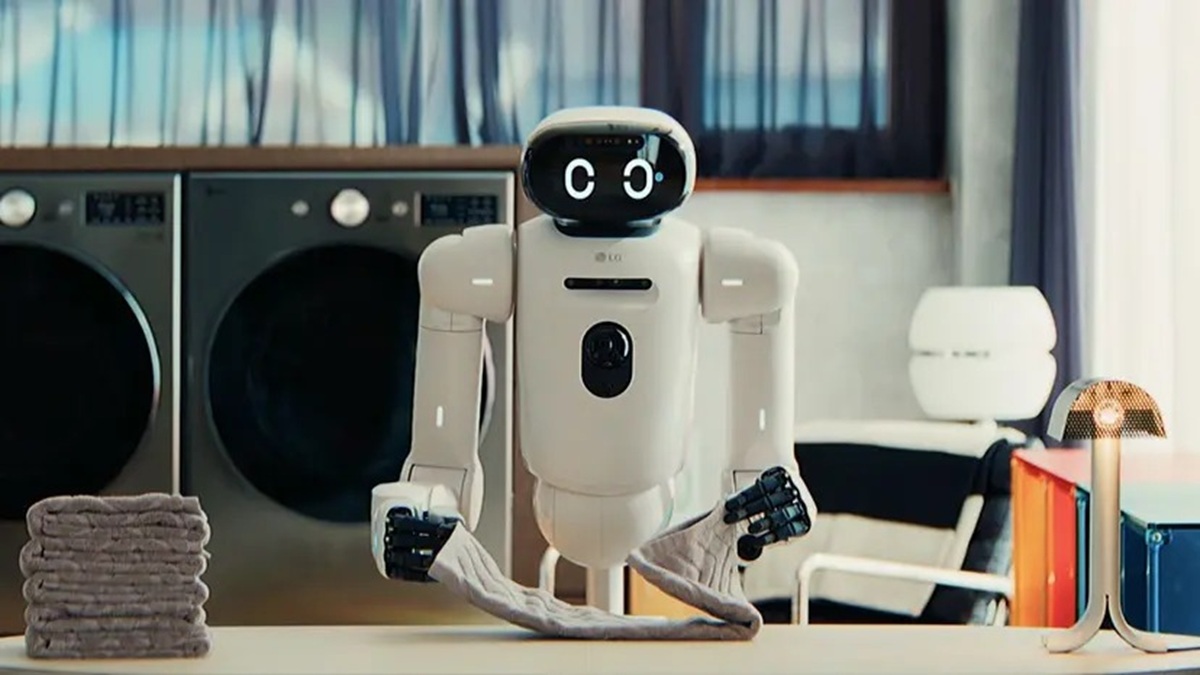
Presented by LG Electronics at CES 2026, the LG CLOiD humanoid robot combines artificial intelligence, autonomous mobility, and integration with connected appliances to perform tasks like preparing meals, starting wash cycles, folding clothes, and coordinating the home routine via the ThinQ platform, reinforcing the company’s home automation strategy
LG Electronics announced that it will showcase the first live demonstration of the LG CLOiD, a humanoid robot with artificial intelligence designed to perform household tasks and integrate connected appliances, materializing the company’s strategy called Work-Free Home, on January 4 at CES 2026.
Unprecedented Demonstration at CES 2026
The presentation of the LG CLOiD will mark the public debut of LG’s humanoid robot in real operation, during CES 2026, at the Las Vegas Convention Center. The event was chosen as a stage to showcase the system’s capabilities in simulated everyday household environments.
LG stated that the demonstration was planned to show how the robot integrates into the company’s smart home ecosystem. The central proposal is to highlight the coordination between CLOiD, the ThinQ platform, and the ThinQ ON hub, which are responsible for communication between devices.
-
Motorola launched the Signature with a gold seal from DxOMark, tying with the iPhone 17 Pro in camera performance, Snapdragon 8 Gen 5 that surpassed 3 million in benchmarks, and a zoom that impresses even at night.

-
Satellites reveal beneath the Sahara a giant river buried for thousands of kilometers: study shows that the largest hot desert on the planet was once traversed by a river system comparable to the largest on Earth.

-
Scientists have captured something never seen in space: newly born stars are creating gigantic rings of light a thousand times larger than the distance between the Earth and the Sun, and this changes everything we knew about stellar birth.

-
Geologists find traces of a continent that disappeared 155 million years ago after separating from Australia and reveal that it did not sink, but broke into fragments scattered across Southeast Asia.

According to the company, the robot is designed to take on routine tasks, reducing the need for direct human intervention. This initiative is part of LG’s strategic vision to automate recurring household activities using applied artificial intelligence.
Household Tasks in Multiple Environments
During CES 2026, the LG CLOiD will be presented executing tasks in different household scenarios. One of the disclosed examples includes preparing breakfast, with the robot taking milk from the fridge and placing a croissant in the oven.
Another scenario involves laundry activities, where the robot initiates wash cycles, monitors drying, and folds and stacks clothes. These actions were designed to demonstrate the humanoid’s understanding of human routines.
LG asserts that these tasks illustrate CLOiD’s ability to control connected appliances precisely. The robot also demonstrates fine motor coordination when handling everyday objects, such as utensils and clothing, in various areas of the house.
Physical Structure and Mobility of LG CLOiD
The LG CLOiD features a structure composed of a torso, head, and two articulated arms mounted on a wheeled base that allows for autonomous navigation. The torso is adjustable and can tilt to modify the robot’s operational height.
Each arm of the humanoid has seven degrees of freedom, allowing for movements similar to those of a human arm. Shoulder, elbow, and wrist can move in multiple directions and rotations, enhancing functional flexibility.
The hands have five independent fingers, enabling careful handling of various objects. This design allows CLOiD to operate in kitchens, laundry rooms, and living rooms, adapting to different surfaces and heights.
The wheeled mobility system utilizes autonomous driving technology based on LG’s robotic vacuum cleaners and the LG Q9 model. The low center of gravity is designed to increase stability and reduce the risk of tipping over, even in light collisions.
Artificial Intelligence Architecture and Interaction
The core of LG CLOiD functions as a mobile AI hub, based on a chipset that acts as the brain of the system. The robot is equipped with a screen, speaker, cameras, multiple sensors, and voice-based generative AI.
These components allow for communication through spoken language and facial expressions, enhancing interaction with human users. LG emphasizes that the combination of these features aims to make interaction more natural and functional in the home environment.
At the software level, the humanoid uses a Vision-Language Model that converts images and videos into structured understanding. Complementarily, the Vision-Language-Action model translates visual and verbal commands into coordinated physical actions.
Both models have been trained with tens of thousands of hours of data from household tasks. This training allows the robot to recognize appliances, interpret user intentions, and perform actions like opening doors or picking up objects, even with slight variations in the environment.
“The LG CLOiD home robot was designed to naturally interact and understand the humans it serves, providing an optimized level of household assistance,” said Steve Baek, president of LG Home Appliance Solution Company.
Visitors at CES 2026 will be able to see how the LG CLOiD operates at LG’s booth number 15004, where the Work-Free Home proposal will be practically presented, despite minor details still undergoing adjustments in the system.








-

2 pessoas reagiram a isso.