






 2 min of reading
  0 comments


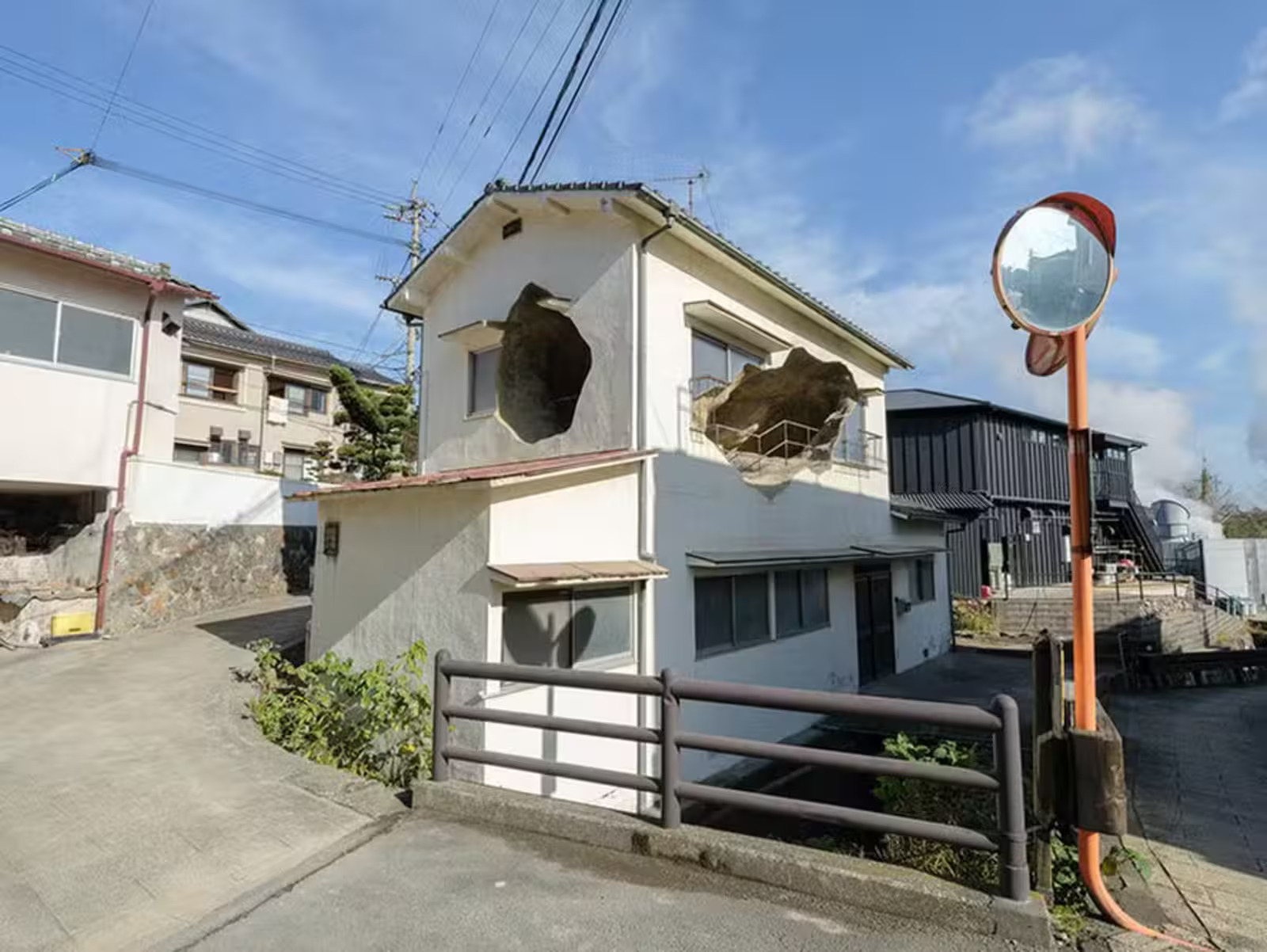
Created by the collective 目 [mé] in Kannawa, the Space II transforms a house in Beppu into an excavated environment, connecting architecture, urban landscape, and local volcanic geology.
In the geothermal district of Kannawa, in Beppu, the Japanese collective 目 [mé] created the installation Space II (2025) inside a house, transforming the property into an excavated environment, resembling a cave, to alter the perception of domestic space.
House transformed into a cave
The Space II was installed in a residence crossed by irregular voids, which gave the interior a cave-like appearance.
The intervention makes the house appear excavated from the inside out, completely changing the reading of the environment.
-
Survivor of 1966 SS Daniel J. Morrell Shipwreck in Lake Huron Recounts 38-Hour Ordeal in Extreme Cold

-
The Greatest Hoax in World Cup History? The Film That Denied Brazil’s 1958 Victory and Exposed How Fake Evidence Can Seem Convincing on TV
-
Fake South Korean Online Stores Offer Shopping Thrill Without Spending Money or Receiving Products
-
The War of Jenkins’ Ear: How a Severed Ear Sparked One of the 18th Century’s Most Unusual Conflicts


The openings have rough edges and surfaces that resemble eroded rocks and layers of volcanic origin.
In the architecture of the work, walls and floors lose defined boundaries and form a continuous space.

Original structure was removed
Instead of adding new volumes, the collective chose to remove parts of the original structure of the house.
This decision reinforces the excavated character of the project and supports the proposal to transform architecture into a sensory experience.
Discreet handrails guide the path through the interior of the installation. The circulation follows the irregular design of the voids, while the configuration of the space leads to the observation of the environment gradually.
Natural light connects interior and surroundings
Natural light enters through the fissures opened in the residence and frames fragments of the landscape of Kannawa. Roofs, streets, and residents appear from these openings, connecting the interior of the house to the urban surroundings.
The installation also reorganizes the perception of daily life by placing the external landscape within the domestic experience. Thus, the architecture proposed by the group relates the house to the surrounding city.
Geology inspired the project
The creation of Space II was guided by the geological aspect of the region, marked by intense volcanic activity over thousands of years. This process shaped the local relief and keeps the underground warm.
Beppu is known for its natural hot springs, formed when rainwater penetrates the ground, is heated by deep rocks, and returns to the surface as steam or hot water.
With information from Casa e Jardim.





Be the first to react!