





 Portuguese
  English
  Spanish
  3 min of reading
  0 comments


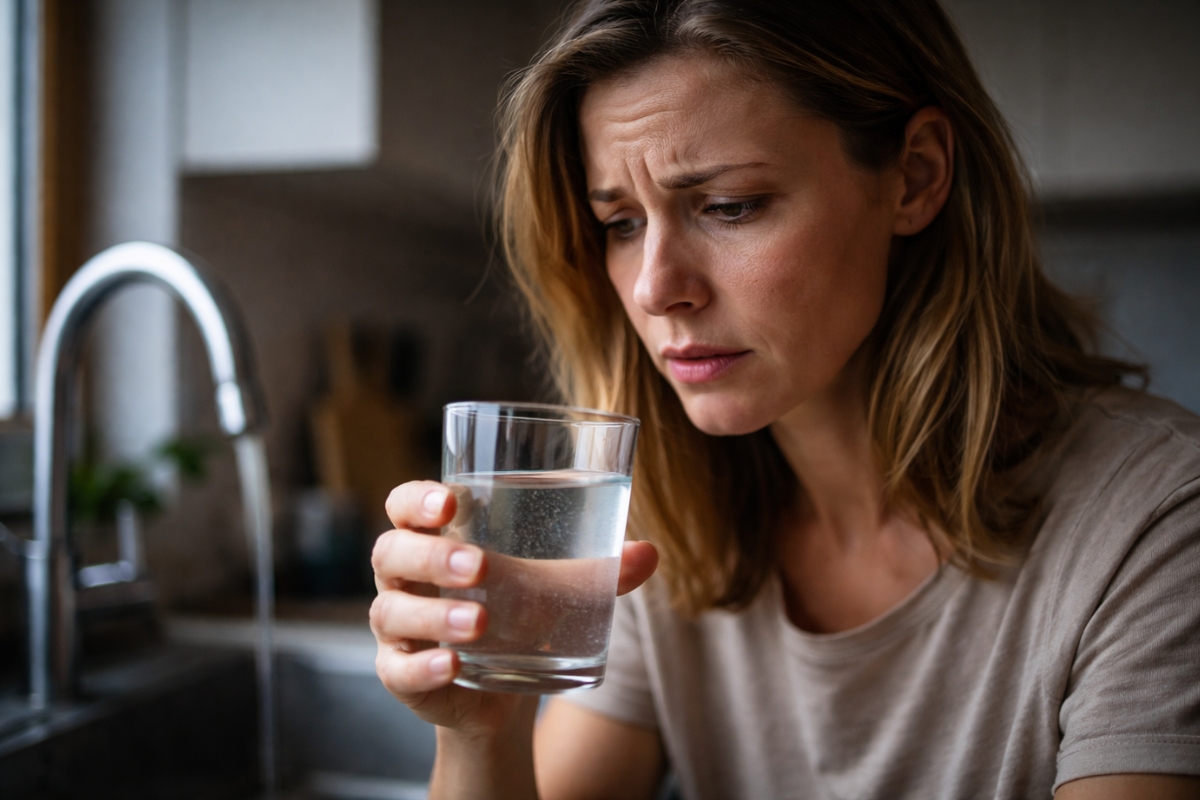
In Santa Catarina, the Public Ministry Identified 42 Types of Pesticides in the Drinking Water of 155 Municipalities, Including 5 Prohibited Substances, Causing a Sanitary Alert and Mobilization of Health Agencies.
The water consumed by thousands of residents of Santa Catarina has become the center of a concerning alert. A survey by the Public Ministry of Santa Catarina revealed the presence of pesticides in 155 municipalities, a number that represents more than half of the state.
The data draws attention not only due to its territorial scope but also because of the number of substances found. In total, 42 types of pesticides were identified in the analyses.
The most serious detail is that five of these substances are banned in Brazil, according to Anvisa.
-
Friends have been building a small “town” for 30 years to grow old together, with compact houses, a common area, nature surrounding it, and a collective life project designed for friendship, coexistence, and simplicity.

-
This small town in Germany created its own currency 24 years ago, today it circulates millions per year, is accepted in over 300 stores, and the German government allowed all of this to happen under one condition.

-
Curitiba is shrinking and is expected to lose 97,000 residents by 2050, while inland cities in Paraná such as Sarandi, Araucária, and Toledo are experiencing accelerated growth that is changing the entire state’s map.

-
Tourists were poisoned on Everest in a million-dollar fraud scheme involving helicopters that diverted over $19 million and shocked international authorities.


Five Banned Pesticides Found in Treated Water
Among the detected products are benomyl, carbofuran, methyl haloxifop, metolachlor, and molinate, all banned in the country.
The presence of these substances in drinking water amplifies the debate about inspection, indiscriminate use, and environmental impacts.
The survey was conducted at the request of the Operational Support Center for Consumers, an agency linked to the Public Ministry, aiming to assess the consequences of pesticide use on public health.

Study Analyzed Treated Water Between 2018 and 2023
The data are part of the Safe Food Program, which monitors pesticides in the state.
The analyses were conducted in accredited laboratories and considered treated water samples from 2018 to 2023.
The study concluded that environmental pollution affects not only water resources but also soil and air.
In addition, it was detected that some concentrations were outside the classification considered unsafe for consumption, raising concern among specialists.
Regions with the Highest Incidence of Pesticide Residues
The regional data show significant differences among the analyzed areas.
- South: 35 out of 46 municipalities, equivalent to 76.1 percent
- Greater Florianópolis: 12 municipalities
- West: 63 out of 118, about 53.5 percent
- Vale do Itajaí: 24 out of 54, equivalent to 44.4 percent
- North: 11 out of 26, approximately 42.3 percent
- Serra: 10 out of 30, around 33.3 percent
Vale do Itajaí appears as one of the most critical regions of the state.
Municipalities Report High Numbers of Pesticides
In Imbuia, between 2022 and 2023, 17 different pesticides were identified in the water, with two active ingredients banned since 2019.
Experts also found a fungicide with a concentration considered high.
In Ituporanga, 23 active ingredients were detected. Nine were above 1 microgram per liter, a value that may exceed permissible limits depending on the average considered.
Different types of fungicides were also identified in the region.
Agencies Plan Intersectoral Actions After the Results
In light of the scenario, the Public Ministry, in partnership with the Directorate of Sanitary Surveillance of Santa Catarina and the Health Surveillance of Populations Exposed to Pesticides, intends to create intersectoral working groups.
The proposal involves teams from health, social assistance, agriculture, and consumer protection sectors.
The goal is to increase awareness about the use of pesticides and their impacts on health and the environment.
The State Department of Health and the Catarinense Company of Water and Sanitation were contacted but did not respond by the time of publication.
The identification of 42 types of pesticides in the drinking water of 155 municipalities reinforces the debate on environmental control, inspection, and sanitary safety in Santa Catarina, highlighting the risks associated with pesticide use in the state.
Do you believe that control over the use of pesticides needs to be more stringent? Leave your opinion in the comments.










-

-

-

5 pessoas reagiram a isso.