





 Portuguese
  English
  Spanish
  3 min of reading
  0 comments


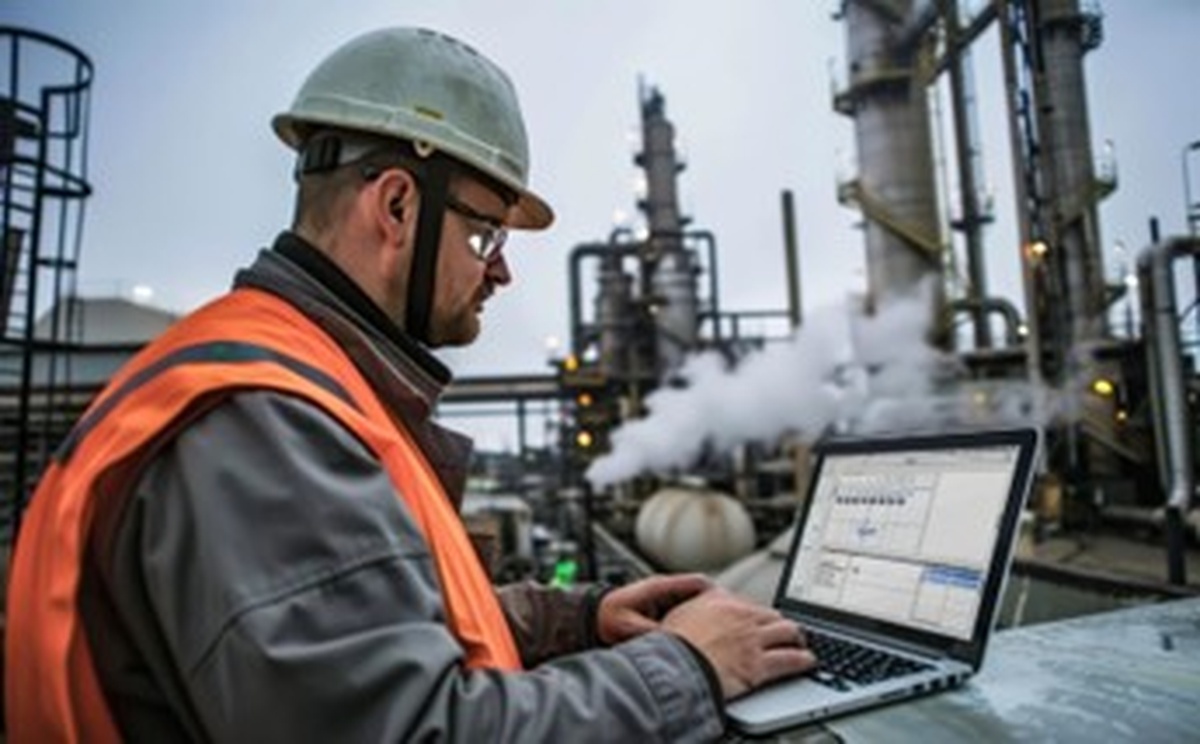
Digitalization, Analytical Intelligence, and Strategic Logistics Support a New Cycle of Maturity in the Global Energy Industry.
Since 2026, the oil and gas sector has been consistently advancing toward a period of consolidation and maturation, where technology, logistics, and data-intensive usage take center stage. In this regard, according to reports released in 2024 and 2025 by the International Energy Agency, companies that invest in digitalization can reduce operational costs by up to 20%, as well as increase the reliability of operations performed in highly complex environments. Thus, efficiency shifts from being a differentiator to a structural requirement.
At the same time, gradually, digitalization is moving away from being a future promise. Consequently, it begins to operate as essential infrastructure of the industry. According to Cristian Bazaga, CEO of Excel, a Brazilian company specialized in fleet and fuel management solutions, this advancement occurs without abrupt disruptions. On the contrary, it happens through a continuous cycle. “The industry enters a phase where operational efficiency, technological intelligence, and energy responsibility become determining factors,” the executive explains while analyzing the landscape observed throughout the 2020s.
Meanwhile, despite technological transformations, oil remains a key player in the global energy landscape. According to projections from the International Energy Agency, released in 2025, global demand is expected to stay above 100 million barrels per day during the second half of the decade. This trend is driven mainly by emerging economies and the growing quest for energy security. Therefore, the relevance of the sector remains strong.
-
Lula reveals a masterstroke by Petrobras to undo a deal made by Bolsonaro, which involves the return of an important refinery that currently produces less than half of what was expected and makes Brazil dependent on international diesel.
-
A study confirms that the natural gas sector will reduce greenhouse gas emissions in Brazil by 0.5% and accelerate the energy transition by 2026.

-
Petrobras implements a severe adjustment and confirms a 55% increase in the price of aviation kerosene with a proposal for installment payments for the companies.

-
The rise in oil prices could ensure an extra revenue of R$ 100 billion for the Federal Government, indicates a recent economic study.


However, parallel to this high demand, there is also a growing pressure for more efficient and responsible practices. As Cristian Bazaga highlights, the central challenge is not the immediate elimination of fossil fuels, which still sustain a significant portion of the global economy. Instead, the focus shifts to the adoption of a smarter, more transparent, and efficient usage model. In this way, technology and data begin to guide strategic decisions.
In this context, logistics takes on a decisive role. Historically regarded as an operational activity, the supply chain is now viewed as a strategic asset. Studies published between 2023 and 2024 by McKinsey & Company indicate that logistics optimization, when integrated with structured data usage, can increase operational efficiency by up to 15% in the energy sector. Thus, processes become more predictable and controlled.
Finally, in countries with a strong contribution of the energy industry to Gross Domestic Product, such as Brazil, reports released in 2024 by the World Economic Forum reinforce a key point. More analytical, connected, and data-driven organizations demonstrate greater preparedness to navigate this new cycle, marked by efficiency, transparency, and operational responsibility. Therefore, the oil and gas sector remains central to economic development, while technology and logistics consolidate as determinant vectors of its evolution in 2026.










-

Uma pessoa reagiu a isso.