





 Portuguese
  English
  Spanish
  5 min of reading


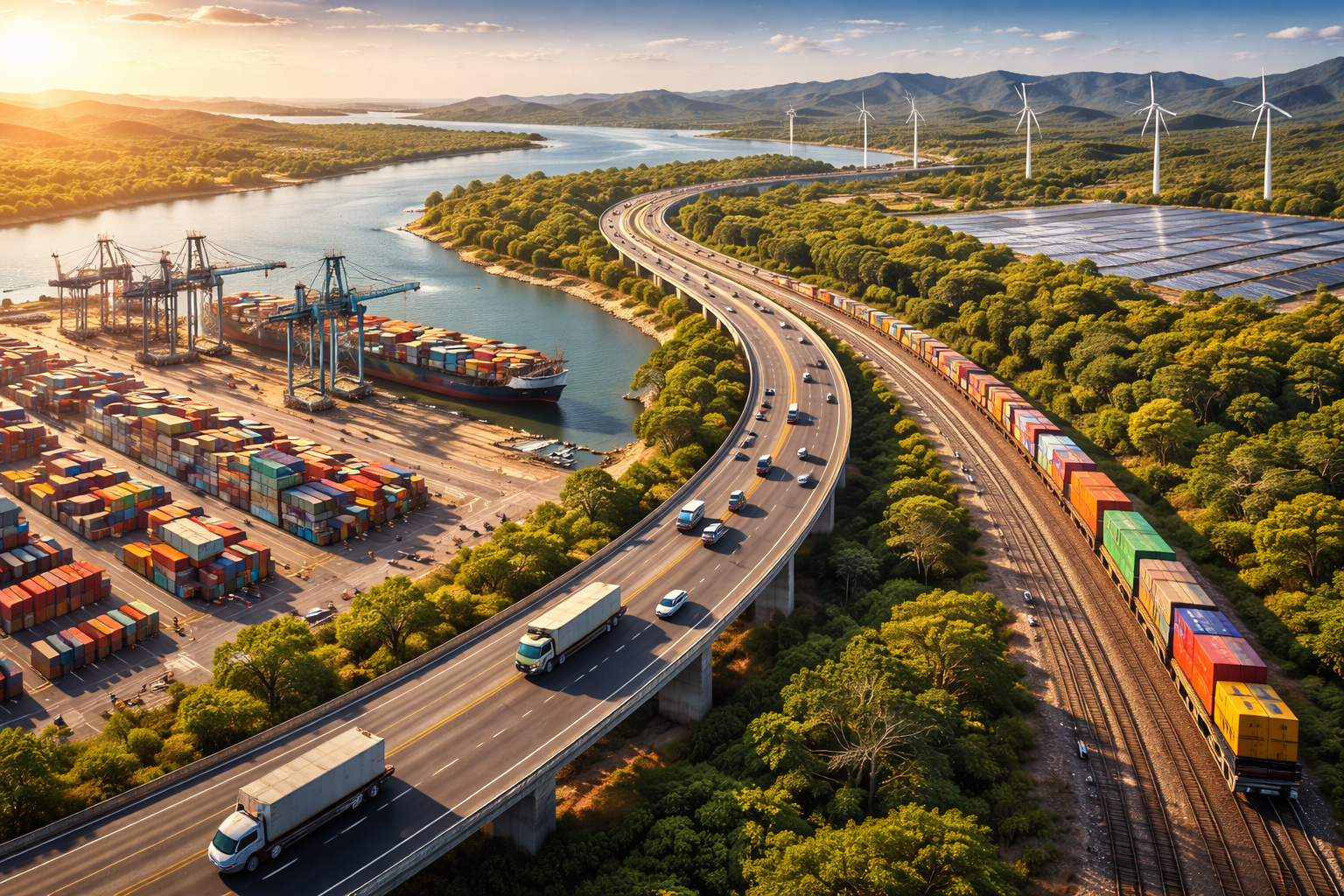
Over the past few decades, logistics has taken on an increasingly strategic role in Brazil’s development. Therefore, creating a long-term planning framework has become essential to address historical bottlenecks while simultaneously preparing the country for new economic, environmental, and social demands. In this context, the National Logistics Plan 2050 emerges as a landmark by placing sustainability at the center of the sector’s structural decisions.
Unlike previous plans, which mainly focused on the physical expansion of infrastructure, the PNL 2050 proposes a shift in logic. Instead of solely expanding highways, ports, and railways, the document now guides investments based on environmental, social, and territorial criteria. Thus, logistics ceases to be merely a means of transportation and becomes a tool for balanced development.
According to the Ministry of Transport, responsible for coordinating the plan, the proposal aims to align economic growth, reduce environmental impacts, and promote regional inclusion. Consequently, logistical planning begins to engage with topics such as climate change, energy efficiency, and territorial cohesion.
-
Embrapa’s discovery reveals an unexpected advancement by allowing the production of seedlings from the caatinga using brackish water, opening a new frontier for farmers to face drought more efficiently.

-
6 sources of free fertilizer that you are throwing away every day and can transform your garden without spending anything.

-
With a water crisis on the radar, Sabesp invests in reclaimed water for data centers and transforms sewage treatment into a solution that saves millions of liters and protects public supply.

-
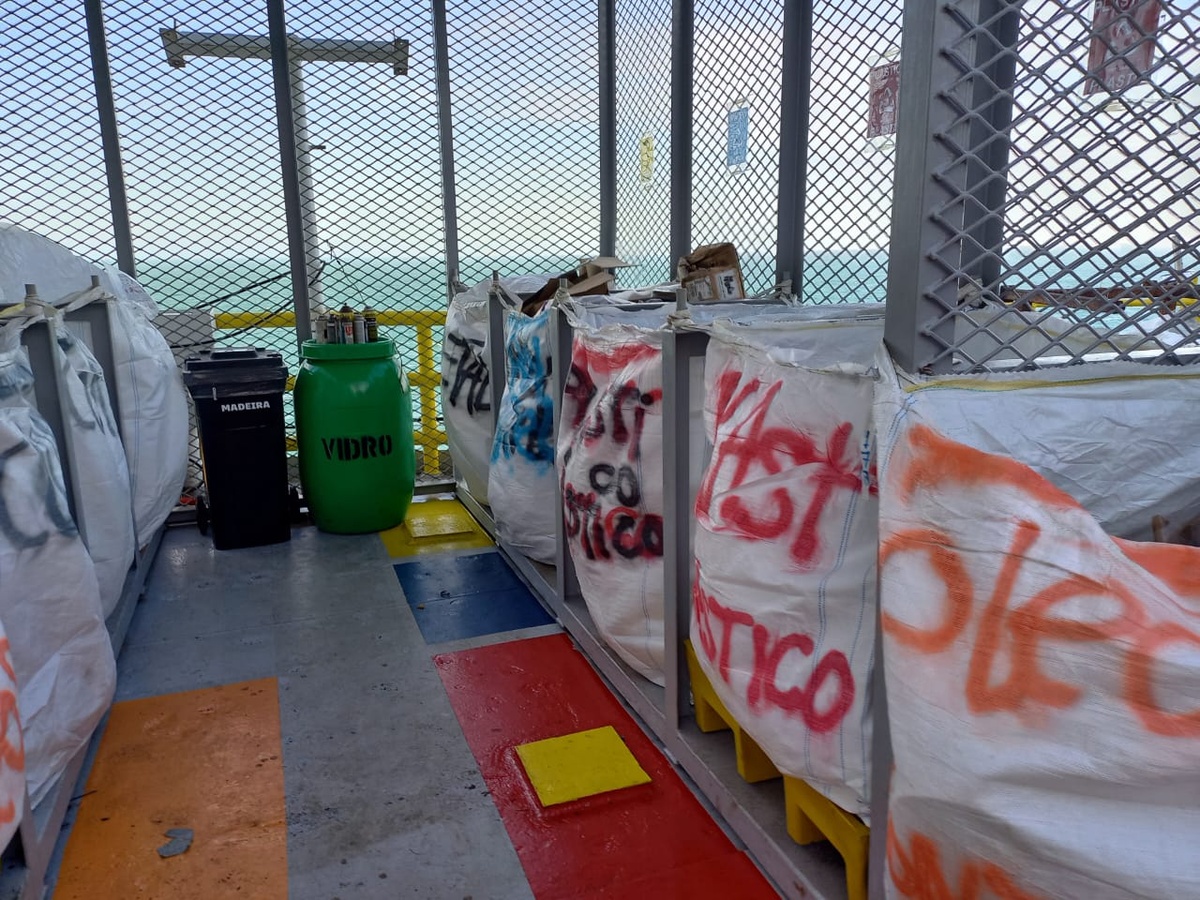
Foresea achieves 100% offshore waste reuse in 2025, eliminates landfill disposal, and consolidates sustainable strategy with 1,500 tons recycled.

Logistical Planning and Future Vision
Historically, Brazil has faced difficulties arising from the lack of integrated planning in the logistics sector. For much of the 20th century, investments occurred in a fragmented manner, prioritizing road transport while neglecting more efficient alternatives. As a result, an unbalanced matrix formed, leading to high economic and environmental costs.
In light of this scenario, the need for a long-term plan has gained traction. According to the federal government, in technical documents published since 2021, the PNL 2050 was designed to overcome this fragmentation. The central objective is to create a systemic vision capable of guiding decisions over decades, regardless of political cycles.
Moreover, the plan adopts a data-driven approach based on future scenarios. Thus, projections of population growth, economic expansion, and cargo flows now guide investment priorities. Consequently, planning stops reacting to immediate problems and starts anticipating structural challenges.
As a result, sustainability emerges not as an accessory element, but as the foundation of logistical choices.
Sustainability as a Structural Criterion
By placing sustainability at the base of planning, the PNL 2050 promotes a significant conceptual shift. According to the federal government itself, the plan incorporates environmental criteria from the diagnostic phase to the definition of priority projects. This includes the assessment of greenhouse gas emissions, energy consumption, and impacts on ecosystems.
In this sense, modalities such as railways and waterways gain prominence. After all, they present lower emission intensity compared to road transport. Thus, the plan encourages a gradual reconfiguration of the Brazilian logistics matrix, focusing on efficiency and reducing the environmental footprint.
Additionally, the document also considers social aspects. The location of investments now takes into account regional inequalities and specific territorial needs. Consequently, logistics becomes a tool for national integration, connecting less developed regions to major consumption and export centers.
Therefore, sustainability ceases to be a discourse and starts to inform concrete investment decisions.
Integration Between the Public Sector and Private Initiative
Another central point of the PNL 2050 lies in the coordination between the public sector and private initiative. According to the Ministry of Transport, the plan serves as a reference for concessions, public-private partnerships, and direct investments. Thus, it offers predictability to economic agents and reduces regulatory uncertainties.
By establishing clear guidelines, planning facilitates the attraction of private capital for infrastructure projects. Furthermore, by incorporating environmental and social criteria, the plan aligns with increasingly prevalent demands in the global financial market, such as ESG practices.
Consequently, projects aligned with the PNL 2050 tend to receive greater acceptance from institutional investors. Thus, sustainability also becomes an economic competitiveness factor, not just a regulatory obligation.
In this way, the plan creates a more favorable environment for long-term investments, essential for the country’s logistical modernization.
Territorial Impacts and Reducing Inequalities
Throughout history, the concentration of logistical investments in certain regions has deepened territorial inequalities. In this context, the PNL 2050 proposes a more balanced redistribution of resources. According to the government, the plan considers regional productive vocations and the potential logistical flows of each territory.
Thus, historically less integrated regions begin to gain prominence in planning. By connecting producing areas to ports, railways, and distribution centers, logistics becomes a catalyst for local development.
In addition, infrastructure improvement reduces transportation costs and enhances the competitiveness of Brazilian products in domestic and international markets. Therefore, the benefits extend beyond the logistics sector and reach entire production chains.
Thus, sustainable planning also translates into regional development and economic inclusion.
Logistics, Climate, and Resilience
Another relevant aspect of the PNL 2050 involves adaptation to climate change. According to government agencies, extreme events such as droughts, floods, and landslides are already affecting Brazil’s logistical infrastructure. Therefore, the plan incorporates resilience criteria in the design of new projects.
This means designing highways, railways, and ports capable of withstanding adverse weather conditions. Furthermore, diversifying modalities reduces risks associated with excessive dependence on a single type of transport.
In this way, sustainable logistics also presents itself as a risk mitigation strategy. By anticipating future scenarios, the country strengthens supply security and the continuity of production chains.
Thus, logistical planning begins to engage directly with the global climate agenda.
A New Paradigm for Brazilian Infrastructure
By establishing guidelines up to 2050, the National Logistics Plan consolidates a new paradigm for the sector. More than just a set of projects, it proposes an integrated vision guided by sustainability, efficiency, and territorial justice.
According to the federal government, the plan will be periodically updated, ensuring adherence to economic and technological transformations. Thus, it remains a living instrument capable of guiding decisions over time.
In this regard, logistics ceases to be merely an economic support. It becomes a strategic element of a national project, aligned with the environmental and social demands of the 21st century.
By placing sustainability at the base of planning, the PNL 2050 redefines how Brazil thinks, plans, and executes its logistical infrastructure, building stronger foundations for long-term development.






Seja o primeiro a reagir!