





 Portuguese
  English
  Spanish
  3 min of reading
  0 comments


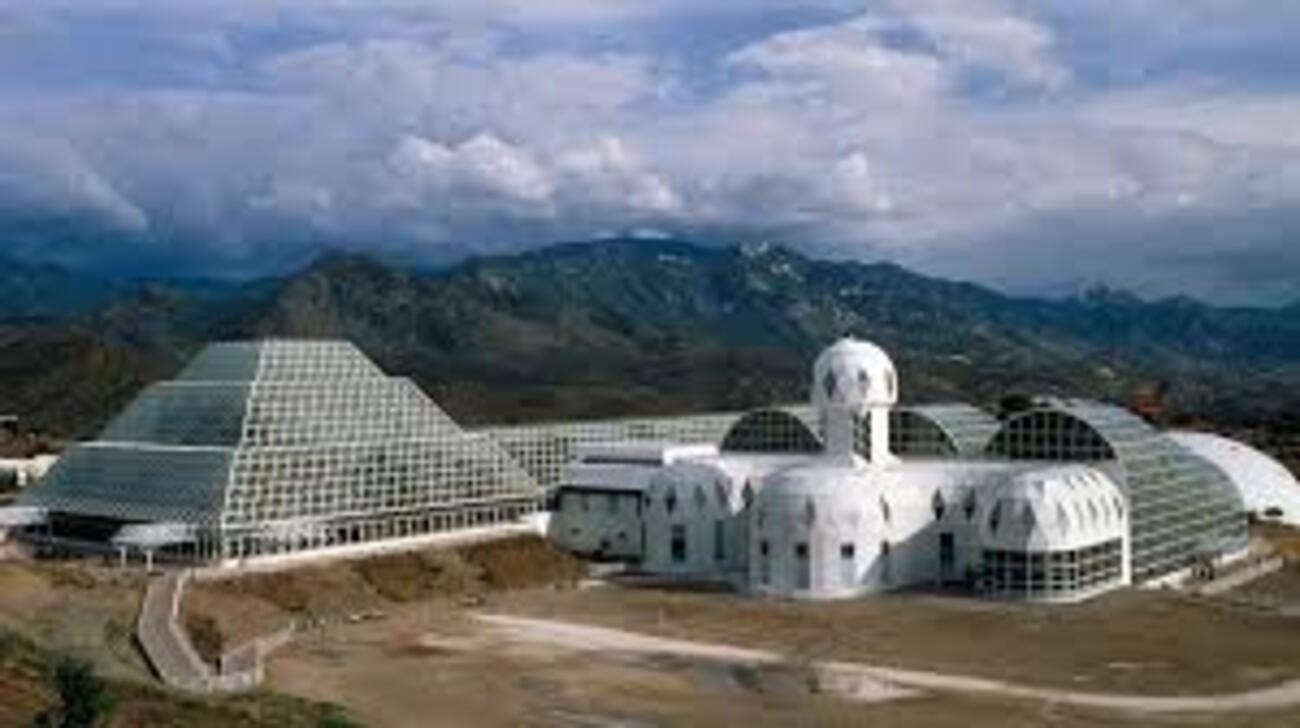
Researchers Continue Biosphere 2 That Simulates Survival in Space. Adapting to a New Planet May Be More Difficult Than It Seems!
In September 1991, eight people locked themselves inside a sealed structure in the Arizona desert, United States, for two years. The location, called Biosphere 2, simulated a mini Earth with various ecosystems, such as rainforest, desert, and even an artificial ocean.
The goal? Test human survival in a self-sufficient system capable of inspiring adaptation to a new planet, such as Mars.
The project, funded by about US$ 150 million by billionaire Ed Bass, aimed to anticipate the challenges humanity would face if it needed to leave Earth.
-
End of the stove: new technology from Xiaomi promises to retire the old stove with a smart pot that prepares up to 16 servings in 24 minutes and has 10 automatic levels controlled by an app.

-
If Ormuz closes, the world freezes: the 1,200 km Saudi Petroline transports oil from the Gulf to the Red Sea, operates near 7 million barrels/day, and becomes a geopolitical weapon in the crisis with the US.

-
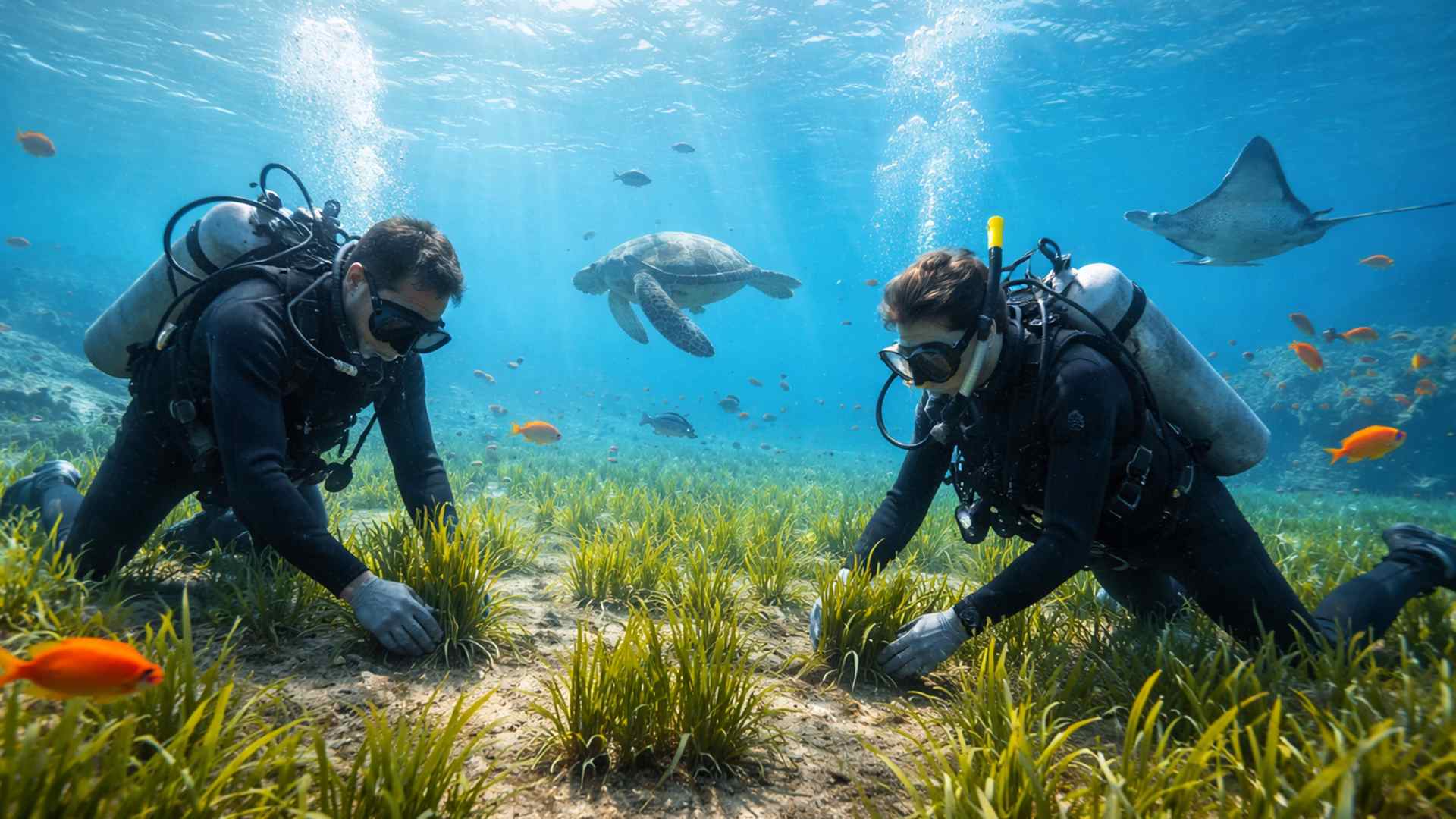
Scientists restore seagrass meadows in the open sea.
-
Scientists find about 1 million giant live eggs hatching in an active underwater volcano, discover a natural furnace on the ocean floor, and reveal one of the most unlikely nurseries ever seen in the ocean.

With a glass and steel structure occupying 1.2 hectares, the experiment became one of the most ambitious in the history of environmental and space science.
A Capsule of Earth in the Heart of the Desert
Biosphere 2 was named as such for representing an attempt to replicate Biosphere 1: the planet Earth. Its futuristic design included forests, savannas, mangroves, desert with fog, and even a coral reef.
Each biome was carefully planned to study the interaction between organisms and the effects of total isolation.
In addition, the complex had a farm for food production and systems for water recycling and climate control.
The intention was to understand whether humanity could survive without relying on external resources, something crucial for long-duration space travel.
Failure or Learning? The Controversy Over Survival in Space
Despite the advanced technological structure, problems began within the first months. The oxygen level dropped drastically from 21% to about 14%, leaving the participants weak and showing altitude sickness-like symptoms. Meanwhile, CO₂ levels increased, putting the health of the “biospherians” at risk.
Scientists discovered that the soil used was too rich, which favored the growth of bacteria and fungi. These microorganisms consumed oxygen and released carbon dioxide, disrupting the ecosystem.
To reverse the situation, emergency measures were taken, such as introducing external oxygen — something that was considered a breach of the experiment’s rules at the time.
Adapting to a New Planet Requires More Than Technology
Despite the setbacks, the scientists involved today consider the project a milestone in the study of closed ecosystems. Mark Nelson, one of the participants and director of the Institute of Ecotechnics, states that “the biggest lesson was understanding how complex and interconnected our planet is.”
Other experts, such as Lisa Rand from the California Institute of Technology, emphasize that in times of climate change and space exploration, bold experiments like Biosphere 2 are essential for testing our ability to adapt.
More than imagining a new life on Mars, the mission revealed that we still have much to learn about the functioning of our own Earth — and that surviving on another planet is more difficult than it seems, even with billions in investment.
Tests Continue and Show the Importance of the Original Planet
Currently, Biosphere 2 is an active research center at the University of Arizona. Scientists are testing the effects of climate change on living ecosystems, such as forests and reefs.
The site has become a vital tool for studying how the planet reacts to different environmental scenarios.
Survival outside Earth remains one of humanity’s great challenges. But before conquering Mars, the project shows that perhaps we should learn better how to care for our own home.






Seja o primeiro a reagir!