





 Portuguese
  English
  Spanish
  4 min of reading
  7 comments


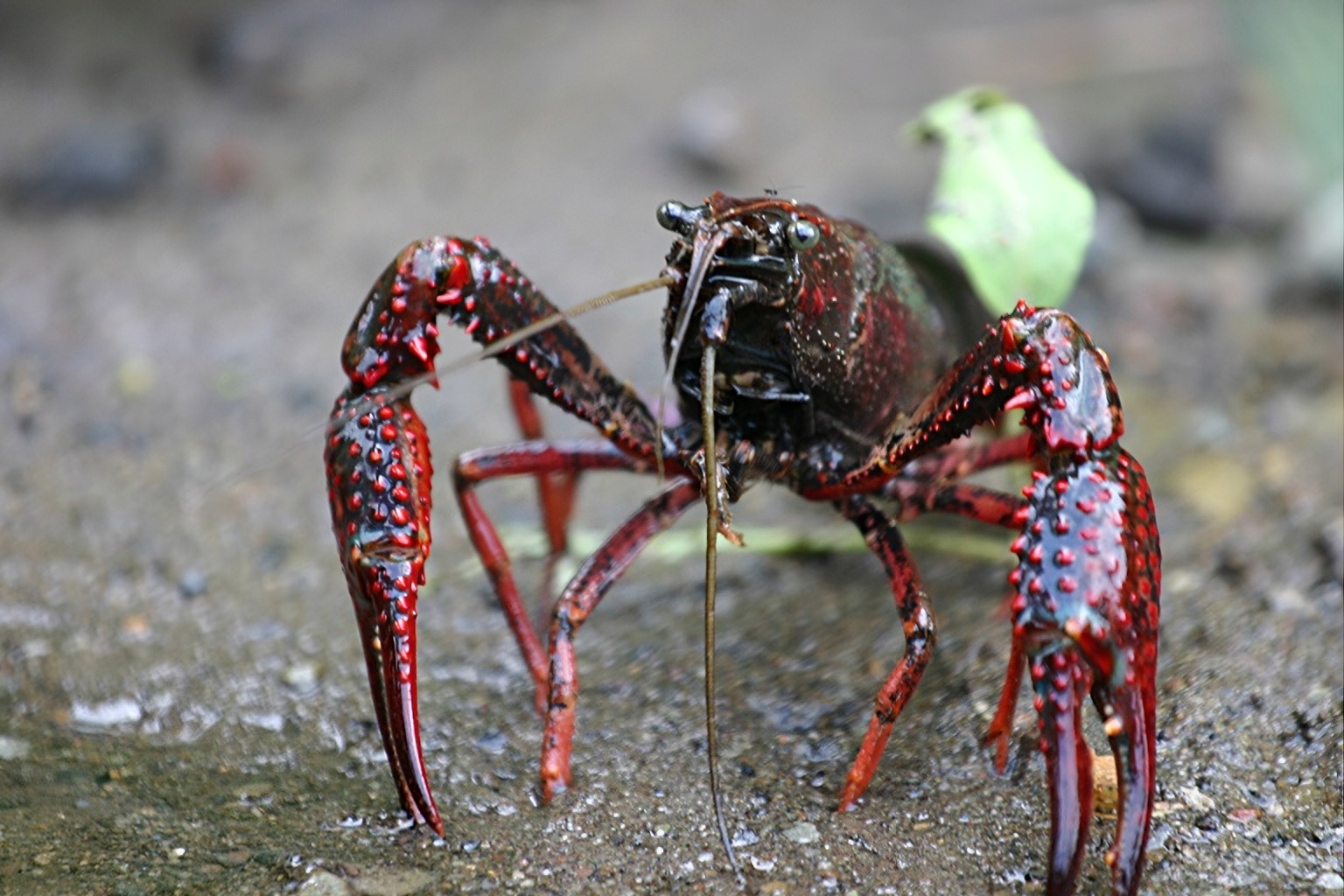


Louisiana Red Crayfish Invades Rivers of Europe, Spreads Fatal Fungus, Eradicates Native Species and Alters Freshwater Ecosystems at an Accelerated Pace.
The Louisiana red crayfish (Procambarus clarkii) may not seem threatening at first glance. It averages between 5 and 12 centimeters, lives at the bottom of rivers, ponds, and canals, and resembles a common crustacean. However, this North American species has become one of the most destructive aquatic invaders on the planet, capable of reshaping entire ecosystems in just a few years, decimating native populations, and spreading a disease that is virtually lethal to other crustaceans.
Originally from the southern United States and Mexico, the Procambarus clarkii was deliberately introduced to several countries starting in the 1970s, primarily for aquaculture and human consumption. The result was one of the largest silent ecological disasters ever recorded in freshwater environments.
How a Common Crustacean Became a Continental Pest
The expansion of the red crayfish has been driven by a rare combination of biological advantages. It tolerates low oxygen concentrations, withstands pollution, survives in cold or warm waters, walks on land during dry periods, and reproduces with extreme efficiency.
-
With a cost per shot close to zero, the DragonFire laser could change naval warfare in 2027 and provide British ships with nearly unlimited defense against drones.

-
A British startup creates tires that generate electricity in electric vehicles when passing over potholes, speed bumps, and cracks.

-
Scientists have created robots made with living cells that have their own nervous system, swim on their own, explore the environment, and self-organize without any genetic engineering, and now they want to do the same with human cells.

-
Students create a solar-powered ambulance that operates without a plug, without fuel, and still keeps medical equipment running in remote areas.


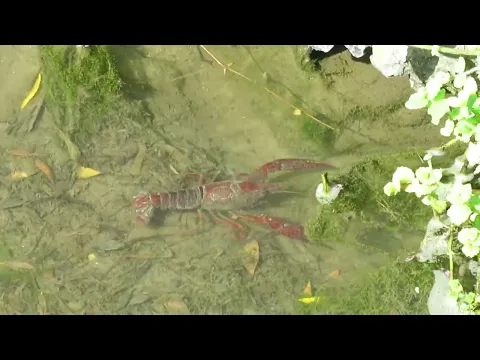

A single female can produce between 300 and 600 eggs per breeding cycle, and the species can have two generations per year in warmer regions. In invaded environments, densities exceeding 10 individuals per square meter have been documented in ditches and flooded areas.
This ability enables the crayfish to quickly colonize rivers, lakes, rice fields, and swamps, occupying ecological niches previously dominated by native species much slower to reproduce.
The Invisible Fungus That Devastates Native Crustaceans
The most severe impact does not come solely from competition for food. The Procambarus clarkii is an asymptomatic carrier of a devastating pathogen: the fungus Aphanomyces astaci, known as “crayfish plague.”
This fungus is lethal to almost all native European crayfish species. When the pathogen enters a river, mortality can reach 100% of the local population within weeks. While the red crayfish survives, historic species like Austropotamobius pallipes simply disappear.
In practice, this means irreversible local extinctions. In various countries across Europe, native populations have completely collapsed following the arrival of the invader.
Dredged Rivers, Destroyed Banks, and Cloudy Water
The burrowing behavior of Procambarus clarkii causes direct physical damage to ecosystems. It builds deep burrows along riverbanks and canals, resulting in erosion, de-stabilization of dams, slope collapses, and increased water turbidity.
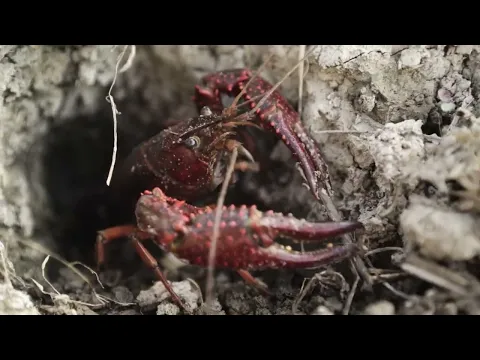
Studies in invaded areas show a significant increase in sediment suspension, reduced light penetration, and a decline in the productivity of submerged aquatic plants. This affects everything from microscopic algae to fish that depend on clear environments for reproduction.
In rice fields in Spain, Italy, and southern France, the red crayfish has come to be considered an agricultural pest, destroying roots, creating holes in dikes, and causing annual losses in the millions.
An Invader Almost Impossible to Eradicate
Once established, the Procambarus clarkii proves extremely difficult to eliminate. It survives out of water for hours, burrows into the soil during droughts, and resists chemical methods that would kill other species.
Eradication programs attempted in Europe involved traps, draining water bodies, chemical control, and even ongoing manual removal. No strategy has managed to completely eliminate established populations in large watersheds.
Today, the dominant approach is population control, attempting to reduce impacts in sensitive areas, protect refuges for native species, and prevent new introductions.
Where the Invasion Has Caused the Most Damage
The red crayfish is officially present in more than 40 countries, with well-documented impacts in:
– Spain, where it dominates rivers and rice fields in the south
– Italy, especially in the Po Valley
– France, in wetlands and agricultural channels
– Portugal, with continuous expansion into inland watersheds
– North Africa, affecting reservoirs and wetlands
– Asia, where it has also been introduced for consumption
In many of these locations, it has become the dominant crustacean species, altering entire food chains.
An Ecological Paradox: Environmental Villain and Economic Resource
Despite the impacts, the Procambarus clarkii also drives local economies. In some regions of Spain and China, it supports fishing and export production chains. This creates a paradox: the species is both fought against by environmentalists and economically exploited.
This conflict complicates stricter control policies, as complete eradication would affect jobs and established markets.
The case of the Louisiana red crayfish is a clear example of how seemingly harmless introductions can lead to lasting ecological collapses. A small, resilient, and highly adaptable animal was enough to eliminate ancestral species, alter entire rivers, and create a virtually irreversible environmental problem.
Today, Procambarus clarkii is cited by European environmental agencies as one of the worst invasive freshwater species in the world, serving as a warning for biosafety policies, aquaculture control, and the transport of species between continents.
The invasion continues. And in many rivers, the damage can no longer be undone.






In the Uk, it’s almost impossible to get a licence to trap them, it’s left up to anglers to kill them on capture. If a licence was available, trappers would help keep them under control but it would also mean employing bailiffs to monitor the trappers and traps. That would be expensive so no licences issued.
We love them here in South Louisiana. There is nothing like a crayfish boil. There are so many ways to prepare this delicious little critter.
Hasta los animales disque Americanos son igual de invasores que las personas, asesinos rateros disque Americanos!!!
Still upset la Migra sent you home?
Porquê esse ódio,e por causa quê os americanos não gostam dos seus cartéis de drogas? Kkk