





 Portuguese
  English
  Spanish
  5 min of reading
  0 comments


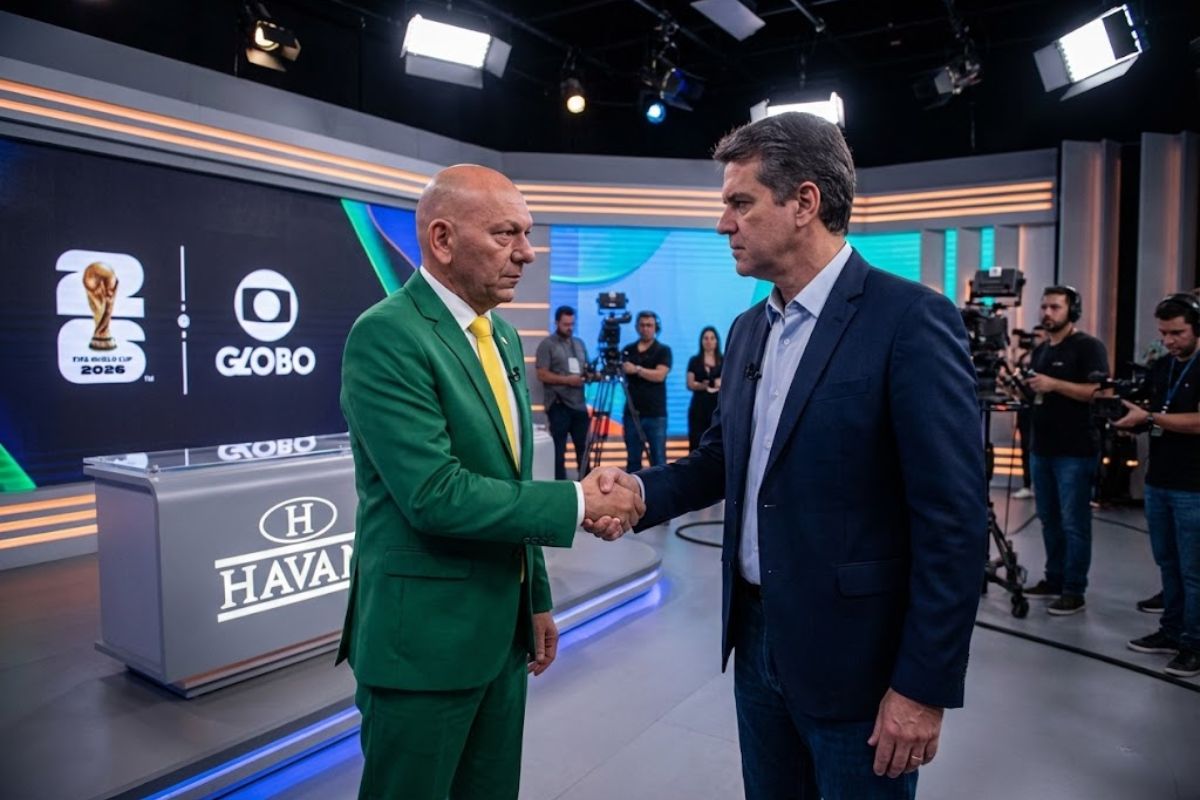
Luciano Hang Authorized Havan to Purchase a Support Quota of R$ 235 Million for the 2026 World Cup on Rede Globo, Despite the History of Public Criticism, and the Move Reinforces the Understanding That Advertising, Audience, and Space Negotiation Weigh More Than Ideological Discourse Today.
Luciano Hang spent years attacking Rede Globo on social media while simultaneously maintaining commercial ties with other broadcasters. On 02/12/2026, news that Havan decided to invest R$ 235 million in the 2026 World Cup broadcast by Rede Globo came to the market’s attention as it affected positioning, media strategy, and reputation.
The central point is not just the value. It’s the type of exposure purchased: a support quota that prioritizes content actions and presence in commercial breaks during the World Cup. For executives and analysts, the combination of concentrated audience, fixed calendar, and delivery predictability makes the negotiation easier to justify than scattered campaigns throughout the year.
What Exactly Was Purchased for the World Cup
@ergarotv ARTICLE CONTINUES BELOWSee also
The government requests the Federal Revenue Service for a new system to automate the income tax declaration, reducing errors, time, and bureaucracy for millions of Brazilians.

Pix in installments, international Pix, and contactless payment without internet: the Central Bank revealed the new features coming to the tool that is already used by almost every adult in Brazil.

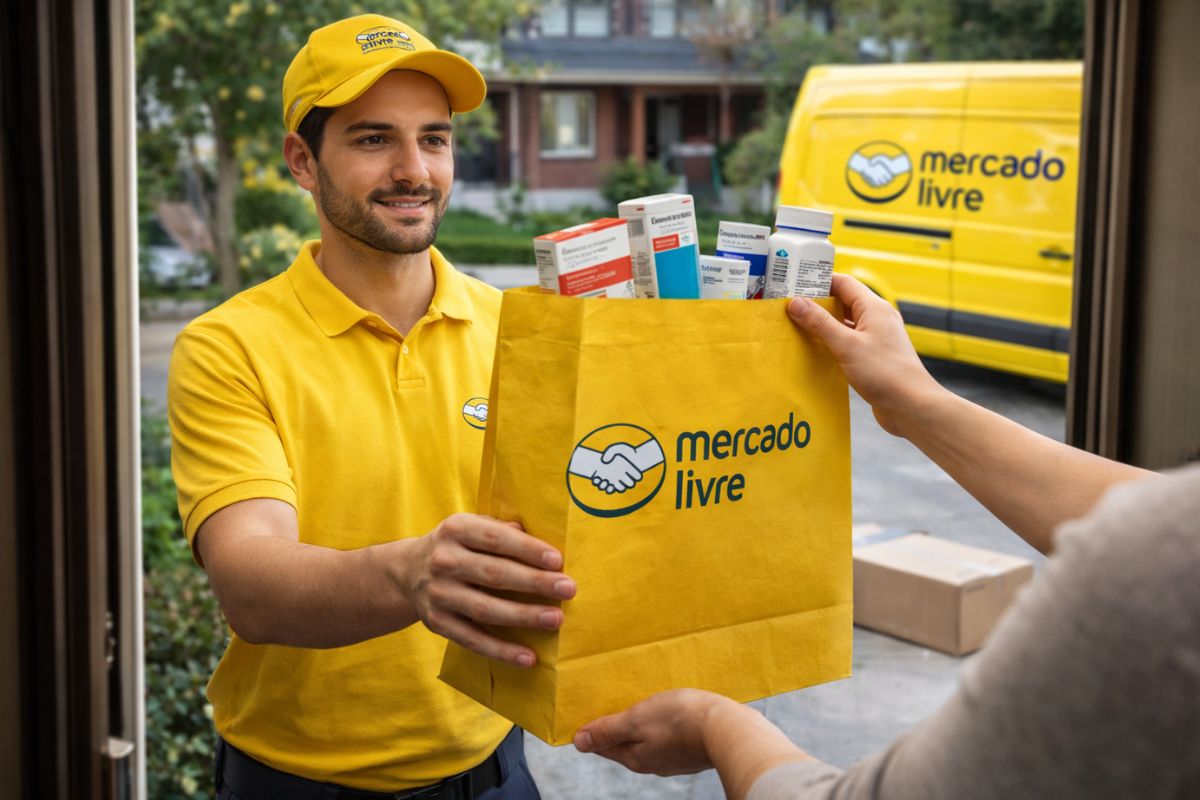
Mercado Livre has just started selling medications with delivery in up to three hours to your door, and this move could completely change the way Brazilians buy medicines on a daily basis.
In Dubai, rising tensions from the war in the Middle East are causing super-rich individuals to leave the Gulf and direct their fortunes to a new financial refuge in Asia.

Havan confirmed the sponsorship for Globo’s World Cup. Luciano Hang’s store will invest around R$ 235 million in the broadcaster. In a statement, the company clarified that the disclosed amounts do not match reality, criticized the newspaper’s reporting, and reinforced that, although it does not advertise on national newscasts, it maintains the investment by recognizing the relevance of football as a national passion and a widespread event in Brazil. #Globo #LojasHavan #Havan #Direita
According to Gabriel Vaquer’s column in Folha de São Paulo, Havan acquired a support quota of around R$ 235 million for the 2026 World Cup on Rede Globo.

In this format, the brand tends to appear more frequently in content actions and in commercial breaks, which increases repetition and memorization during a high-audience event.
For the market, the distinction matters because a support quota is not synonymous with a mere one-off mention.
It organizes presence in programming blocks and associates the brand with the event’s editorial package, which can amplify perceived returns compared to standalone purchases.
At the same time, it requires tolerance for a high-attention competitive environment, where the excess of advertisers can dilute impact.
Why Rede Globo Became the Showcase, Despite the History
The understanding surrounding the negotiation is that Havan’s approach to Rede Globo did not start at the World Cup.
The basis informs that the company had been increasing its presence in Rede Globo’s commercial breaks, in a gradual movement of reducing friction between public discourse and commercial pragmatism.
The noteworthy data is the level change.
The column describes that this would be the first time Havan has closed a sponsorship agreement for a product itself within Rede Globo, and not just a media purchase in competitor attractions.
When the strategy shifts from testing to commitment, the market tends to look for signs of political recalibration, brand repositioning, and a search for a broader audience.
What Changes When R$ 235 Million Enters the Media Budget
R$ 235 million, by itself, is a figure that creates noise in any planning.
In terms of execution, this volume pressures the company to extract measurement, frequency, and message consistency, as the internal demand for results tends to grow as the value increases.
In the case of the World Cup, the bet is usually on concentration: days and times with simultaneous consumption, greater recall, and lower audience dispersion.
There is also a component of competitive asymmetry.
When Havan occupies recurring spaces on Rede Globo during the World Cup, it raises the opportunity cost for competitors who would need to buy equivalent visibility.
The practical effect is to make competitors’ silence more expensive in a period when part of retail prefers to reduce noise and wait for the seasonality to pass.
Bastidores, Market, and the Limitation Between Image and Convenience
The market interpreted the negotiation as an approach to Rede Globo, but what changes behind the scenes is not always immediately verifiable.
A conservative hypothesis is that the decision was motivated by efficiency: the World Cup has a closed calendar, national reach, and a finite media inventory, which facilitates negotiation and campaign planning for Havan.
Another hypothesis, also present in market interpretations, is that Luciano Hang seeks to reduce the cost of permanent confrontation with a high-reach vehicle.
Media pragmatism usually wins over discourse when the showcase is large. Still, the investment’s own logic does not prove editorial alignment or a change of convictions; it proves a priority for advertising delivery.
How Much Globo Can Earn and Why This Matters to Advertisers
The basis informs that, with the spaces sold so far, Rede Globo is expected to raise around R$ 1 billion from the 2026 World Cup.
In addition to open TV, the games will also air on SporTV and GE TV, expanding inventory and allowing cross-packaging within the group.
Adding the broadcasts on these closed channels, the cited projection is almost R$ 2 billion linked to the event.
For Havan, this means competing for attention in a high-density advertising environment while also accessing an ecosystem of formats.
The larger the package, the greater the ability to segment messages by window, by program, and by type of audience.
SBT, Domingo Legal, and the Coexistence of Strategies
Even with the investment in Rede Globo, the basis notes that Luciano Hang remains one of SBT’s main partners.
The cited example is the sponsorship of an entire segment on Domingo Legal, hosted by Celso Portiolli, which reinforces the coexistence of strategies across competing broadcasters.
For the market, this helps to separate narrative from exclusivity.
The media buying logic can be simultaneous: presence on SBT for specific profiles and times, and presence on Rede Globo for peak audience and the event with the highest concentration on the calendar.
The lingering question is where strategy ends and politics begins, as the public tends to interpret route changes as a sign of behind-the-scenes maneuvering, even when the justification is merely efficiency.
Luciano Hang placed Havan inside the largest advertising stage in football and, by doing so on Rede Globo, transformed a discourse dispute into a case of commercial strategy observed by investors and competitors. R$ 235 million for the 2026 World Cup does not explain everything, but it reveals one point: media decisions are rarely neutral when they become news.
If you were in Luciano Hang’s position, would you treat Rede Globo as the inevitable showcase of the World Cup or would you keep your distance even with R$ 235 million at stake, considering image, coherence, and brand outcome?









-

-

-

-

4 pessoas reagiram a isso.