





 Portuguese
  English
  Spanish
  5 min of reading
  0 comments


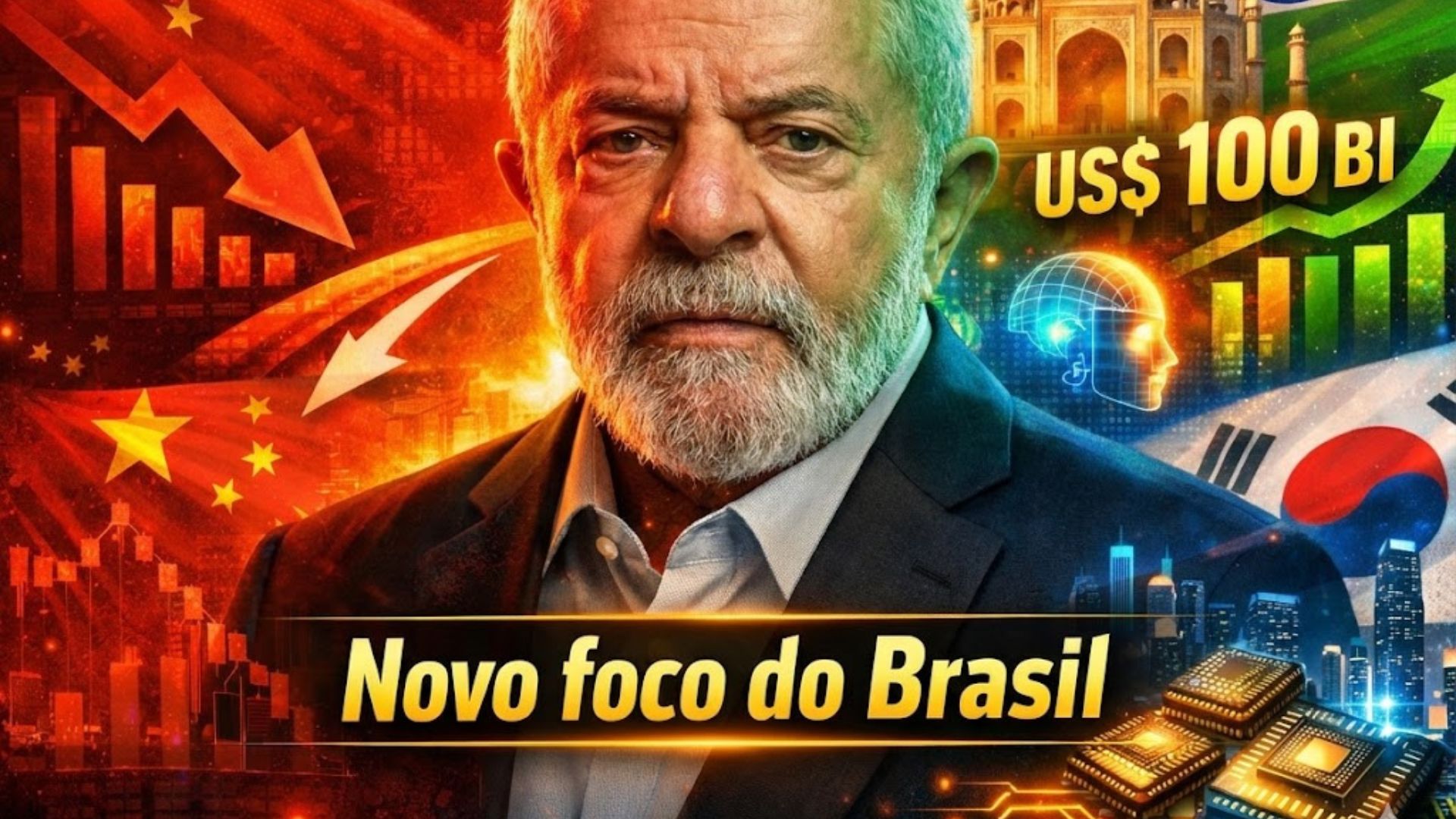
Strategic Movement Expands Brazilian Presence in Asia Amid Trade Tensions, Focusing on Technology, Critical Minerals, and Diversifying Partnerships Beyond China.
President Luiz Inácio Lula da Silva is preparing a new trip to India and South Korea after Carnival, aiming to expand partnerships and reduce the concentration of Brazilian trade in China, according to government sources and members of the economic area.
The delegation plans to discuss market openings, cooperation in technology and rules for artificial intelligence, as well as conversations about critical minerals, at a time of global trade tensions and increased competition for strategic supply chains, according to a report published by the newspaper O Globo.
At the same time, the Planalto seeks to calibrate external signaling ahead of a meeting scheduled in Washington in March between Lula and US President Donald Trump, confirmed by the politician himself in recent statements.
-
The government requests the Federal Revenue Service for a new system to automate the income tax declaration, reducing errors, time, and bureaucracy for millions of Brazilians.

-
Pix in installments, international Pix, and contactless payment without internet: the Central Bank revealed the new features coming to the tool that is already used by almost every adult in Brazil.

-
Mercado Livre has just started selling medications with delivery in up to three hours to your door, and this move could completely change the way Brazilians buy medicines on a daily basis.

-
In Dubai, rising tensions from the war in the Middle East are causing super-rich individuals to leave the Gulf and direct their fortunes to a new financial refuge in Asia.


Behind the scenes, aides claim that the search for alternatives in Asia is not aimed at distancing from Washington, but rather reflects the understanding that Brazil cannot limit opportunities to a single market in an environment of geopolitical rearrangement and competition for investments.
India as a Strategic Priority and Market of 1.4 Billion Inhabitants
The scale of India is treated as a central axis of the itinerary, combining an estimated population of 1.4 billion and urban consumption growth, along with a growing presence in technology, digital services, and international debates on data governance.
Lula is traveling at the invitation of Prime Minister Narendra Modi and is expected to participate, in the first part of the visit, in an event focused on the impacts of artificial intelligence, before fulfilling state commitments and bilateral meetings with local authorities.
According to information from the newspaper O Globo, members of Itamaraty believe that the agenda seeks to consolidate understandings in areas considered strategic, in a dialogue that the government associates with the defense of multilateralism and reform of global governance.
“Dialogue with India gains relevance in the context of global instability and the defense of multilateralism,” stated the diplomat, also mentioning convergences on changes in international institutions, including the United Nations Security Council.
At Itamaraty, the relationship is described as organized around pillars of cooperation that include defense, food security, energy transition, digital transformation, and industrial partnerships, with mentions of sectors such as aerospace, pharmaceuticals, and oil and gas.
The bet, according to reports from government members, is to use the visit to increase trade flow and advance on sensitive topics, such as critical minerals, without detailing exploitation models or closed agreements, a point that still depends on negotiations.
In the productive sector, the National Confederation of Industry believes that the trip could unlock a broader agenda, combining investments, trade, and regulatory dialogue, especially at the frontier of emerging technologies and industrial chains.
“The presidential visit creates a favorable environment to leverage this agenda, with the possibility of advancing in the expansion of the Mercosur-India agreement,” stated Frederico Lamego, superintendent of International Relations at CNI, in an interview with the newspaper O Globo.
Data from the government itself indicates that Brazilian exports to India grew in recent accumulations, coinciding with an increase in imports over the same period.
South Korea on the Radar for Semiconductors and Opening for Brazilian Meat
After India, Lula heads to South Korea on a state visit, in an effort to open fronts in a market with a high technological level and strong industrial presence, in addition to a history of barriers for Brazilian agricultural products.
On the government’s radar, Brazilian meat reappears as a recurring topic, while authorities and specialists point to interest in higher value-added supply chains, such as semiconductors, a sensitive segment in the competition for global technological leadership.
The Asian country also draws attention for its innovation capacity and the presence of large industrial groups, an aspect that Brasília associates with the reindustrialization discourse, even though cooperation details depend on technical and business agendas.
South Korean President Lee Jae-myung is mentioned by the government as the host of the visit, in a context where Seoul maintains strategic ties with the United States but preserves room for economic and technological agreements with other partners.
The newspaper also pointed out that South Korea appears on the Brazilian radar for both commercial and technological reasons, especially given global discussions about supply chains and chip production.
According to Professor Alexandre Uehara, coordinator of studies on Asian business, the search for new destinations gains strength due to the trade changes promoted by the US since 2025, impacting global supply chains and investment decisions.
“It’s an important trip, as it is necessary to seek alternatives and expand business with other countries,” he said, advocating that market openings help reduce risks related to the concentration of Brazilian trade.
China Remains Dominant in Brazilian Foreign Trade
China remains at the center of Brazilian foreign trade, with a consolidated advantage since it became the main destination for the country’s exports, a movement that, in practice, increased the weight of commodities and basic products in the sales agenda.
In 2025, Brazilian exports to China reached US$ 100.02 billion, and the trade balance with the country recorded a surplus of US$ 29.09 billion, according to data compiled from Comex Stat.
In the same year, Chinese participation was estimated at 28.7% of Brazil’s total exports and 25.3% of imports, an indicator used to measure dependence.
This weight explains why government aides treat India and South Korea as important alternatives, even though the stated goal is not to replace Beijing, but to increase maneuvering room and reduce vulnerabilities to external shocks, as highlighted by O Globo in its coverage.
In the view of international relations experts, India offers Brazil a combination of market, diplomatic autonomy, and space for technological cooperation, while South Korea tends to generate more concentrated results in trade and industry.
The agenda with Trump, scheduled for March, also comes into this calculation, as the government evaluates that American trade policy can influence flows and production chains, requiring Brazil to have a more diversified map of partners.








-

-

-

5 pessoas reagiram a isso.