





 Portuguese
  English
  Spanish
  5 min of reading
  0 comments


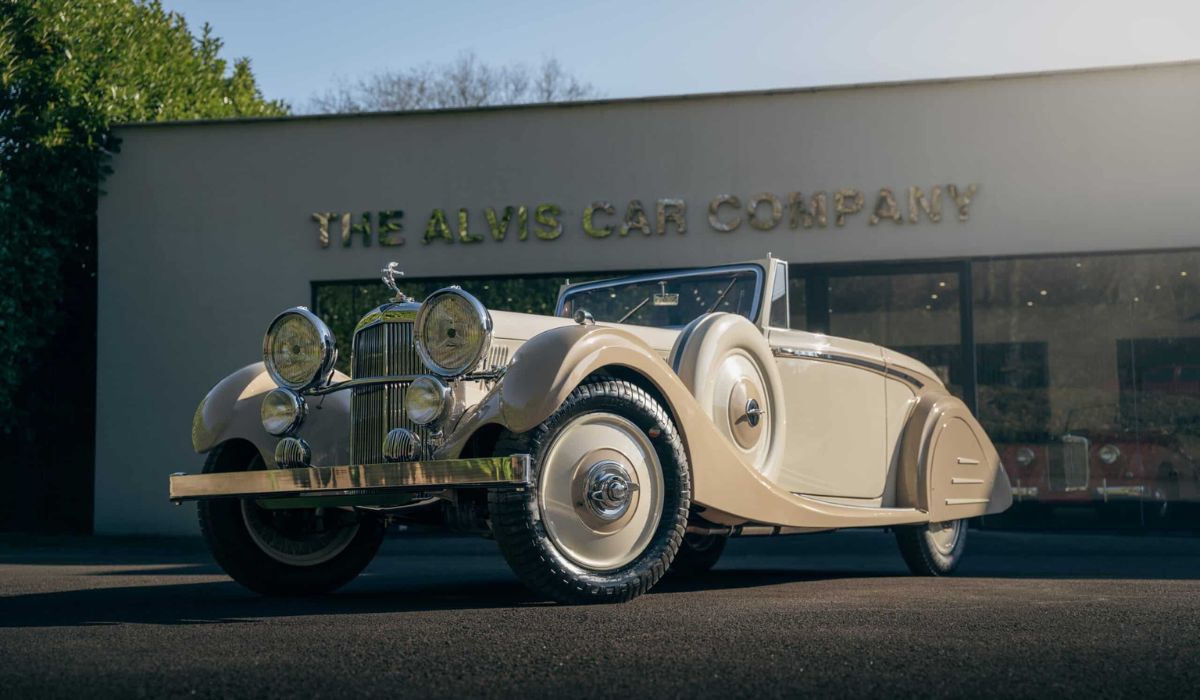
In Operation In The United Kingdom, A Company Keeps Technical Files, Original Parts, And Handcrafted Methods To Restore And Reconstruct Cars Inspired By The 1930s, Serving Collectors Seeking Historical Fidelity Combined With Adaptations Required By Contemporary Use.
In A British Factory Marked By Old Doors, Shelves Filled With Historical Components, And Technical Drawings Preserved For Decades, Cars Conceived From Designs Of The 1930s Still Roll Out.
The Operation Is Conducted By The Alvis Car Company, Which Currently Dedicates Itself To The Maintenance, Restoration, And Construction Of Models Known As “Continuation”, Produced Based On The Brand’s Original Records.
Although The Production Of Alvis Passenger Cars Ended In The Last Century, The Technical Knowledge Has Not Been Lost.
-
A French brand placed a car on four huge red balloons to prove that its suspension made the vehicle “float,” and the surreal scene became one of the most iconic and unusual images in automotive history.

-
Jeep Avenger begins production in Brazil, debuting as the brand’s new entry-level SUV and inaugurating an unprecedented phase by becoming the first national Jeep manufactured outside of Goiana, as part of a R$ 3 billion plan.
-
Costing R$ 12,490, the new Shineray Urban Lite 150 “cheap one” arrives in Brazil with a CVT transmission, digital dashboard, and LED lights, making it more affordable than the Biz and targeting those who want to abandon the bus.
-
Ducati brings to Brazil the Superleggera V4 Centenario: 228 hp that become 247 with a track kit, carbon fiber and carbon-ceramic brakes, estimated price between R$ 1.5 and 2 million, deliveries only in 2027.

A Group Formed By Former Employees Kept The Files, Tools, And Manufacturing Methods Active, Which Later Led To The Company’s Current Structure.
This Legacy Today Supports A Service Aimed At Collectors And Owners Interested In Preserving Or Reconstructing Classic Vehicles According To Historical Standards.
Technical Innovation Of Alvis At The Beginning Of The Automotive Industry
Founded In One Of The Main Industrial Hubs Of The Midlands Of England, Alvis Was Part Of An Experimental Phase Of The Automotive Industry.
Historical Documents And Records From The Company Indicate That The Brand Adopted, In The Early Decades Of The 20th Century, Technical Solutions That Would Later Become Common, Such As Synchromesh Transmissions, Front-Wheel Drive, And Independent Front Suspension.

In Addition To Use In Street Vehicles, These Solutions Were Also Tested In Competitions.
In The 1920s, Alvis Even Developed A Front-Wheel Drive Grand Prix Car During A Time When Different Mechanical Architectures Were Being Evaluated By European Manufacturers.
Preserved Historical Archive And Tracking Of Vehicles
One Of The Company’s Main Differentiators Is The Collection Maintained By The Factory.
According To Information Released By The Company Itself And By Specialized Media In The United Kingdom, Thousands Of Original Parts, Along With Technical Blueprints And Ownership Records Of The Automobiles Produced Over The Decades, Have Been Preserved.
This Material Allows Buyers Of A Classic Alvis To Access A Detailed History Of The Vehicle.
In Interviews With The British Press, The Company’s Owner, Alan Stote, Stated That Customers Often Bring Recently Acquired Cars To The Factory To Obtain Complete Reports On The Vehicle’s Journey Since The Original Delivery.
In A Statement Published By Autocar Magazine, Stote Also Commented On How The Classic Car Market Was Viewed In The Past.
“Back Then, There Were No Car Collectors Like Today. If You Had An Old Car, You Were Either Poor Or Eccentric — Those Were The Two Criteria. Alvis Never Expected Its Passenger Car Division Would Need To Last More Than 10 Years.”
Among The Preserved Documents Are Historical Correspondences Related To Former Owners.
Part Of This Material Includes Exchanges Of Letters Associated With The British Royal Family, Maintained As A Historical Record Of The Collection.
How Much Does It Cost To Order An Alvis Today
Today, It Is Possible To Order A Newly Built Alvis Based On The Original Designs.
Recent Reports From The European Press Indicate That The Starting Price Is Around £325,000, An Amount That Corresponds To Approximately R$2.3 Million, Considering The Public Exchange Rate Of The British Currency During The Period.
The Buyer Can Choose From Different Combinations Of Bodies And Six-Cylinder Engines, With Capacities Around 3.0 And 4.3 Liters.
The Specifications Follow The Historical Drawings But Receive Technical Adjustments To Meet Current Usage And Environmental Regulations.
Among These Updates Is The Adoption Of A Modern Manual Transmission From Manufacturer Tremec, Mentioned By The Company As Part Of The Mechanical Package.
Continuation Model Or Restoration Of Original Chassis
Orders Can Follow Two Formats.
One Involves The Construction Of A New Car, Registered As A Continuation Model.
The Other Provides For The Complete Restoration Of An Original Chassis, An Option That Allows Maintaining The Historical Identity Of The Vehicle And, In Some Cases, The Period License Plate.
According To Information Released By The Factory Itself, Both Processes Require Up To 5,000 Hours Of Work.
The Majority Of The Parts Are Custom-Made Or Sourced From Local Suppliers, In Line With The Industrial Tradition Of The Region Where The Company Is Located.
In Interviews, Stote States That Some Customers Closely Follow The Progress Of The Assembly, Visiting The Workshop Throughout The Process.
According To Him, This Interaction Is Part Of The Business Model Adopted By The Company.
Performance And Handling In Recent Evaluations
Tests Conducted By Specialized Publications With Newly Built Units Indicate That The Cars Exhibit Behavior Compatible With Modern Use.
In Evaluations With An Alvis Vanden Plas Of 4.3 Liters, It Was Reported That The Mechanical Set Operates Stably Even In Low Temperatures.
Technical Data Released By The Company Indicate That The Inline Six Engine Delivers 184 lb-ft Of Torque Between 1,000 And 4,000 RPM.
The Six-Speed Transmission, According To The Engineers Involved In The Project, Contributes To A More Predictable Driving Experience On Modern Roads.
The Performance Also Appears In Historical Records.
In 1938, Autocar Magazine Published That The Alvis Super Tourer Accelerated From 0 To 60 MPH In 11.3 Seconds, A Mark Considered High For The Standards Of The Time.
Technicians At The Factory Claim That Current Versions May Exhibit Superior Figures, Although They Do Not Disclose Comparable Official Measurements.
By Resuming Almost Century-Old Projects Based On Original Documentation, Alvis Maintains A Production Model Aimed At A Specific Niche Of The Classic Car Market.









-

-

2 pessoas reagiram a isso.