





 Portuguese
  English
  Spanish
  5 min of reading
  0 comments


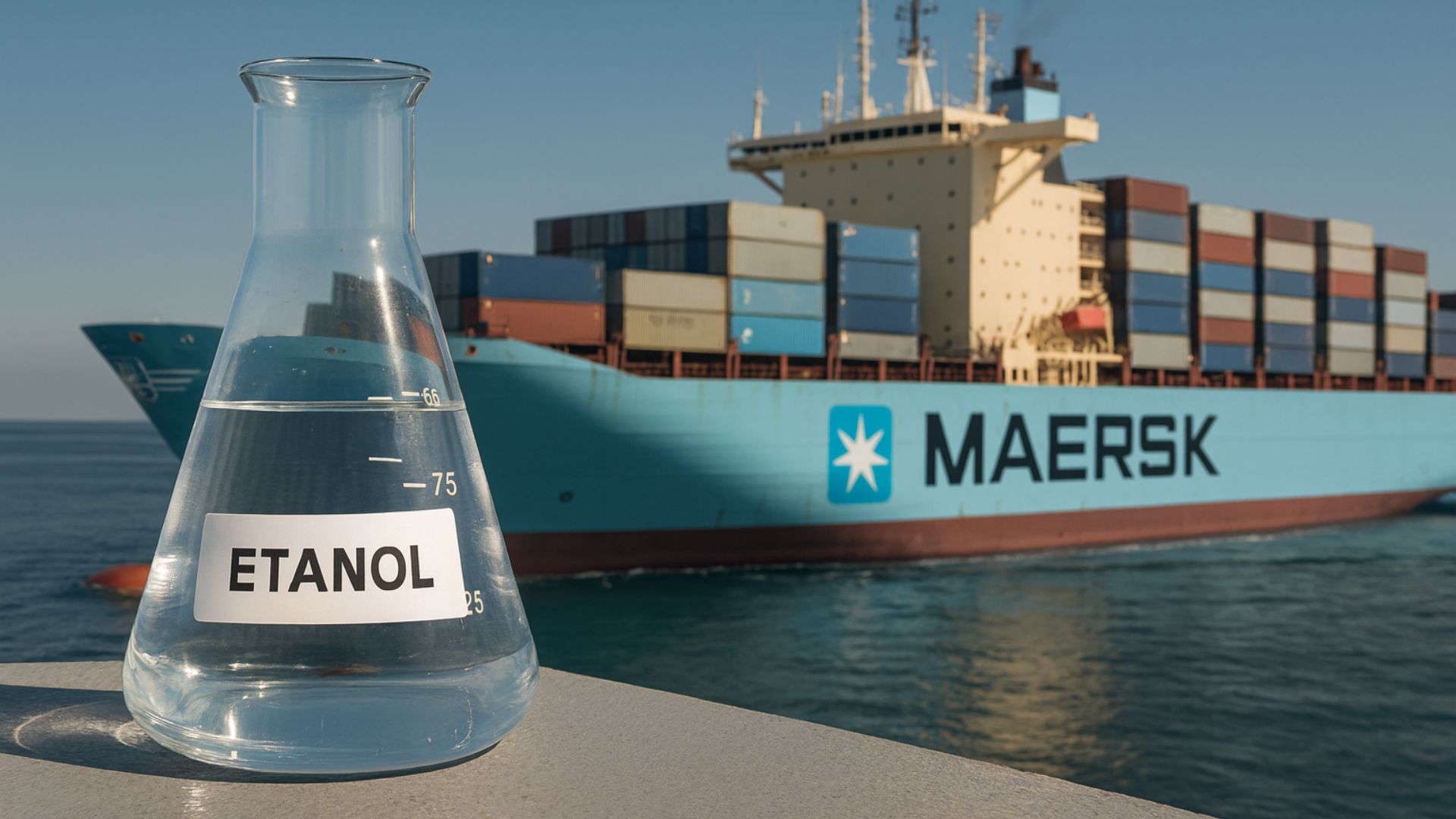
Maersk Advances Energy Transition by Expanding Ethanol Testing After Positive Performance of E10 Vessel, Now Evaluating 50% Blend to Accelerate Decarbonization of Maritime Transport
On December 5, 2025, Maersk announced a new phase of experiments with low-emission marine fuels. According to a report published by Globo Rural and other outlets, after successfully validating a test using 10% ethanol (E10) blended with methanol on the Laura Maersk vessel, the company confirmed it will now expand the analyses to a blend containing 50% ethanol, marking an important advancement in its strategy for global decarbonization of maritime transport.
Why Is Maersk Betting on Ethanol in Its Decarbonization Strategy?
The initiative gained international attention for paving the way for the use of ethanol as fuel for long-haul navigation, a sector responsible for about 3% of global greenhouse gas emissions, according to studies. The change signals a significant movement towards energy transition in an industry traditionally reliant on fossil fuels.
Maersk has taken the lead in the search for cleaner marine fuels. This is because, according to widely disseminated estimates, maritime transport still contributes a relevant share of global CO₂ emissions.
-
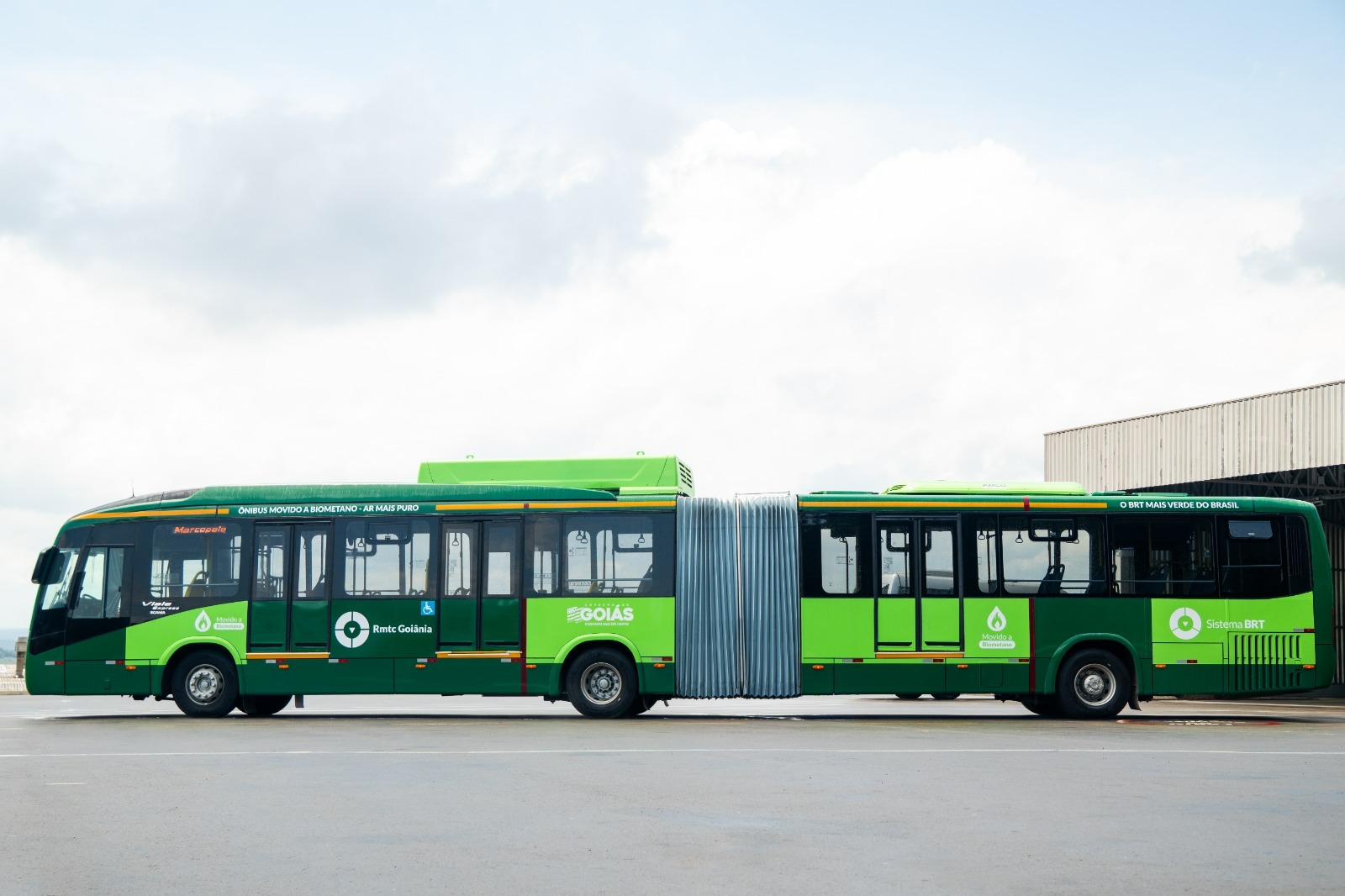
Revolution in public transport: Goiânia puts into circulation the first articulated buses powered by biomethane in Brazil and promises to drastically reduce pollution on the Anhanguera Corridor.
-
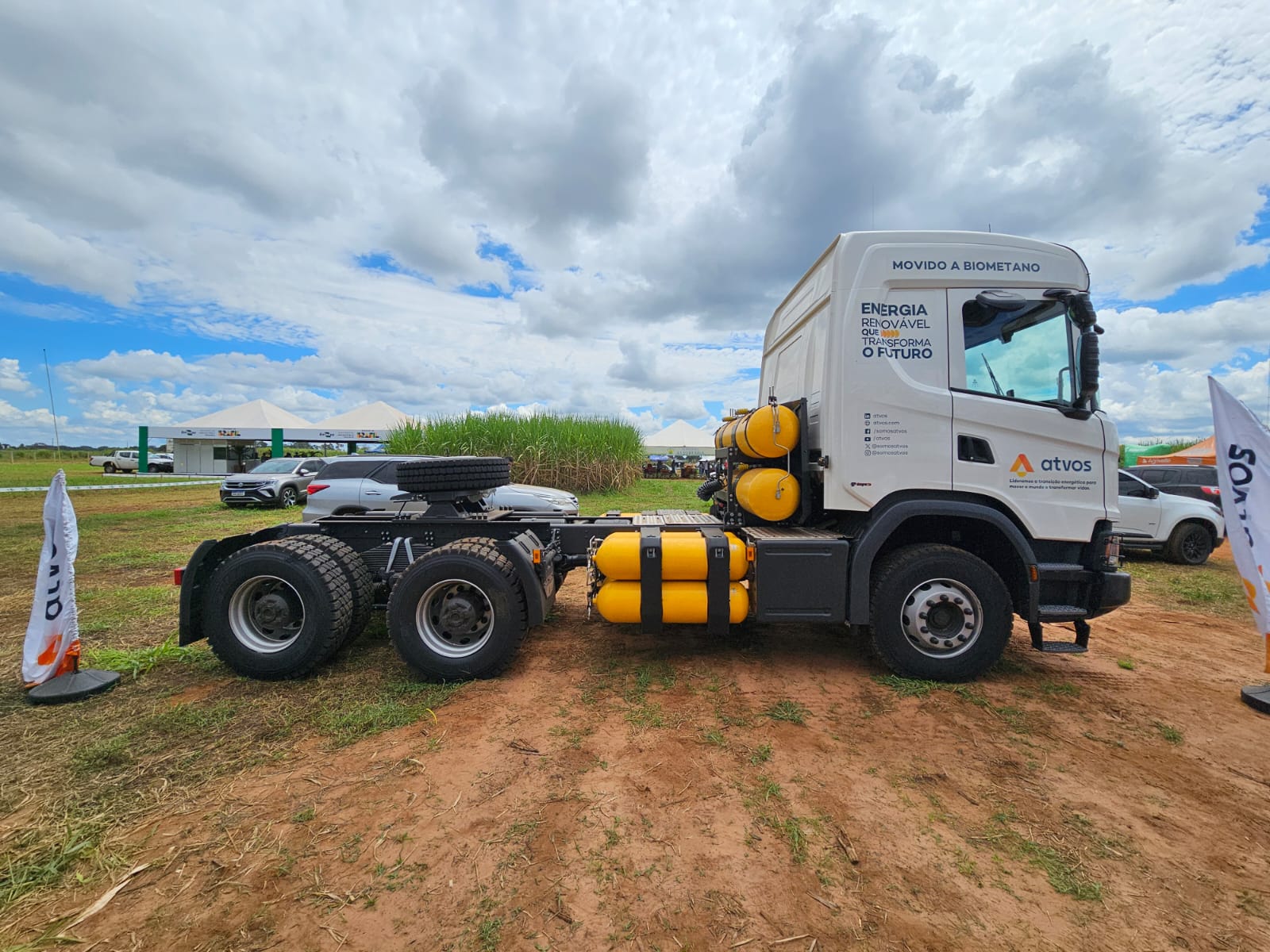
From the field to the pipelines: Mato Grosso do Sul accelerates the energy transition and consolidates a new axis in renewable energy with the arrival of a giant biogas plant.
-
The Economist states that Brazil has a “secret weapon” against expensive oil and highlights how the country can reduce economic impacts even in international scenarios of high volatility.
-
Brazil accelerates decarbonization in the South: International forum in Foz do Iguaçu gathers leaders to discuss the advancement of biomethane in the energy matrix and the potential of “caipira pre-salt.”

As international regulations become more stringent and major shippers push for more sustainable logistics chains, companies like Maersk are accelerating initiatives capable of drastically reducing their environmental footprint.
In this context, ethanol stands out as a promising option due to its widespread global supply, technological maturity, and existing infrastructure—especially in countries like Brazil, one of the world’s leading producers. These characteristics could facilitate eventual large-scale adoption.
Furthermore, the use of ethanol opens new possibilities for complementing other alternative fuels in development, such as biomethanol, biodiesel, and, in the future, biogas.
The Initial Test with the E10 Vessel and Maersk’s Positive Results
The first experiment, conducted between October and November 2025, assessed the compatibility of a blend containing 10% ethanol and 90% methanol in the dual-fuel engine of the Laura Maersk. This phase aimed to identify any impacts on ignition, combustion, lubrication, and the integrity of engine components.
The analyses were considered positive. According to information released by the sources responsible for coverage, the blend did not present any issues that compromised the operational performance of the vessel.
This solid result allowed Maersk to confidently move forward to a more ambitious phase: testing with 50% blend, representing a significant jump in the share of ethanol in the marine fuel used.
The success of E10 was crucial to validate the technical viability and pave the way for more robust blends.
Expansion of Tests with 50% Ethanol Blend
Starting December 5, 2025, the company officially began evaluating a blend containing 50% ethanol, a proportion that is much more challenging from a technical standpoint. The goal is to measure how the dual-fuel engine performs under real navigation conditions using a fuel with a high presence of ethanol.
The blend will initially be tested on the same vessel, the Laura Maersk, which is already equipped and configured to operate with alternative fuels. The expected results include:
- detailed analysis of combustion with higher ethanol content;
- variations in energy consumption;
- stability during long journeys at sea;
- impacts on maintenance, wear, and corrosivity;
- performance under different weather conditions.
The company emphasized that the new testing phase represents not only a technical validation but also an investigation into operational and economic feasibility on a global scale. After all, if the 50% blend demonstrates efficiency, the demand for ethanol could increase drastically—with projections already discussed in the sector reaching billions of liters annually.
Potential Impacts on the Global Market and the Brazilian Ethanol Sector
The expansion of tests with high ethanol concentration could generate significant impacts on the international biofuel market. Among the main:
Opportunities for Brazil
As one of the largest global producers of ethanol, Brazil could directly benefit from this new demand. This includes:
- increased exports;
- attraction of investments in new production routes;
- appreciation of the sugar-energy chain;
- stimulation of innovation in renewable fuels.
Industry sources reported that if the use of ethanol in large scale navigation were to be adopted worldwide, the necessary volume would be enough to profoundly alter the global market.
Challenges to Ensure Sustainability
Although the economic potential is clear, the sector would need to ensure that all supplied ethanol meets stringent sustainability standards. This involves traceability, certifications, and monitoring to avoid practices that could cause environmental impact, such as deforestation or pressure on agricultural areas. Maersk emphasized the need for a sustainable supply chain if ethanol is to be incorporated as a long-term fuel.
The Fleet and Maersk’s Environmental Commitments
Maersk is among the most advanced shipping companies in the energy transition. Since 2021, all new vessels ordered by the company are dual-fuel, capable of operating with low-emission options.
By the end of 2025, the widely reported expectation was that the fleet would have 19 vessels equipped to operate with methanol and alternative fuels, marking a consistent advancement towards climate neutrality.
The company maintains a global goal of achieving net zero emissions by 2040, adopting multiple energy alternatives to mitigate risks related to global availability and fuel price volatility.
Ethanol, therefore, emerges as another piece of this diversified energy ecosystem, reinforcing the company’s strategy not to depend on a single low-carbon solution.
Operational and Logistical Challenges for the Adoption of Maritime Ethanol
Despite the optimism, global adoption faces significant obstacles:
- Port Infrastructure: few ports around the world are prepared to supply ethanol as a marine fuel.
- Environmental Certification: traceability must ensure sustainable origins.
- Operational Safety: the behavior of the fuel on long crossings needs to be fully understood.
- Economic Viability: the cost of ethanol must remain competitive compared to other renewable options.
- Scaling Capacity: the global market would need to expand supply without compromising other production chains.
These factors will determine whether ethanol can become a widely adopted fuel by the shipping industry in the future.
What the Results Could Mean for the Future of Maritime Transport
Maersk’s expanded initiative represents much more than a simple operational test—it signals a clear trend of transformation in global maritime transport. If the experiment with 50% blend confirms efficiency, safety, and economic viability, ethanol could solidify its position as one of the main alternative fuels to reduce emissions in the sector.
This would have direct repercussions on international trade, the biofuels agribusiness, and the sustainability strategies of large global companies. Maersk’s movement reinforces that energy innovation is advancing rapidly and that ethanol could play a strategic role in the climate transition of maritime transport in the coming years.








Seja o primeiro a reagir!