





 Portuguese
  English
  Spanish
  5 min of reading
  0 comments


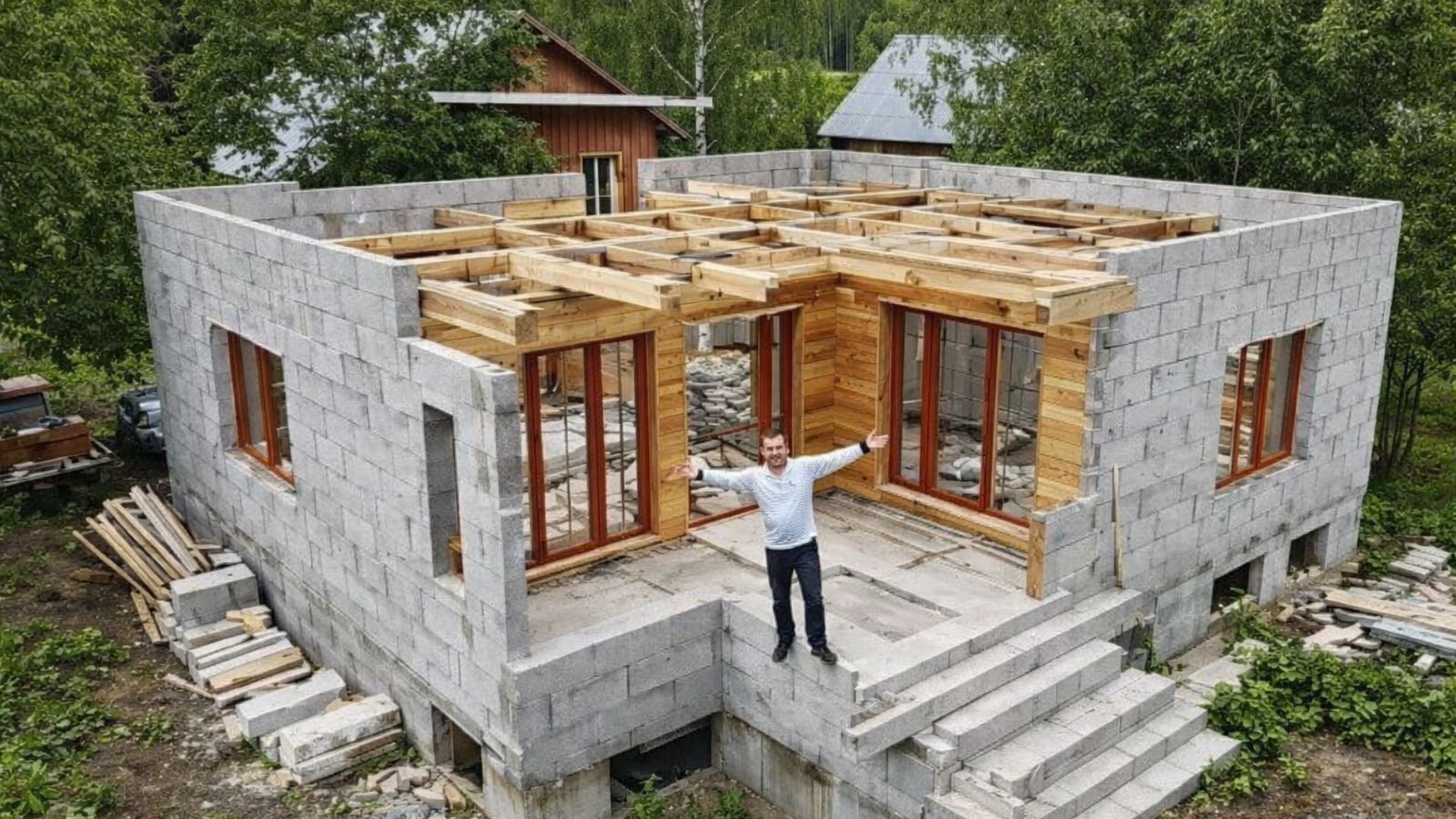
Independent Project Bets on Millimeter Engineering, Oversized Walls, and Continuous Thermal Insulation to Reduce Long-Term Costs and Extend the Structure’s Lifespan for Up to a Century, Focusing on Energy Efficiency and Low Maintenance.
In about 500 days of work, Dmitry Lukin single-handedly completed the construction of a house designed to reduce costs over time, combining oversized walls and continuous thermal insulation to decrease energy consumption and the need for structural maintenance, according to the project’s own description.
The project gained notoriety after appearing in videos on the Quantum Tech HD channel and on the profile @DmitryLukinDIY, which showcase the step-by-step of the construction site and the rationale behind construction choices driven by performance rather than finishing shortcuts.
Technical Planning and Execution Schedule
To avoid improvisations, Dmitry organized the construction as an engineering project, defining the sequence of steps before starting execution and minimizing adjustments made “on the fly,” a practice that tends to increase waste and leave room for hidden failures.
-
Friends have been building a small “town” for 30 years to grow old together, with compact houses, a common area, nature surrounding it, and a collective life project designed for friendship, coexistence, and simplicity.

-
This small town in Germany created its own currency 24 years ago, today it circulates millions per year, is accepted in over 300 stores, and the German government allowed all of this to happen under one condition.

-
Curitiba is shrinking and is expected to lose 97,000 residents by 2050, while inland cities in Paraná such as Sarandi, Araucária, and Toledo are experiencing accelerated growth that is changing the entire state’s map.

-
Tourists were poisoned on Everest in a million-dollar fraud scheme involving helicopters that diverted over $19 million and shocked international authorities.


In this planning, the foundation and structure were treated as absolute priorities because any mistakes in these phases are likely to manifest later as cracks, leaks, and costly rework, especially when the house undergoes temperature and humidity variations.

Throughout the process, the idea of “short-term foolish savings,” mentioned in the original account, was replaced by purchases and decisions focused on durability, with the argument that more robust materials can reduce future interventions and preserve the stability of the whole.
Oversized Structure and Durability
Rather than just building walls to enclose spaces, the project was described as a structure designed to maintain strength and alignment for decades, creating a stable base for insulation and finishes to function without losing efficiency over time.
This logic contrasts with constructions that prioritize a quick appearance, or a “pretty face,” but overlook the behavior of the building in the face of cycles of expansion, movements, and small settlements that, when combined, tend to generate pathologies.
In the narrative of the method, the term “over-engineered” is used to summarize the strategy of oversizing elements, adopting larger safety and robustness margins, with the promise of minimizing recurring repairs that typically arise a few years after delivery.
Continuous Thermal Insulation and Energy Efficiency
Energy efficiency is primarily attributed to the continuous thermal insulation, designed to reduce heat losses and minimize the impact of external variations, while the house operates closer to a “thermal bottle,” a term used to explain passive comfort.

This type of solution depends on continuity between layers and good sealing, because any weak point in joints, transitions, and material connections tends to become a preferential path for heat and moisture exchange, compromising performance even when the material is good.
By emphasizing sealing and insulation, the account associates the higher initial investment with a reduction in consumption over the years, with an estimate of saving 50% on energy.
Millimeter Engineering and Waste Reduction
Another hallmark of the project is the so-called “millimeter engineering,” presented as a routine where measurements and fittings are defined in advance, avoiding corrections during construction and reducing the need for improvised cuts that can weaken specific points of the masonry.
The execution, according to the description, aims to keep whole pieces and a predictable work rhythm, swapping the logic of “doing it on the fly” for preemptive decisions, which tends to reduce material leftovers and limit changes that spread throughout the rest of the construction.
For this reason, the work sequence is presented as a decisive point, with the order of foundation, structure, sealing, insulation, and finishing treated as a rule to minimize rework, as reversing phases tends to hide problems behind coatings.
Higher Initial Cost and Promised Reduced Maintenance
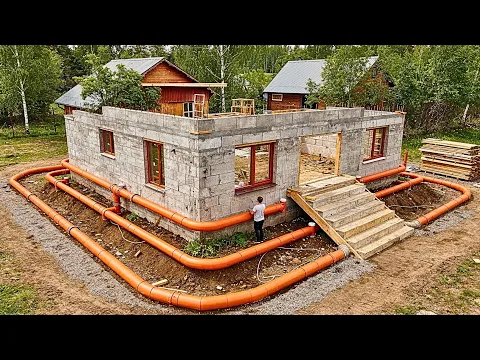

The text attributes to the method a cost about 20% higher than that of a conventional construction, arguing that the extra expense would be justified by the projected savings over time, with a reduction of 90% in maintenance, especially for structural and envelope corrections.
Still, the comparison is presented as a summary of the concept, not as a technical audit, because there is no public detailing in the cited material about which items are included in this account, what time horizon was considered, and what would be the reference standard.
Even without these parameters, the central idea is clear: investing more in structure, insulation, and execution can reduce the “invisible cost” that often appears later, when leaks, mold, and cracks require repeated interventions and interruptions in the use of the property.
Impact on Social Media and Debate on Construction Standards
The disclosure of the case primarily relies on videos on YouTube, with a version published by the Quantum Tech HD channel and content on Dmitry’s own channel, which helped transform an individual construction into a reference material for curious individuals and professionals.
The original text cites “more than 18 million views” for the content displayed by Quantum Tech HD, but public surveys from third parties indicate counts in the millions for this specific video, suggesting that the number may vary depending on the date checked.
At the center of the story remains the achievement of single-handedly conducting a long and technically demanding construction, linking execution discipline, material choices, and performance focus, with the promise of a house with “soul” and prepared to last.
If residential works often prioritize short deadlines and immediate finishes, what would change in construction standards if more projects started to treat insulation, sealing, and oversizing as the core of the investment?









-

-

-

-

-

-

25 pessoas reagiram a isso.