





 Portuguese
  English
  Spanish
  4 min of reading
  29 comments


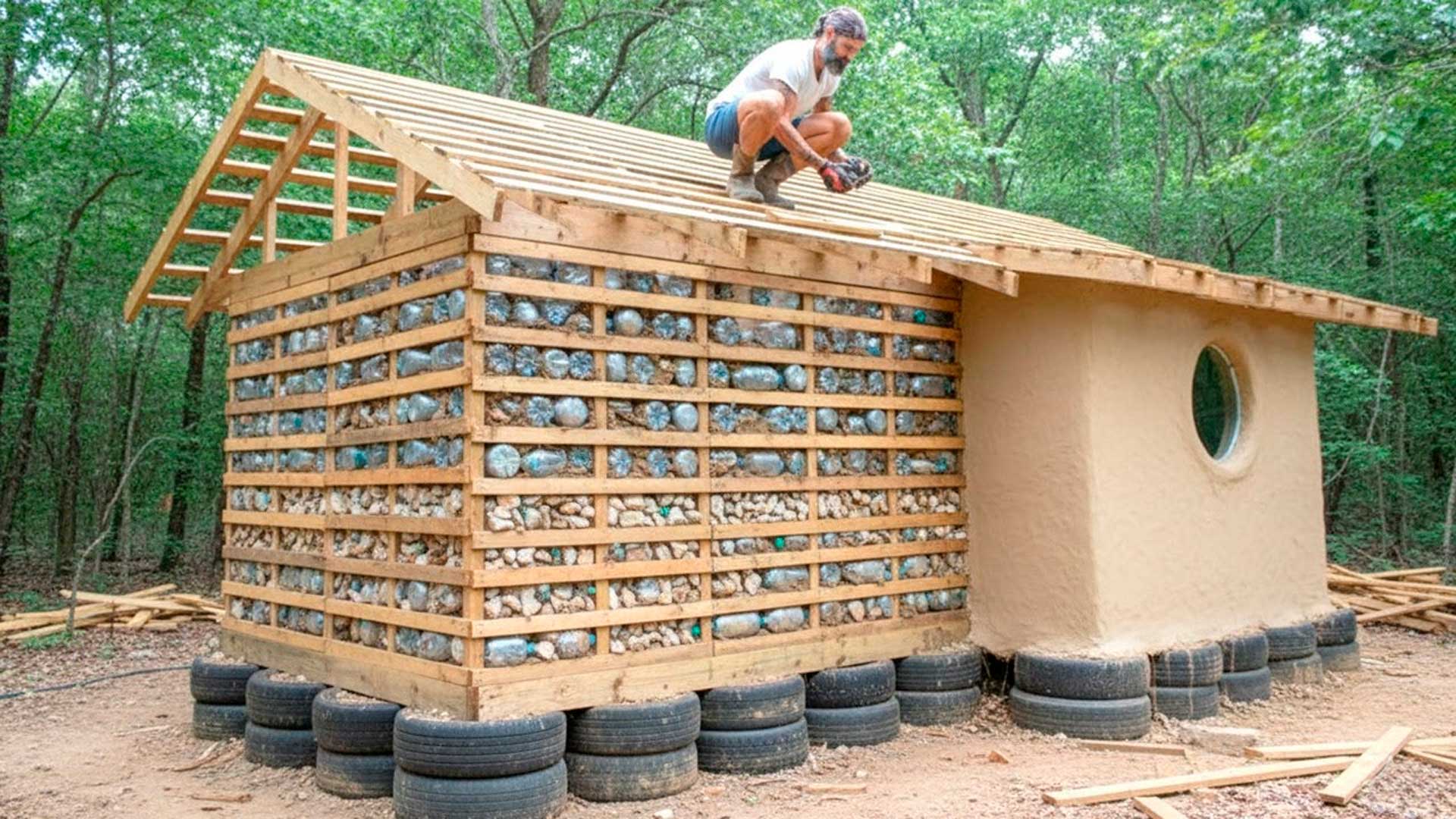


Innovative Project Shows How Discarded Materials Can Be Transformed Into a Functional Home, Despite Neighbor Complaints and Challenges Faced During Construction
The construction of a house using exclusively discarded materials has drawn attention on social media and sparked discussions about sustainability and alternative architecture. One man decided to transform waste into housing, using wooden pallets, old tires, plastic bottles, and other waste that would be discarded.
The project, which combines creativity with environmental awareness, demonstrates how it is possible to give a second life to materials considered useless.
The initiative gained prominence in videos showing the entire construction process, from the foundation to the final finishes.
-
Friends have been building a small “town” for 30 years to grow old together, with compact houses, a common area, nature surrounding it, and a collective life project designed for friendship, coexistence, and simplicity.
-
This small town in Germany created its own currency 24 years ago, today it circulates millions per year, is accepted in over 300 stores, and the German government allowed all of this to happen under one condition.

-
Curitiba is shrinking and is expected to lose 97,000 residents by 2050, while inland cities in Paraná such as Sarandi, Araucária, and Toledo are experiencing accelerated growth that is changing the entire state’s map.

-
Tourists were poisoned on Everest in a million-dollar fraud scheme involving helicopters that diverted over $19 million and shocked international authorities.


Despite neighbor criticism and the unconventional appearance, the structure reveals that sustainable architecture can be affordable and functional. The creator of the project did not worry about traditional aesthetic standards, but rather about originality and resource utilization.
Foundation Made With Old Tires Guarantees Structure Stability

The base of the construction was established using discarded automotive tires as support for the main pillars. According to the applied method, the tires were filled and positioned strategically to distribute the weight of the structure evenly.
This technique, known in bioconstruction projects around the world, offers stability and durability.
The tires act as natural thermal insulators and prevent direct contact of the wood with the ground, preventing decay.
The choice of this material also represents a solution to one of the most problematic wastes on the planet. According to environmental data, millions of tires are discarded annually, and projects like this demonstrate creative alternatives for reuse.
Wooden Pallets Form Walls and Structure of the Home
After establishing the foundation, the builder used discarded wooden pallets to raise the walls and create the main structure of the house. The pallets were fixed to the vertical pillars, forming a skeleton that defines the rooms and internal layout.
The assembly process followed an intuitive approach, without conventional architectural plans. Each piece was assembled according to material availability and the needs that arose during the construction.
This methodology, although unorthodox, allowed for flexibility and constant adaptation. The spaces between the pallets were later filled with plastic bottles, stones, and soil, creating thermal insulation and providing greater resistance to the walls.
Plastic Bottles and Various Materials Complete the Insulation
One of the most interesting aspects of the construction is the filling of the walls with plastic bottles filled with earth and other found materials. This technique, used in various sustainable construction projects, provides efficient thermal insulation.
The bottles were placed in the gaps left between the pallets, creating a barrier against temperature variations.
Additionally, stones, plastics, and other waste were incorporated into the structure, following the principle of utilizing everything that was available.
The result is a heterogeneous wall, with different colors, textures, and materials. Despite its unusual appearance, the combination demonstrates structural coherence and fulfills the basic functions of a residential enclosure.
Neighbors Complain But Builder Maintains Determination in the Project
During the construction process, the man faced complaints from local residents, possibly disturbed by the appearance of the materials used and the temporary accumulation of waste on site. According to reports, the tires, bottles, and other items caused visual discomfort.
Despite the criticism and social pressure, the builder kept his focus on his goal. The determination to complete the project reflects not only a personal dream but also a statement about creative freedom and questioning established norms.
Similar cases of alternative constructions often face initial resistance from communities. Experts in sustainable architecture point out that social acceptance of these projects tends to increase when environmental and economic benefits become evident.
Finishes Include Fireplace, Windows, and Comfort Elements
In the final stages, the house received doors and windows rescued from waste, which were installed and adjusted to the structure.
The utilization of these architectural elements demonstrates that essential components for comfort and functionality can be found in discards.
A small fireplace was built inside, including a complete chimney. This element not only provides heating but also adds a cozy aspect to the rustic environment of the home.
The sleeping area was prepared with hay, later covered with soil and cement, creating a firm base.
The finishes, although simple, ensure the minimum conditions for habitability and protection against the elements.
Adaptive Architecture Redefines Concepts of Construction Planning
The project represents an inversion of traditional construction logic. While in conventional architecture the design comes first and materials are purchased according to specifications, in this case, the available materials determined the final design.
This approach, known as adaptive or responsive architecture, has gained traction in discussions about sustainability. Experts advocate that it reduces waste and stimulates creativity in solving construction problems.
The result is a structure without conventional symmetry but with its own internal logic. Each element serves a specific function, and the chaotic appearance hides a functional organization that meets the basic needs of housing.
The experience also served as therapy and stress relief for the builder, according to observations of the process. The physical activity and manual labor provided benefits that go beyond the simple construction of a shelter.
And you, do you believe that houses built with recycled materials can be a viable solution to the housing and environmental crisis? Or do you think projects like this should follow stricter regulations before being implemented? Share your opinion in the comments and share your view on this alternative form of housing that divides opinions between sustainable innovation and aesthetic controversy.










Me parece excelente alternativa al problema de vivienda y ambiental en el mundo y la cantidad de desechos qué se multiplican cada vez más en el planeta, claramente se necesita una planificación para lograr la habitabilidad indispensable siguiendo estándares ya establecidas por ciertas normas. Pero creo firmemente en la reutilizacion de materiales que brinden nuevas oportunidades, soluciones y alternatividad.
( Los materiales ya existentes )
Un proyecto de reutilización de materiales, dará siempre críticas, las qué sólo darán oportunidad de mostrarle a quiénes sin ninguna relevante información se manifiestan en contra de ese proyecto. Muchas especies animales, han mostrado y seguirán dando idea de lo tracendente de utilizar los mensajes seriales ya existentes.!!!