





 Portuguese
  English
  Spanish
  5 min of reading
  0 comments


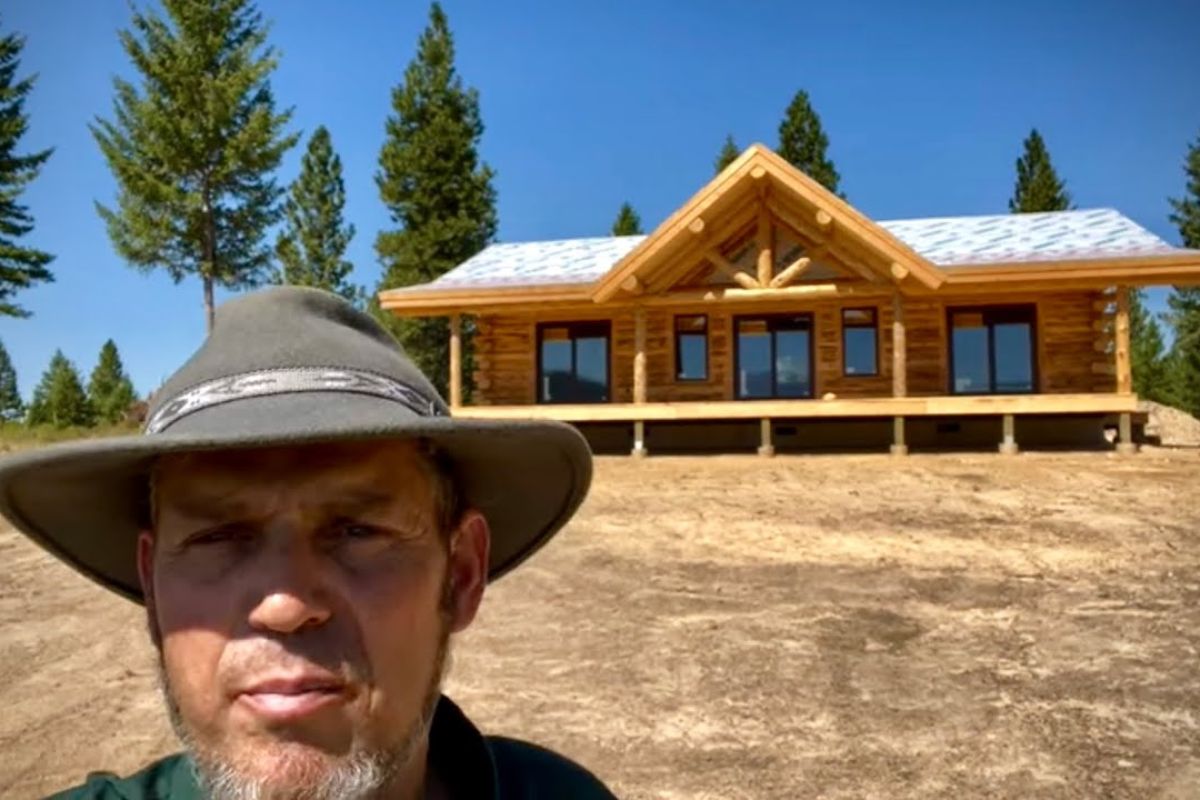
In A Recently Assembled Ranch, The Log Cabin Emerges As A Pre-Assembled, Numbered Package, Disassembled And Reassembled On Site. In Montana, The 8-Inch Concrete Foundation Responds To The Weight Of The Logs, While The Roof Receives Continuous Foam For Sealing And Insulation In Winter With Wide Eaves And Heavy Windows.
The Single-Story Log Cabin Assembled By A Team Specialized In Logs Exposes A Little Discussed Point Outside The Construction Site: When The Project Arrives “Dry,” With The Structure Standing, What Remains Is A Set Of Invisible Decisions About Load, Sealing, And Maintenance In Extreme Weather Conditions In Montana.
Those Passing By The Porch And Seeing The Finished Volume Tend To Notice The Design And Scale, But The Critical Part Is In What Does Not Appear: Massive Concrete Where The Load Concentrates, Seamless Sealed Roof, And A System Designed For Natural Accommodation Of The Logs Without Opening Gaps In Winter.
Measurements, Useful Area, And The Logistics Of Getting Everything Up

The Described Package Is 30 Feet At One End And 44 Feet Long, Resulting In 1,320 Square Feet On A Single Level, Equivalent To 123 M².
-
Friends have been building a small “town” for 30 years to grow old together, with compact houses, a common area, nature surrounding it, and a collective life project designed for friendship, coexistence, and simplicity.

-
This small town in Germany created its own currency 24 years ago, today it circulates millions per year, is accepted in over 300 stores, and the German government allowed all of this to happen under one condition.

-
Curitiba is shrinking and is expected to lose 97,000 residents by 2050, while inland cities in Paraná such as Sarandi, Araucária, and Toledo are experiencing accelerated growth that is changing the entire state’s map.

-
Tourists were poisoned on Everest in a million-dollar fraud scheme involving helicopters that diverted over $19 million and shocked international authorities.


The Choice Of Single-Story Log Cabin Expands The Usable Area On The Same Plane And Reduces Dependence On Stairs, Something Relevant In Snow And Ice Regions.
The Logistics Begin Before The Site: The Log Cabin Is Pre-Assembled In Its Own Facility, Numbered Piece By Piece, Disassembled, And Then Shipped For Reassembly.
In Practice, This Transforms The Construction Into A Fitting Operation, But Does Not Eliminate The Heavy Transport Stage: The Logs, Even When Dried, Fill Almost Two 50-Foot Flatbed Trailers.
Massive Concrete, 8-Inch Walls, And The Direct Relation To Weight

The Mentioned Foundation Is A Crawl Space With A Formed And Poured Concrete Wall, 4 Feet High And 8 Inches Thick.
The Choice Of Concrete Poured On Site Is Justified By The Accumulated Weight Of The Logs And The Need For Rigidity Under A Flooring System That Receives Continuous Load.
In This Type Of Log Cabin, Concrete Is Not A Peripheral Detail: It Defines Plumb, Level, And Stability For The Settlement.
When Ventilation Openings Are Not Left In The Concrete, The Solution Migrates To The Flooring System, Which Changes The Reading Of The Project And Requires Fine Adjustments To Maintain Ventilation Of The Lower Space.
Logs, “Fit And Pass” Corners, And What The Chainsaw Really Needs To Deliver
The Mentioned Corner System Is The “Fit And Pass,” With A Projection Of 8 To 10 Inches At The Ends.
In A Log Cabin, This Arrangement Creates A Robust Appearance And, More Importantly, A High-Quality Corner When Executed Precisely, Since Each Log Is Unique, Hand-Stripped, And Never Repeats.
The Visible Finish, However, Is Only The Surface. The Real Adjustment Appears In Complex Notches, Such As The “Valley” That Receives Roof Boards And Connects Rounded Surfaces At Multiple Angles.
This Is Where Execution Decides Whether The Log Cabin Will Seal Well Or “Breathe” Too Much, Even Though The Roof Is Sealed.
Sealed Roof With Continuous Foam And The Debate On Sealing In Extreme Weather

The Described Roof Uses Tongue And Groove Boards And Above Them, I-Beams That Create A Cavity For Foam.
The Application Of 5 Inches Of Foam Is Presented As A R38 Barrier, With The Possibility Of 8 Inches To Achieve R49 Where The Local Requirements Are Higher.
The Central Technical Point Is Continuity: The Roof Is Treated As A Single Seal, Without Insulation Discontinuities Crossed By Wood Touching The Ceiling.
In Montana, Where Extreme Cold Punishes Air Infiltration, A Sealed Roof Reduces Thermal Variations, Helps Maintain Internal Stability, And Decreases The Risk Of Condensation In Cold Spots.
Heavy Windows, Low Emissive Glass, And The Role Of The Set In Efficiency
The Mentioned Windows Are Made Of A Wooden Frame With A Vinyl Core And An Aluminum Exterior Coating, With Low Emissive Glass Filled With Argon Gas.
In Practical Terms, This Places The Window Set As Part Of The Thermal System, Not Just As An Aesthetic Opening.
In A Log Cabin, The Interface With The Logs Requires Additional Attention: Doors And Windows Are Installed With Foam And Accommodation Space Above, So That The Natural Settling Of The Logs Compresses The Seal Without Crushing The Frame.
The Goal Is To Keep The Sealed Roof And The Openings Stable, Even When The Set Settles Over Time.
Porch, 4-Foot Eaves, And The Engineering Of Everyday Use
The Indicated Porch Has A Deck Of 8 By 16 Feet, With Beams Spaced 16 Inches On Center And A Double Edge For Reinforcement.
The Choice Of Locally Sawn Boards, With Dimensions Above Standard Commercial Sizes, Reinforces The Idea Of Oversizing In Components Subjected To Water And Ice.
The 4-Foot Eaves At Each End Serve As Passive Protection.
In Montana, Long Eaves Reduce Direct Water On The Logs, Help Preserve The Exterior Finish, And Decrease Moisture Cycles, One Of The Factors That Most Pressures Maintenance In A Log Cabin When There Is Thawing And Refreezing.
What The Construction Delivers “Dry” And What Remains Open On Site
At The End Of The Reassembly, The Log Cabin Appears “Dry”: Floor Installed, Structure Standing, Roof Mounted, And Sealed Roof, With Visible Wiring For Recessed Lighting.
What Is Missing, According To The Plan, Are Steps Such As Specific Concrete, Final Electrical Work, Interior Finishing Of Windows And Doors, And Any Interior Walls In Structure.
This Division Of Responsibilities Changes The Schedule Risk: When An External Step Is Delayed, The Rest Does Not Advance, Even With The Logs Ready.
For Those Living In Montana, The Time Factor Is Also Climatic Because Heavy Windows, Concrete, And A Sealed Roof Need To Be Closed Before A Winter Turn So That The Log Cabin Does Not Become A Thermal Problem Even In The Finishing Phase.
The Log Cabin Of The Ranch Type Shows That Rusticity, Here, Is A Consequence Of Structural Choices, Not A Style.
Logs, Massive Concrete, And A Sealed Roof Comprise A Technical Package Designed For Extreme Cold, But Leave An Uncomfortable Question About Maintenance Cost, Deadlines, And Who Assumes What Remains After The Team.
If You Were To Build A Log Cabin In Montana, What Decision Would You Treat As Non-Negotiable: Thick Poured Concrete, Larger And Heavier Logs, Or A Sealed Roof With Continuous Insulation? And In Your Experience, What Fails First In Winter: Window Sealing, Accommodation Of The Logs, Or Ventilation Points In The Floor?










-

-

-

-

-

-

39 pessoas reagiram a isso.