





 Portuguese
  English
  Spanish
  4 min of reading
  0 comments


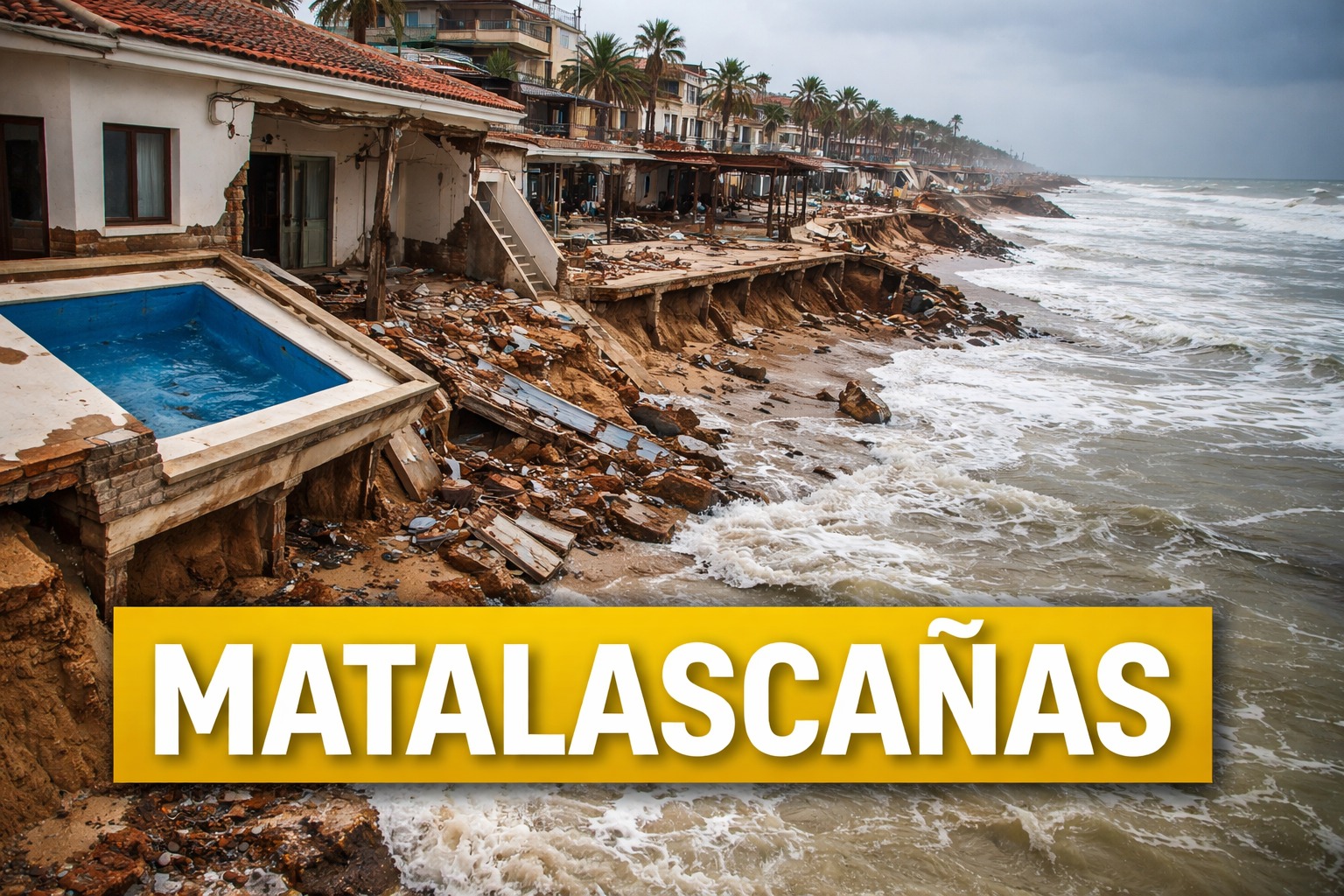
From Matalascañas to Scotland and New York, Storms, Planning Failures, and Rising Sea Levels Reveal Coastal Transformation, Where Resisting Is Expensive and Adapting Has Become Inevitable for Communities
In Matalascañas, the transformation of the landscape has ceased to be a distant prediction. The sea is no longer a contemplative element on the horizon but a present force that crosses physical boundaries. Water invades backyards, structures give way, beach bars disappear. What for decades was a broad strip of sand has lost its protective function, exposing homes and urban equipment to increasingly frequent and intense storms.
Erected between the 1960s and 1970s in an area marked by high natural erosion, the urbanization was born without coastal dynamics studies and without dune systems capable of acting as a barrier.
Today, the contrast is inevitable: constructions designed for a static coastline face a territory that has always been in motion.
-
Motorola launched the Signature with a gold seal from DxOMark, tying with the iPhone 17 Pro in camera performance, Snapdragon 8 Gen 5 that surpassed 3 million in benchmarks, and a zoom that impresses even at night.

-
Satellites reveal beneath the Sahara a giant river buried for thousands of kilometers: study shows that the largest hot desert on the planet was once traversed by a river system comparable to the largest on Earth.

-
Scientists have captured something never seen in space: newly born stars are creating gigantic rings of light a thousand times larger than the distance between the Earth and the Sun, and this changes everything we knew about stellar birth.

-
Geologists find traces of a continent that disappeared 155 million years ago after separating from Australia and reveal that it did not sink, but broke into fragments scattered across Southeast Asia.

The storms of 2026 did not initiate the crisis; they merely accelerated a process announced years ago, amplifying the feeling of abandonment among residents who see emergency responses arrive late and without a definitive character.

Exception That Became Routine
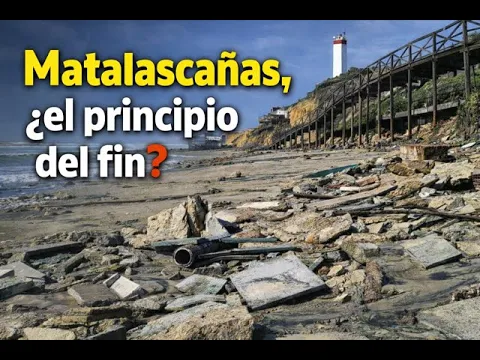
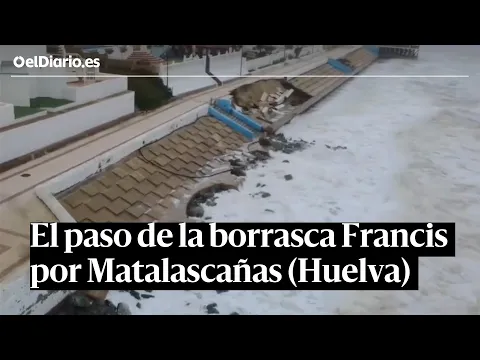
After Storm Francis, what was seen was not treated as an isolated event. Within weeks, a new storm repeated the script, bringing water to the doors of houses, sweeping away beach bars and reopening still-recent scars.
Erosion has ceased to be perceived as a future threat. In Matalascañas, it has consolidated as a permanent state.
The absence of coordination between administrations and the adoption of temporary measures have worsened the scenario. The beach, which could previously recover after storms, can no longer find the same natural balance disrupted two decades ago.
Among residents, the conversation has changed: it is no longer asked whether the sea will advance, but how much and at what speed.
Science Takes On the Unthinkable
The drama experienced locally echoes in broader scientific analyses. Studies conducted in the UK in 2022 warned that hundreds of thousands of coastal homes could be exposed or even abandoned in a few decades.
The justification is harsh: in many cases, protecting them would be unfeasible from both economic and technical viewpoints.
The message, although uncomfortable, is clear. Some communities will have to seek refuge inland. The advance of sea levels is not limited to the gradual rise of water.
It intensifies beach erosion and alters the breaking point of waves, amplifying the impact of each storm and reducing the effectiveness of traditional defenses.
Beaches and Economies at Risk
On a global scale, beach erosion progresses unevenly, yet persistently.
A significant part of the sandbanks is already showing retreat, with projections indicating severe losses before the middle of the century. Human pressure appears as a central factor in this imbalance.
Intense tourism, accelerated urbanization, ports, dams, and the destruction of dunes have reduced the natural sand reserves that allowed beaches to adapt.
In coastal-dependent regions, such as Spanish Mediterranean, shrinking beaches transcend environmental impact. They become a direct threat to the economic and social fabric built around them.
In the North, the Same
In Scotland, Montrose beach loses meters of sand every year, at a pace that exceeds scientific predictions.
The scenario includes crumbling sidewalks, weakened dunes, and historic golf courses being gradually swallowed by the sea. Geography is changing, and with it, costs are changing.
Solutions like artificial sand replenishment emerge as alternatives, but they carry expensive and recurring character.
For indebted administrations, the challenge is no longer merely technical. It becomes structural: how much time can be gained before defenses give way?
Cities in Decline
In major urban centers like New York, rising sea levels threaten tens of thousands of homes amid a severe housing shortage.
A few months ago, The New York Times highlighted that the retreat is no longer occurring only in coastal villages but also in dense urban areas.
The strategy involves purchasing properties, demolishing them, and returning the land to the water. While large protection projects advance slowly, the need to rethink the classic model of occupancy is growing.
The coast ceases to represent expansion and becomes a symbol of a moving frontier that redefines urban future.
As a backdrop, an uncomfortable realization remains. From Matalascañas to Scotland, passing through New York and the Colombian Pacific, the same tension is repeated: cities, homes, and boardwalks were designed for a world in which the sea seemed fixed.
Today, reality shows the opposite. The ocean does not invade suddenly; it merely claims space on a coast that has never ceased to move.
With information from Xataka.







-

-

3 pessoas reagiram a isso.