





 Portuguese
  English
  Spanish
 3 min of reading


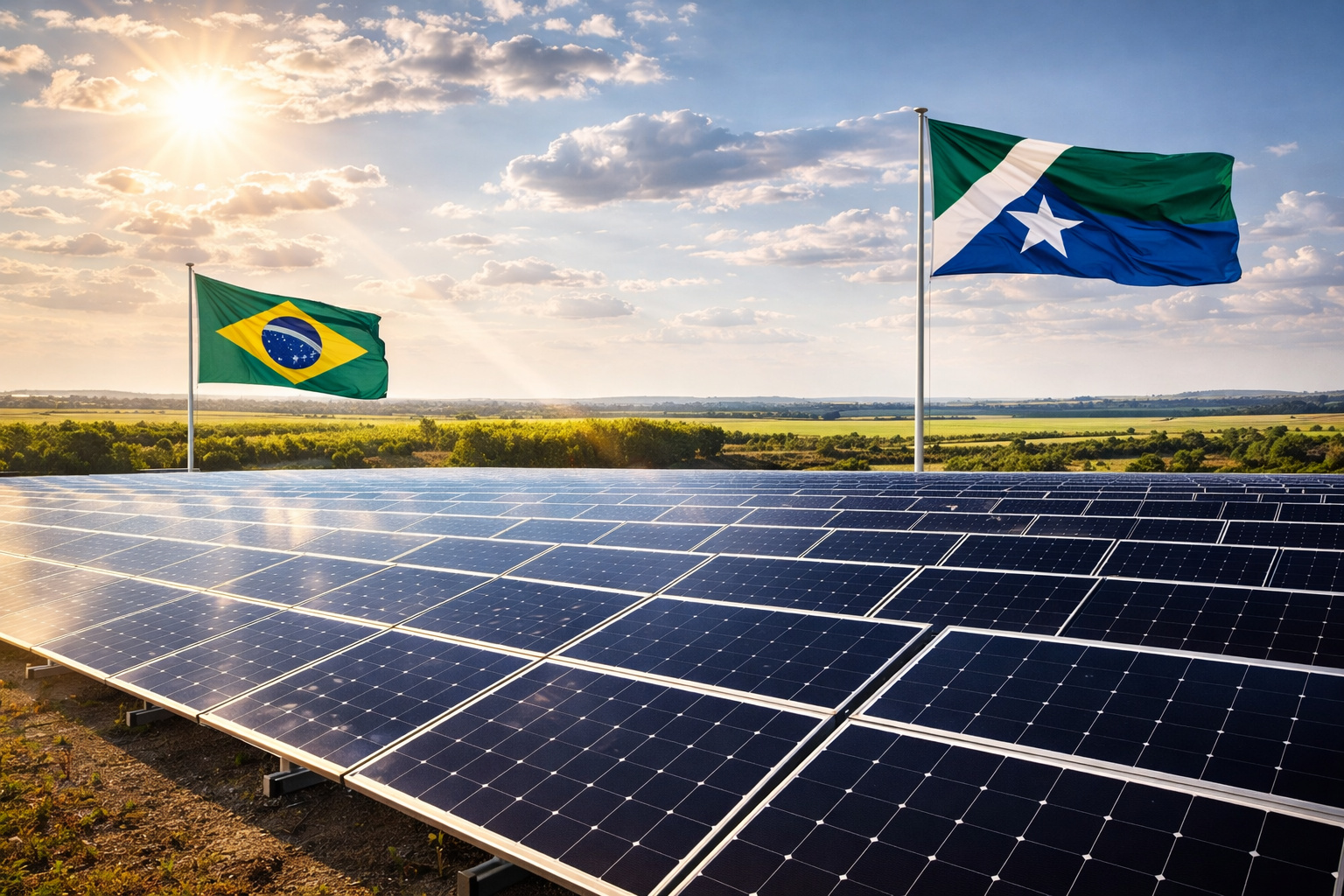
Mato Grosso do Sul Achieved the Title of Best Brazilian State for Solar Energy in 2025.
The position reinforces the state’s potential and shows how the region can become a reference in renewable electricity production in the coming years.
According to data from sector entities cited by consultants and experts, the performance of Mato Grosso do Sul combines solar irradiation above the national average and advancements in both small and large scale photovoltaic installations.
Solar Irradiation Above the Rest of the Country
The factor that attracts the most attention is the climate.
Mato Grosso do Sul has one of the highest incidences of sun in Brazil throughout the year.
Additionally, the state offers vast areas available for the installation of plants and distributed systems.
-
While Brazil wants to end the 6×1 work shift, the president of Argentina wants 12 hours for his workers, increasing political tension in the country.

-
The village where two rivers run side by side without mixing in Santarém and Alter do Chão reveals some of the most beautiful freshwater beaches on the planet.
-
Mars is accelerating, and scientists have discovered that the planet’s day is getting shorter, revealing surprising signs of internal activity.

-
Artemis 2 is set to launch on April 1 at 7:24 PM to orbit the Moon with four astronauts, but a class X solar flare and coronal mass ejection could interfere with communications and threaten the launch.

Consequently, each installed panel generates more energy compared to less sunny regions.
This advantage reduces the payback time on investment and attracts residential, commercial, and rural consumers.
Solar Energy as an Economic Engine
The state also ranks among those that have expanded connections to the electrical grid through self-generation.
As a result, Mato Grosso do Sul has reduced its dependence on conventional sources and increased the share of solar energy in the regional matrix.
In addition to the environmental gain, the expansion creates jobs, boosts the installation chain, and stimulates associated technologies such as inverters and batteries.
Thus, photovoltaic energy becomes a concrete tool for economic development.
A Path to Reduce Electricity Bills in 2026
The prominent position achieved in 2025 also signals a difference for the coming years.
With electricity tariffs varying across the country, experts state that installing solar systems is likely to remain the best alternative for savings in 2026.
Moreover, the possibility of connecting businesses and residences to new solar cooperatives and consortia strengthens the use of technology in areas further away from major urban centers.
Therefore, the greater the number of installed systems, the more consumers will have access to self-production and immediate reduction in their monthly bills.
Mato Grosso do Sul as an Example for the Country
The progress observed serves as a model for other Brazilian regions.
States with similar climates can accelerate local policies, while urban areas can exploit public and private rooftops.
Even so, leadership is not definitive.
States like Bahia, Minas Gerais, and Goiás are also competing and increasing investments.
Thus, the competition creates a healthy environment for the growth of solar energy in the national territory.
The recognition of Mato Grosso do Sul as the best state for solar generation was announced by the electricity sector and confirmed by consulting firms and experts throughout 2025.
These analyses considered data on production, installed capacity, and solar irradiation monitored on a national scale.
Thus, the state begins 2026 with a clear competitive advantage and indicates that solar energy will continue to grow as an economic and sustainable alternative for Brazilian consumers.








Seja o primeiro a reagir!