





 Portuguese
  English
  Spanish
  4 min of reading
  4 comments


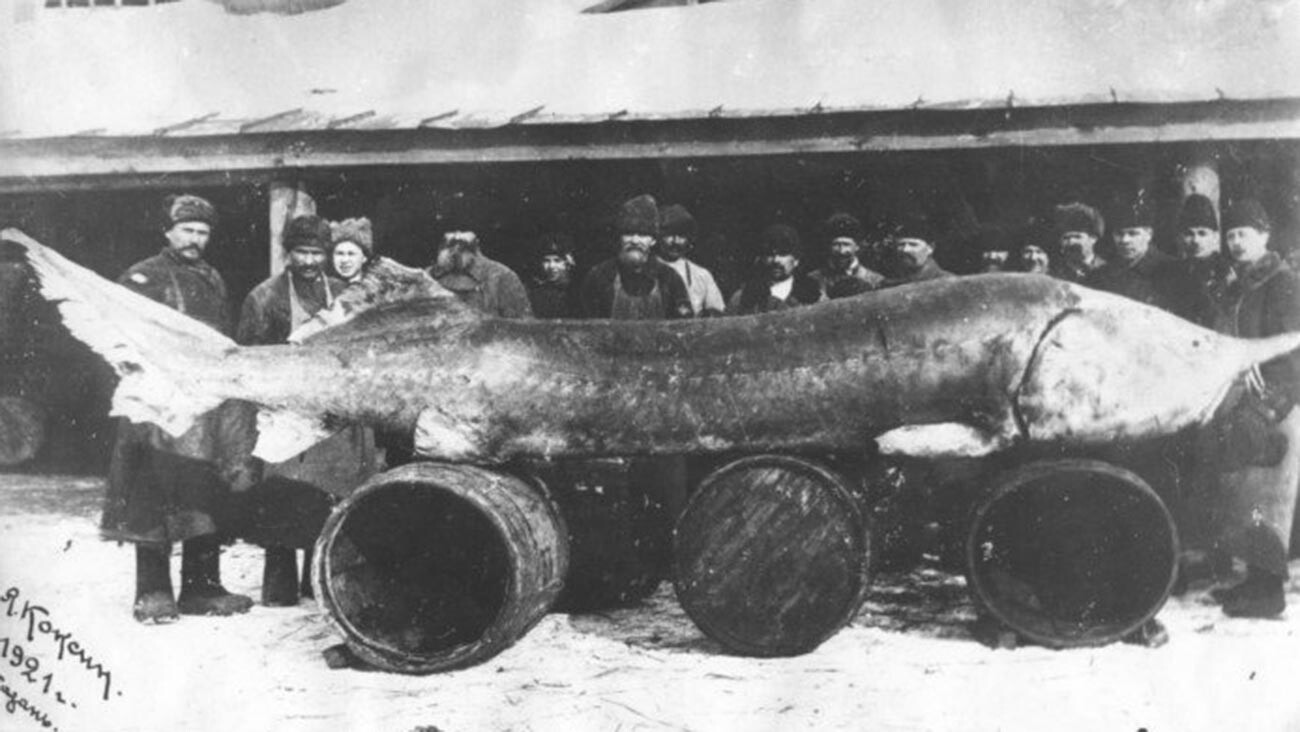


At 7.2 Meters and More Than 1.5 Tons, the Beluga Sturgeon Made History as the Largest Freshwater Fish Ever Recorded, Surpassing Any Other Known River Giant.
Among all the giants that have inhabited the planet’s rivers and lakes, none has gone as far as the Beluga Sturgeon (Huso huso). With reliable historical records pointing to a specimen of 7.2 meters in length and weighing over 1,571 kilograms, this animal holds an absolute place in natural history as the largest freshwater fish ever accurately documented. Its size rivals that of large oceanic sharks and surpasses any other known river fish.
This colossal fish is not just an isolated record, but the pinnacle of an ancient, resilient, and highly specialized lineage.
A Giant That Dominated Enclosed Rivers and Seas
The Beluga Sturgeon is primarily native to the Caspian Sea, Black Sea, and Sea of Azov, migrating through large rivers such as the Volga, Danube, and Ural. Although it spends part of its life cycle in brackish or enclosed marine environments, it spawns exclusively in freshwater, which biologically classifies it as a freshwater fish.
-
While the world looks at oil, the war with Iran is already disrupting helium supply from Qatar, affecting car and iPhone chips, threatening AI expansion, and putting pressure on aluminum packaging at the highest value in four years.

-
Global warming will expose a treasure hidden under the ice of Antarctica and may spark an international dispute over gold and valuable minerals.

-
A street vendor from Praia Grande built a robot made of scrap from scooters and washing machines that pulls his popcorn cart on the beach, emits sounds, and interacts with customers, becoming an attraction on the coast of São Paulo.

-
The specifications of the Xiaomi 18 Pro Max have been leaked, and the highlight is a dual 200 MP camera with a new 22-nanometer technology that promises to consume less energy and capture details in shadows and bright areas using LOFIC HDR.


This migratory capability, coupled with an extremely long lifespan — potentially exceeding 100 years, partly explains how some individuals have managed to reach such extraordinary proportions.
The Largest Freshwater Fish Ever Measured
The historical specimen that set the record was documented in the early 20th century in the Volga River region, when the species was still abundant. Measurements indicated over 7 meters in length and a weight exceeding 1.5 tons, numbers that place the Beluga Sturgeon in an unreachable category for other freshwater fish, such as the arapaima or the Mekong giant catfish.
Even modern-day sturgeons rarely exceed 1,000 kg, highlighting just how exceptional this historical record was.
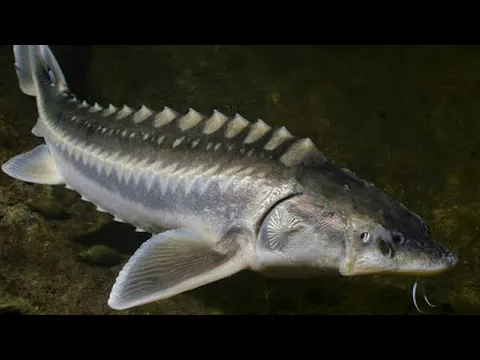

The body of the Beluga Sturgeon is elongated, robust, and covered with bony plates called scutes, which function as a natural armor. Unlike most fish, its skeleton is partially cartilaginous, an ancient evolutionary trait that provides structural strength without hindering growth.
The wide head and protrusible mouth allow it to feed on the river bottom, easily sucking in prey. This body design favors continuous growth throughout its life, without a rigid limit as seen in many other species.
A Predator at the Top of the Food Chain
Unlike most sturgeons, which primarily feed on invertebrates, the Beluga Sturgeon is clearly carnivorous. It hunts fish, crustaceans, and even small water birds, acting as a super predator in its ecosystem.
This dietary habit, combined with the absence of natural predators in adulthood, has allowed some individuals to grow without significant limitations over decades.
The Direct Relationship with the Most Expensive Caviar in the World
Besides its impressive size, the Beluga Sturgeon has become famous for an economic reason: its caviar is considered the most expensive in the world. The large, soft-textured, delicately flavored eggs have made the species a target of intense exploitation for centuries.

This extreme fishing pressure has had a devastating effect. Entire populations were decimated before science could fully document the biological potential of the species.
From Dominant Colossus to Threatened Species
Today, the Beluga Sturgeon is classified as critically endangered. Dams that block reproductive migration, river pollution, and illegal fishing have drastically reduced their populations.
The paradox is evident: the largest freshwater fish in history could disappear, not due to biological incapacity, but due to direct human intervention. Captive breeding programs exist, but they rarely manage to produce individuals that approach historical dimensions.
Comparisons That Help Understand the Scale
To gauge the size of the record Beluga Sturgeon, consider the comparison: it was longer than an urban bus, heavier than a compact car, and larger than many great whites ever recorded. No other known freshwater fish came close to these numbers.
Even modern giants, like the Amazonian arapaima, reach a maximum of about 3 meters and 200 kg, a fraction of what the historical beluga represented.
The record Beluga Sturgeon was not just a large animal. It symbolizes an era when the planet’s rivers were still capable of sustaining aquatic megafauna, which is becoming increasingly rare in the modern world.
Its story serves as a warning: when entire ecosystems are altered, it is not just common species that disappear, but also the largest and most impressive beings that nature has ever produced.








Help them by regulation. Tragic if lost to extinction
I have a photo of my grandfather and my dad from 1955 that shows them with a 13 foot sturgeon that they caught in the Columbia River near the Dalles. Our family fished for salmon and sturgeon in the Columbia River until the mid 90s. After that between the size limits and scarcity we only fish for salmon and steelhead. When my dad and two of his brothers were working on the John Day dam they saw a sturgeon in the water that they said was at least 20 feet long and as round as a 55 gallon oil drum. I’m not sure what the record size sturgeon was for thar type of sturgeon but that has to be bigger.
It’s shameful the damage us humans have done to our beautiful planet. It’s so sad.