





 Portuguese
  English
  Spanish
  5 min of reading
  0 comments


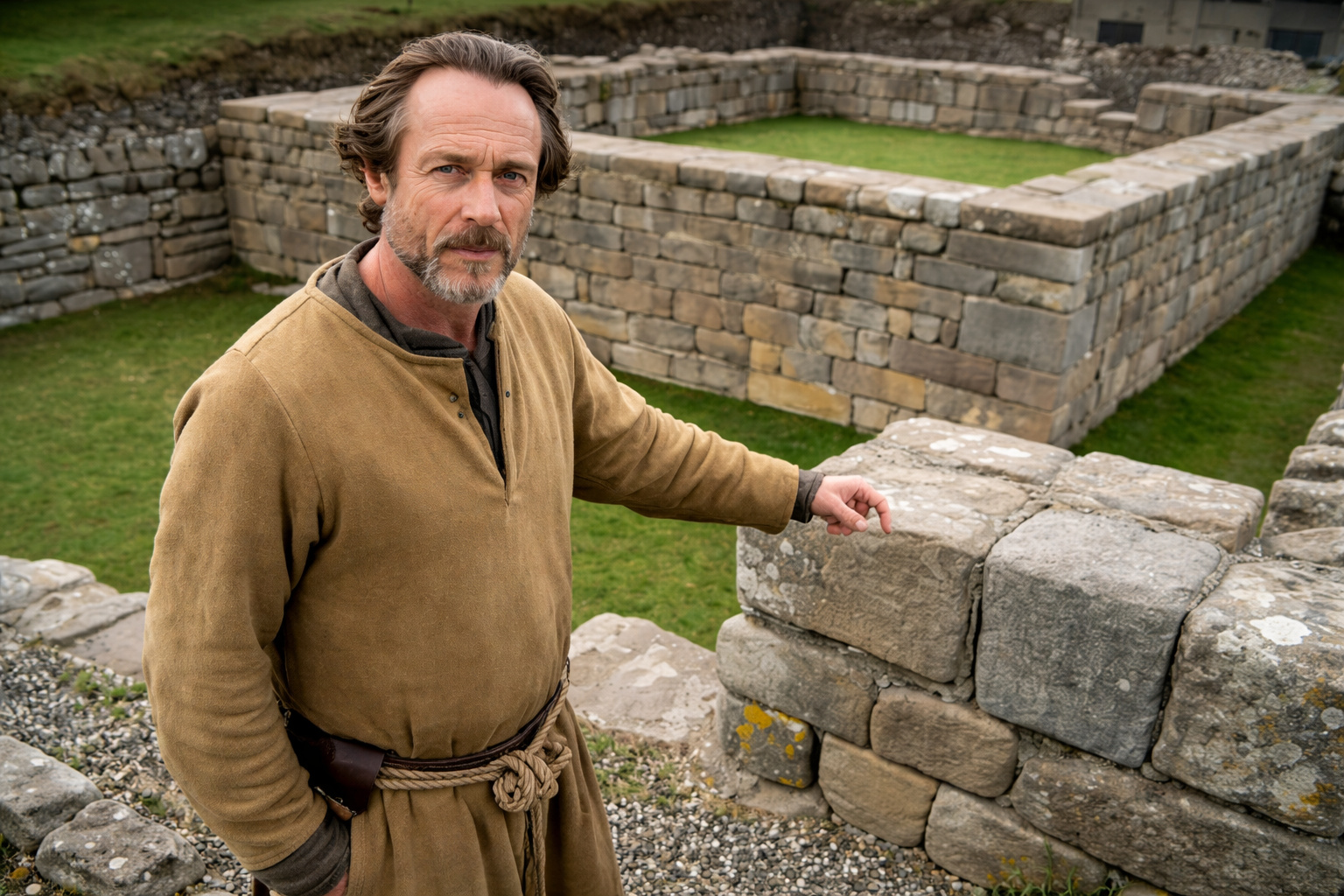
How Castles Built More Than 800 Years Ago Withstood The Test Of Time Using Constructive Philosophy, Passive Drainage, And “Weak” Materials, While Modern Concrete Cracks, Corrodes, And Requires Constant Repairs
For more than 800 years, medieval fortresses have survived empires, wars, climate changes, and erosion cycles without collapsing. In contrast, modern structures less than 30 years old already show deep cracks, internal corrosion, and severe structural failures. This contrast raises an uncomfortable question: what did medieval builders know that modern engineering has forgotten?
The information has been revealed through various historical studies and technical analyses cited in academic articles, archaeological records, and recent research from universities like MIT, which revisited the constructive principles of Antiquity and the Middle Ages. Instead of brute strength and absolute rigidity, builders of the past followed a radically different logic: resilience, adaptation, and cooperation with nature.
Over the centuries, modern engineering has prioritized speed, standardization, and immediate strength. However, in doing so, it has created structures that are too rigid to cope with time, water, and the natural movement of the soil. Medieval masons, long before laying the first stone, addressed the problem that destroys much of today’s constructions.
-
Friends have been building a small “town” for 30 years to grow old together, with compact houses, a common area, nature surrounding it, and a collective life project designed for friendship, coexistence, and simplicity.

-
This small town in Germany created its own currency 24 years ago, today it circulates millions per year, is accepted in over 300 stores, and the German government allowed all of this to happen under one condition.

-
Curitiba is shrinking and is expected to lose 97,000 residents by 2050, while inland cities in Paraná such as Sarandi, Araucária, and Toledo are experiencing accelerated growth that is changing the entire state’s map.

-
Tourists were poisoned on Everest in a million-dollar fraud scheme involving helicopters that diverted over $19 million and shocked international authorities.


The Modern Obsession With Rigidity Created Strong Yet Fragile Structures

The foundation of contemporary engineering is Portland cement concrete, a material that became established after the Industrial Revolution for being quick, predictable, and extremely resistant to compression. This characteristic allowed for the accelerated construction of entire cities, bridges, and buildings in short timeframes, meeting the demands of mass urbanization.
However, this efficiency hides a critical structural fragility. Concrete is rigid, inflexible, and highly susceptible to microscopic cracks from the curing process. As the soil settles or experiences slight movements, these cracks widen, allowing water infiltration.
In cold regions, infiltrated water freezes and expands, intensifying the degradation process through the so-called freeze-thaw cycle. But the most serious problem is embedded in the modern solution itself: the rebar. Steel reinforces concrete against tension, but the material’s porosity allows oxygen and moisture to enter, initiating corrosion.
Corroded steel can expand up to six times its original volume, generating internal pressures that concrete cannot absorb. The result is flaking, spalling, and progressive collapses. Moreover, the production of Portland cement accounts for up to 8% of global CO₂ emissions, making the material structurally and environmentally fragile.
The Medieval Solution Started Underground, Not On The Construction Site
Unlike modern engineering, medieval masons did not see their constructions as barriers against nature, but as systems integrated into the environment. Before any elevation, the focus was on the underground. In castles like Hereford in England, excavations reached about 2.4 meters until hitting the bedrock.
By building directly on rock, the primary cause of failure in modern buildings was eliminated: soil settlement. Rock does not yield, sink, or shift, providing stability for centuries without the need for complex artificial foundations.
Additionally, medieval engineers regarded water as the greatest structural enemy. Passive drainage systems were designed even before the walls. Deep trenches, lined with clay, directed rainwater and groundwater away from the foundations. Layers of gravel acted like what is now called a French drain—technique used for over 700 years.
These systems operated without pumps, electricity, or maintenance. The result is that, eight centuries later, they continue to function. Moats, stone gutters, and roof conduits were part of a single principle: water should never reach the base of the structure.
“Weak” Materials Were Key To Structures That Do Not Break
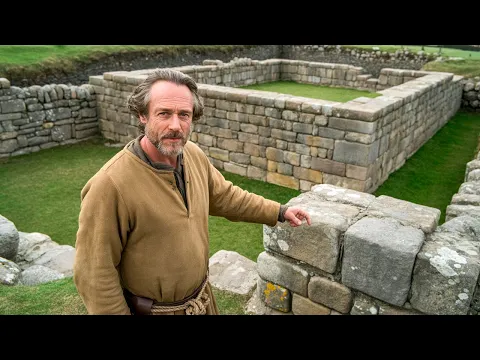

After resolving foundation and drainage, medieval masons made a choice that defies modern logic: the deliberate use of a weaker material. Lime mortar, made from burnt limestone, slaked with water, and mixed with sand, was the central element of construction.
Unlike modern cement, which hardens quickly through chemical reaction, lime mortar hardens slowly through carbonation, reabsorbing CO₂ from the atmosphere over months or even years. In very thick walls, researchers found cores of mortar still partially soft after 800 years.
This behavior was not a defect but a strategy. Lime mortar is breathable, allowing the passage of water vapor, preventing moisture trapping, and reducing freeze damage. Additionally, it is intentionally softer than stone, acting as a structural buffer.
When the structure moves, expands, or experiences thermal variations, microcracks arise in the mortar, not in the stone. The system absorbs energy, redistributes stresses, and prevents catastrophic fractures.
Self-Healing: When Water Fixes What Should Destroy
Recent research, including studies conducted by MIT, has revealed that ancient mortars had self-healing properties. Small fragments of lime that had not fully reacted remained within the material. When a crack formed and water penetrated, these fragments dissolved, releasing calcium.
As it evaporated, the calcium recrystallized as calcium carbonate, sealing the crack with “new stone.” What today destroys modern concrete—water—was, in the past, the repair agent. The structure was not designed to never fail but to fail in a controlled manner and regenerate.
Examples That Have Spanned Centuries Confirm The Philosophy

Medieval castles in Europe, Chinese earthworks, dry stone walls in Ireland, and wooden churches in Norway confirm the same logic. Borgund Church, built around the year 1200, has survived more than 800 harsh winters thanks to flexible joints, wood fittings, and moisture isolation from the soil.
These constructions did not withstand time through rigidity but through adaptation. They breathe, move, and dissipate forces, while modern monolithic structures tend to fail abruptly.
Lost Patience And The Cost Of Speed
Another decisive factor was time. Medieval constructions respected seasons, weather, and the natural curing of materials. A single wall could take years to complete, with interruptions in winter. Today, concrete is poured under rain, snow, or extreme heat, accelerated by chemical additives.
The Industrial Revolution prioritized speed, scale, and cost. Portland cement, patented in 1824, made this possible. In exchange, it created a built environment with embedded obsolescence, requiring constant maintenance and continuous resource consumption.
Building The Future By Learning From The Past
The answer is not to abandon modern engineering but to integrate ancient principles with current technology. The development of smart concretes, self-regenerating materials, and more permeable constructions is a direct translation of these ancestral ideas.
Medieval masons did not have computers but mastered something fundamental: a deep understanding of time, water, and movement. Reviving this philosophy may be key to more durable, sustainable, and resilient cities.
What other ancient techniques, ignored by modern engineering, could make our cities more durable, resilient, and sustainable if relearned today?









-

-

-

-

-

-

40 pessoas reagiram a isso.