





 Portuguese
  English
  Spanish
  5 min of reading
  3 comments


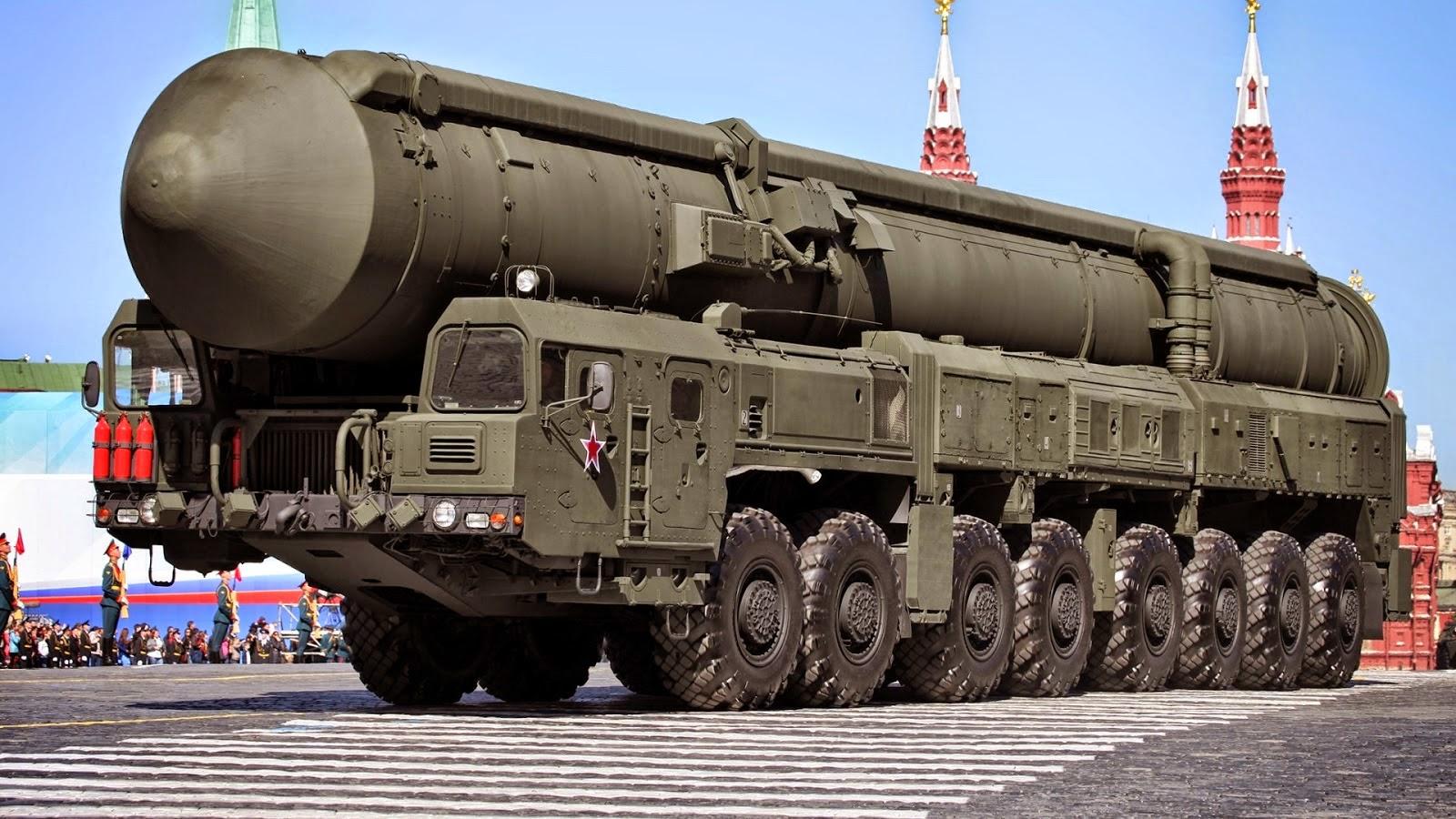


A Seven-Axle Military Chassis Linked to the Topol Missile and Soviet Strategic Mobility, Known for High Consumption and Limited Range, Which Ended Up Being Replaced in the Modernization to the Topol-M and by Industrial Changes After 1992.
The MAZ-7917 has made it to the list of the most unusual machines ever made for off-road use: a military chassis with seven axles and 14 wheels created at the end of the Soviet era to carry, on its own chassis, a mobile launcher of the Topol missile.
More than the size, what draws attention is the cost to get this “giant” moving through mud and destroyed roads. In technical catalogs and specification databases, the model appears with very high consumption in heavy operation, reaching 365 liters of diesel per 100 kilometers, depending on terrain and load.
This appetite for fuel shortens the distance it can travel without stopping. According to technical compilations of the MAZ-7917, the chassis has two tanks with capacities of 395 and 450 liters, totaling about 845 liters.
-
Friends have been building a small “town” for 30 years to grow old together, with compact houses, a common area, nature surrounding it, and a collective life project designed for friendship, coexistence, and simplicity.

-
This small town in Germany created its own currency 24 years ago, today it circulates millions per year, is accepted in over 300 stores, and the German government allowed all of this to happen under one condition.

-
Curitiba is shrinking and is expected to lose 97,000 residents by 2050, while inland cities in Paraná such as Sarandi, Araucária, and Toledo are experiencing accelerated growth that is changing the entire state’s map.

-
Tourists were poisoned on Everest in a million-dollar fraud scheme involving helicopters that diverted over $19 million and shocked international authorities.


Still, the reference range is approximately 413 kilometers, with variations depending on driving conditions, soil type, and weight carried.
Therefore, in long displacements, movement usually depends on planned refueling and logistical support, especially when the route involves sections of dirt and degraded roads.
Chassis MAZ-7917 and the Role in the Topol System
The Soviet Union developed a family of special chassis to transport, lift, and launch missiles from mobile platforms, intending to reduce predictability and enhance dispersion capability.
Included in this set, the MAZ-7917 is described by the manufacturer MZKT, in its historical section, as a special chassis designed to carry the launcher of the Topol system, with an axle configuration of 14×12 and two separate cabins.

This excerpt helps to contextualize the vehicle’s role.
The main objective was not civil transport efficiency, but to allow a large launcher to move along alternative routes, including off-pavement terrains, within operational parameters set for military use.
In this logic, performance is measured by load capacity, mobility, and mechanical robustness, even if it entails high fuel costs.
Diesel Consumption and Range of the MAZ-7917
The most notable data in the records of the MAZ-7917 is consumption.
In specification databases, 365 liters per 100 kilometers appear as the ceiling of a range, not as a fixed rule.
These compilations often record consumption between 265 and 365 liters per 100 kilometers, with variations related to the weight carried and the difficulty of the terrain.
The same materials indicate a working speed in the range of 18 to 32 km/h, a standard associated with vehicles designed to move very heavy loads with control.
Combined with the short range, this set of numbers helps explain why movement depends on planning.
Even when described as capable of operating off-road, a chassis of this size typically requires support coordination, both for fuel and for maintenance and route safety.
Replacement of the MAZ-7917 and Changes After 1992
The MAZ-7917 was designed for a specific role and ended up being linked to a phase of the Topol program.
Reference sources about the chassis line in the region point to two main factors for replacement: the evolution of armaments and industrial changes in the post-Soviet period.
In this context, the chassis began to be compared to newer platforms when the Topol-M entered as a substitute in the family.
With this, the seven axles ceased to be the most suitable alternative for the new launcher configuration.
There is also a production milestone frequently cited in these technical bases.
Records indicate that 402 units of the MAZ-7917 were manufactured until 1992, a period in which the disintegration of the Soviet Union affected industrial chains and assembly priorities.
After that, continuity at scale was conditioned to a reorganization that, according to these same sources, directed evolution to other models.
Some popular descriptions attribute very specific limitations of climate and altitude to the vehicle.
As these points do not appear with the same clarity in widely cited technical sources, the safest approach is to treat them as unconfirmed information.
What the consulted records consistently support is that operating on very uneven terrain, with high loads, increases the effort on the mechanical assembly and on the weight distribution, which factors into maintenance and design choices.
MZKT-79221, Topol-M and the New Platform 16×16
The most associated successor to this transition is the MZKT-79221.
It is described as a 16×16 vehicle with eight axles designed and developed by MZKT in Belarus.
Encyclopedic compilations and industry records indicate development in 1996-1997 and the start of series production in 2000.
The 79221 is typically presented as the base for mobile launchers of the Topol-M, noted as a substitute for the Topol in the line.
The transition from seven to eight axles appears, in these descriptions, as part of adjustments to meet the requirements of the new platform.
Reference sources regarding the 79221 also indicate a V12 diesel engine from the YaMZ family, with power around 800 hp, in addition to multi-axle steering solutions to facilitate maneuvers despite its size.
Differences Between MAZ-7917 and MZKT-79221
In direct comparison, the central difference lies in the configuration and the role assigned to each chassis.
The MAZ-7917 appears as 14×12, with seven axles, linked to the Topol launcher.
On the other hand, the MZKT-79221 is described as 16×16, with eight axles, associated with the Topol-M and the next phase of modernization.

In technical and descriptive sources, the increase in the number of axles and driven wheels is presented as a way to enhance load-bearing capacity and maintain mobility in difficult routes, a recurring requirement for mobile launchers.
Still, the more cautious reading is to treat the change as a result of a package of changes, in which the chassis keeps pace with system demands and the industrial context.
Even with the replacement, the MAZ-7917 continues to be cited in databases and histories of the manufacturer as one of the symbols of the Topol period, including for figures like consumption and range, which dimension the logistical cost of keeping this type of platform moving off highways.









Leiam com atenção. A primeira foto em preto e branco mostra um veículo com 7 eixos (modelo MAZ-7917) e no final do artigo uma segunda foto colorida, um com 8 eixos (modelo MZKT-79221).
Olá,
Oque me chamou a atenção neste informativo, foi a quantidade de rodas e exos deste lançador de mísseis… E fiquei na dúvida de quantas rodas efetivamente ele tem, pois na descrição aparece como sendo 14 rodas, ao olhar a imagem vejo 8 rodas de cada lado…
Alguma coisa está divergente…
Devo acrescentar no que leio ou no que vejo? 🤔
Contei 8 eixos e 16 rodas