





 Portuguese
  English
  Spanish
  4 min of reading
  6 comments


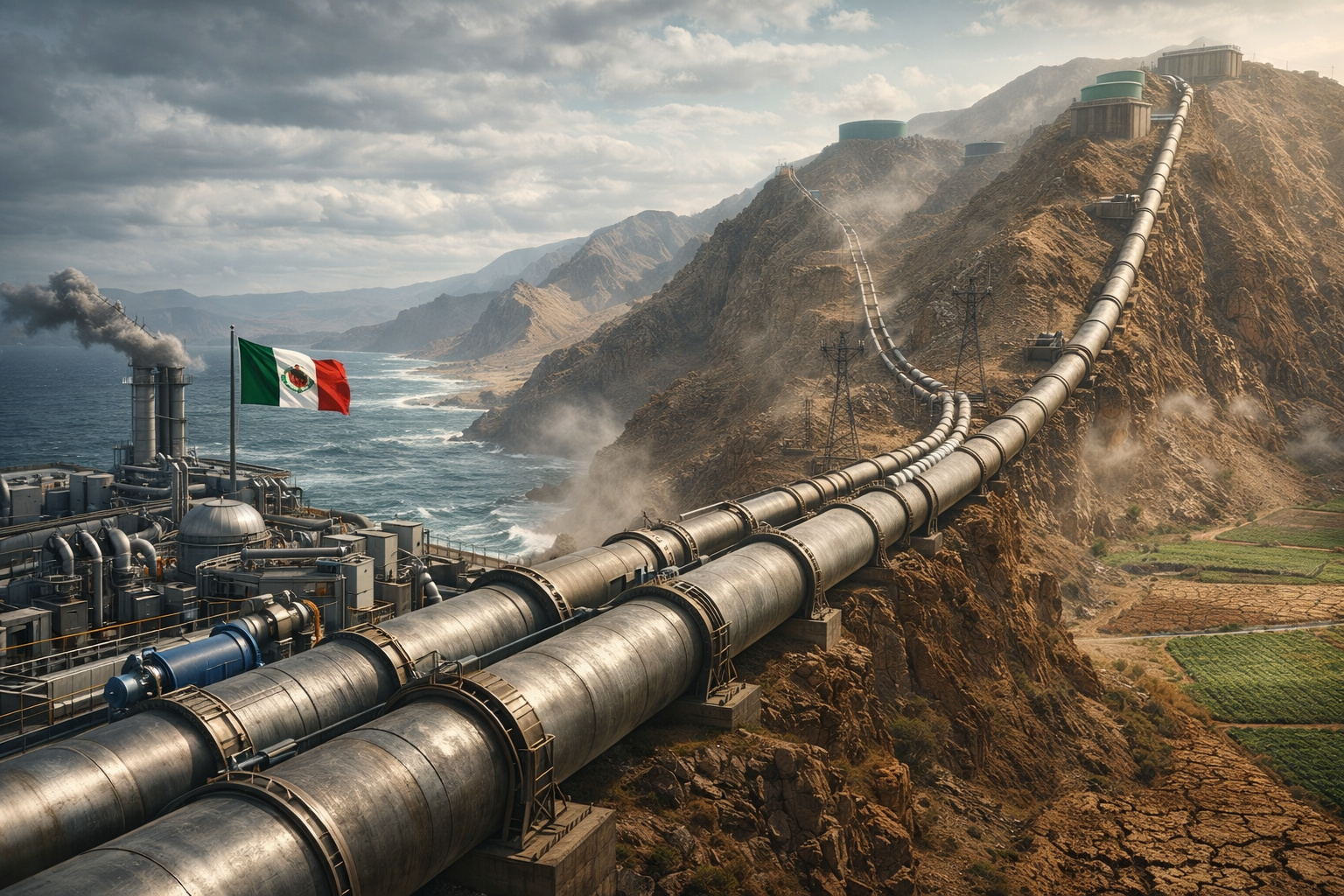


Mexico Evaluates Desalinating The Pacific And Pumping Water Over Mountain Chains To Collapsing Agricultural Regions; Costs, Energy And Engineering Put The Project At The Limits Of Possibility.
The idea seems straight out of an extreme engineering laboratory: capturing water from the Pacific Ocean, desalinizing it on an industrial scale, and pushing it hundreds of kilometers inland, overcoming mountain chains, steep gradients, and one of the driest climates in North America. But this proposal has been increasingly concretely discussed in Mexico, especially to meet the needs of agricultural regions facing water collapse in the states of Baja California and Sonora.
The backdrop is a structural water crisis. The historical dependence on the Colorado River, whose reservoirs reached critical levels in the last decade, has put the sustainability of entire agricultural hubs in jeopardy. With overexploited aquifers and increasingly irregular rainfall, desalination of the Pacific has shifted from a marginal idea to a “last resort” in technical studies and institutional debates.
The Water Collapse That Pushed Mexico To The Ocean
Baja California and Sonora concentrate some of the most productive agricultural areas in northern Mexico, with a strong dependence on continuous irrigation.
-
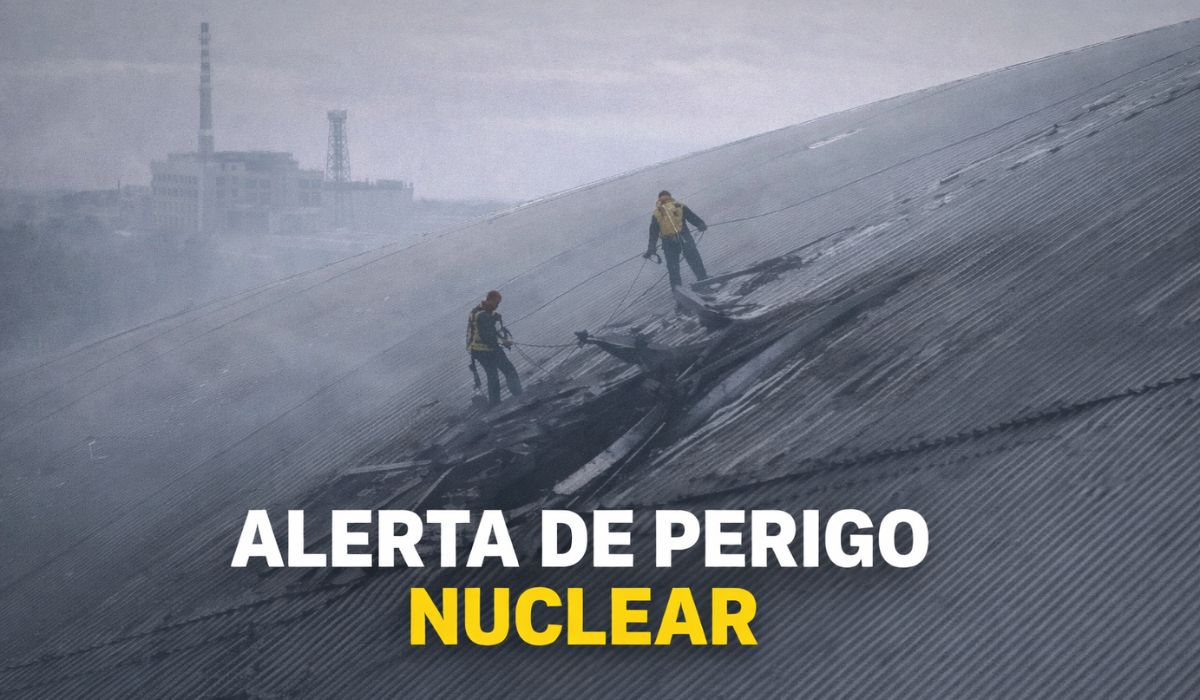
The gigantic steel shell built to contain Chernobyl for a century has been pierced by a drone, exposing a critical system and creating a hole that could cost over 500 million euros to repair.
-
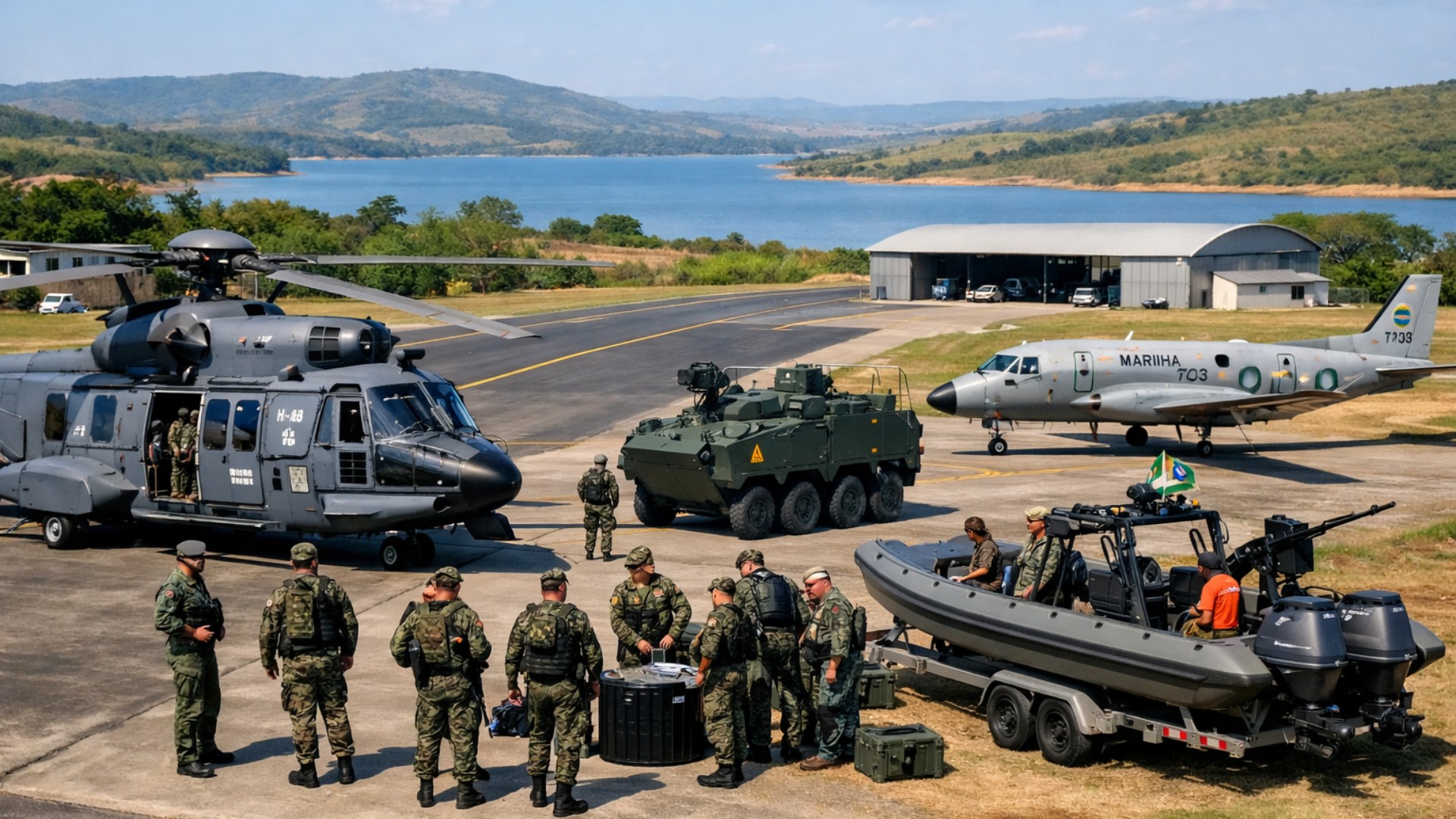
Brazilian Navy reaches a new level by taking over an airport with a 1,600-meter runway used by 1,800 military personnel and autonomous attack drone testing.
-
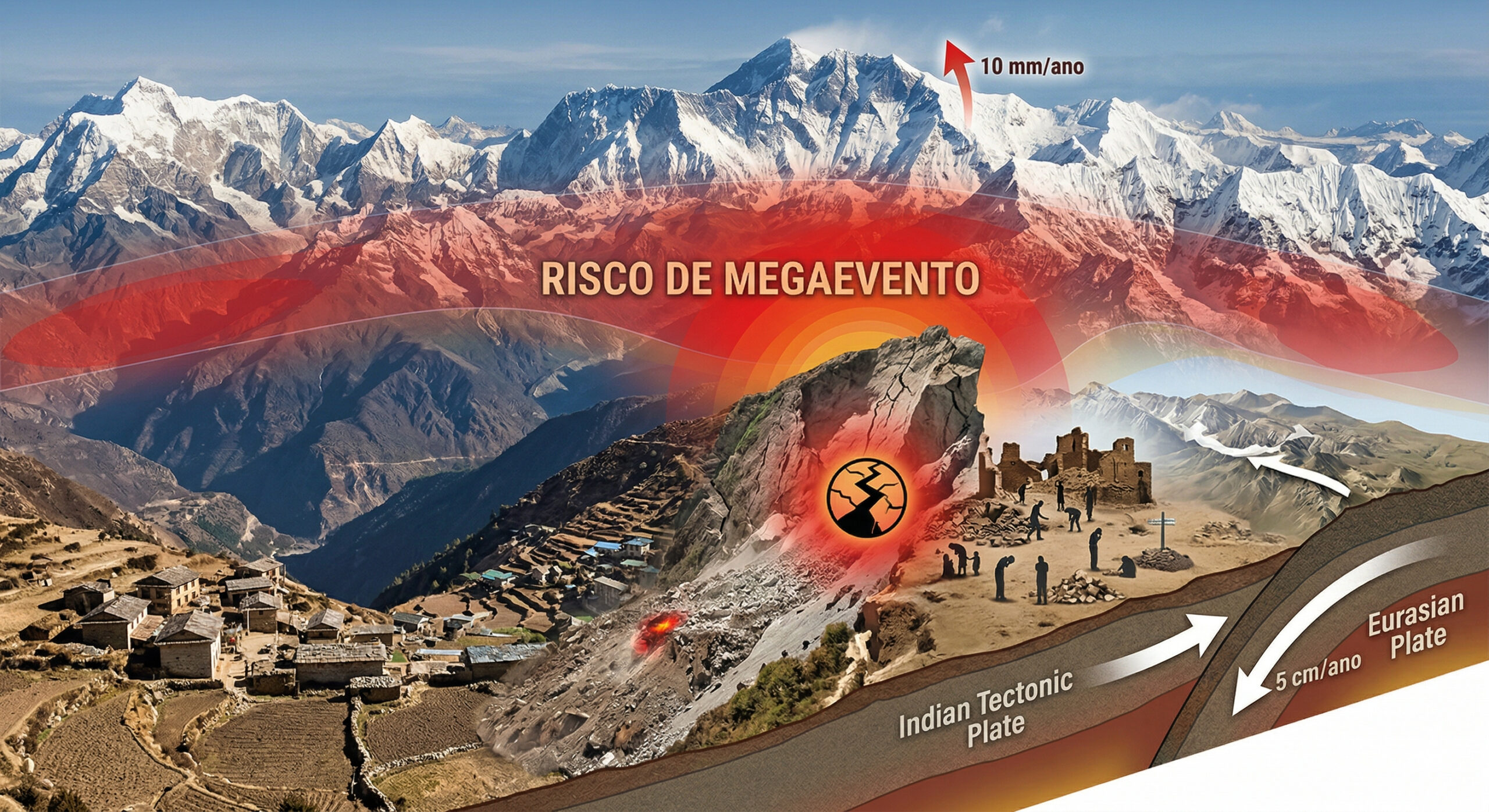
The Himalayas continue to grow to this day, with tectonic plates advancing 5 cm per year, mountains rising up to 10 mm annually, and the 2015 earthquake that killed 9,000 people may have increased the risk of an even larger seismic mega-event.
-
At an altitude of 400 km by astronauts from the International Space Station, Paris transforms at night into a golden mesh so precise that it reveals the outline of the Seine River, avenues, and entire neighborhoods like a luminous map drawn over the Earth.


The problem is that this production was built on a water balance that no longer exists. In several irrigation districts, water availability has dropped to levels that make intensive crops, such as wheat, alfalfa, fruits, and vegetables for export, unviable.

The reduction of flows from the Colorado River, combined with rigid international agreements and accelerated urban growth, has created a scenario where simply redistributing existing water no longer resolves the issue.
It is in this context that proposals for coastal desalination paired with long-range pumping systems, capable of bringing treated water to agricultural regions hundreds of kilometers from the coast, emerge.
Desalination Is Not The Biggest Challenge — Pushing Water Uphill Is
From a technological standpoint, seawater desalination is already a consolidated reality. Modern reverse osmosis plants can produce potable and irrigation water in gigantic volumes, with increasing efficiency. The real bottleneck of the Mexican project begins after the desalinated water.
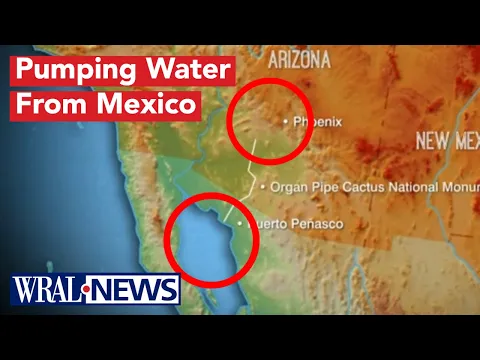
Between the Pacific coast and the agricultural valleys inland lies a brutal physical obstacle: mountain chains, elevated plateaus, and gradients that would require continuous pumping stations. In some sections, the water would need to overcome elevations of hundreds of meters, which multiplies energy consumption and the complexity of the infrastructure.
In practice, this is not just about building pipelines. The project involves tunnels, pumping stations, intermediate reservoirs, redundant energy systems, and constant operational control to avoid losses due to evaporation, leaks, and mechanical failures in extreme environments.
Energy Costs That Put The Project At The Limits Of Viability
Each cubic meter of desalinated water already carries a high energy cost. When combined with the need for pumping at high altitudes and long distances, energy expenditure skyrockets. Preliminary studies indicate that the electric bill would be one of the decisive factors for the project’s viability — or non-viability.
To mitigate this impact, some proposals include the combined use of renewable sources, such as solar plants in the Sonora desert and offshore wind farms. Even so, the numbers remain gigantic.
The final cost of water delivered to the fields may exceed, in many scenarios, the economic value of the very irrigated crops, raising doubts about the financial sustainability of the system.
Engineering On A Continental Scale
From a construction perspective, the project resembles continental works. Hundreds of kilometers of large-diameter pipelines would be needed, using materials capable of resisting corrosion, extreme thermal variations, and constant internal pressure.
Additionally, the route would have to navigate environmentally sensitive areas, seismic zones, and regions with unstable soils.
The operation would also require a permanent maintenance system. Any failure in a critical section could interrupt water supply to vast agricultural areas, with immediate economic impacts. Therefore, studies discuss redundant networks, sensors distributed along the route, and control centers operating around the clock.
Environmental Impacts And Social Resistance
Despite being viewed as a solution to the water crisis, large-scale desalination also raises environmental concerns.
The capture of seawater and the discharge of concentrated brine can affect coastal ecosystems if not strictly controlled. Inland, the arrival of large volumes of water could alter land use dynamics and encourage unsustainable agricultural expansions.
There is also social resistance, particularly in communities questioning whether a billion-dollar investment in extreme infrastructure should precede more aggressive policies for water efficiency, water reuse, and agricultural matrix change.
A Project That Symbolizes The Physical Limits Of Development
More than an immediate solution, the proposal to desalinate the Pacific and pump water over mountains has become a symbol of the point where engineering begins to directly confront physical and climatic limits. It exposes the real cost of maintaining intensive agricultural models in naturally arid regions in a scenario of climate change.
If it comes to fruition, the project will place Mexico among countries betting on extreme hydraulic solutions to sustain their production. If it does not materialize, it will serve as a technical warning that not every crisis can be solved merely with more concrete, steel, and energy.
In the end, the discussion goes beyond engineering: it is about deciding how far it makes sense to take water — and development — when the territory itself begins to impose its limits.








Si se puede si en lugar de subirla se vaja a atravesando la península de baja California en la parte más angosta Asia somora y de ahí repartir…..para abajo o tomarla del golfo de California, aunque puede aver un metiche en el golfo y si se sabe quién es .les felicito y de todo corazón les deseo aganlo
Que hagan una toma en la región “tres brazos” Tabasco ya casi entrando al mar hay agua de sobra
Información no precisa. No hay montañas entre el mar y los valles agrícolas en Sonora, en el caso de Mexicali, BC y San Luis Río Colorado las tomas de agua serían en el Mar de Cortés.
Para Baja California las zonas agrícolas de San Quintín y otras están en la costa.