





 Portuguese
  English
  Spanish
  6 min of reading
  0 comments


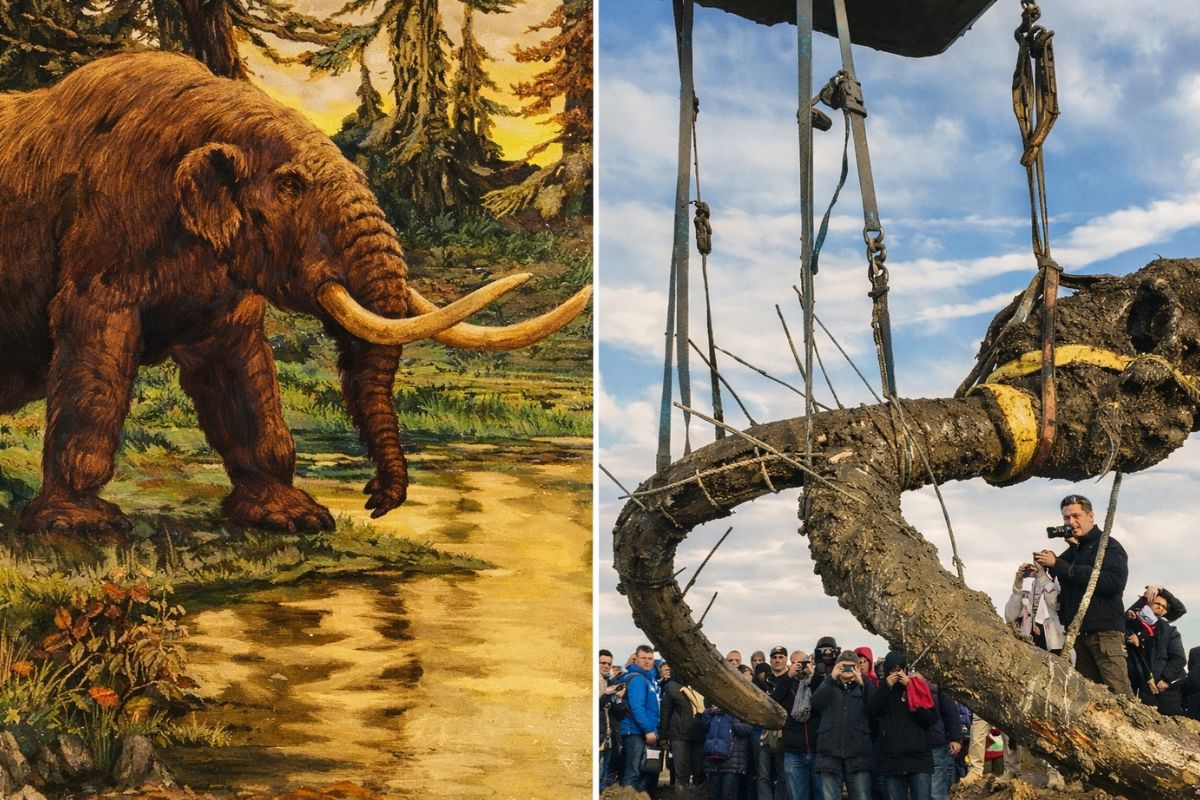
A Farmer From Michigan Who Just Wanted to Dig a Ditch in His Soybean Field Ended Up Revealing a Nearly Complete Mammoth Skeleton, Mobilizing the University of Michigan and Signing One of the Biggest Paleontological Discoveries Ever Made in the State.
The farmer from Michigan, James Bristle, left home on a cold morning in 2015 believing he would have just another ordinary day of work in the field. In less than an hour, the tractor’s shovel hit something hard, the ground gave way around it, and what appeared to be just a piece of buried wood turned out to be the beginning of a find that would go down in history.
As he and two friends cleared the mud from the object, the trio realized that it was too large to be an old log or post.
When the first piece was cleaned, they were faced with a gigantic rib, the first indication that the soybean field concealed a mammoth skeleton.
-
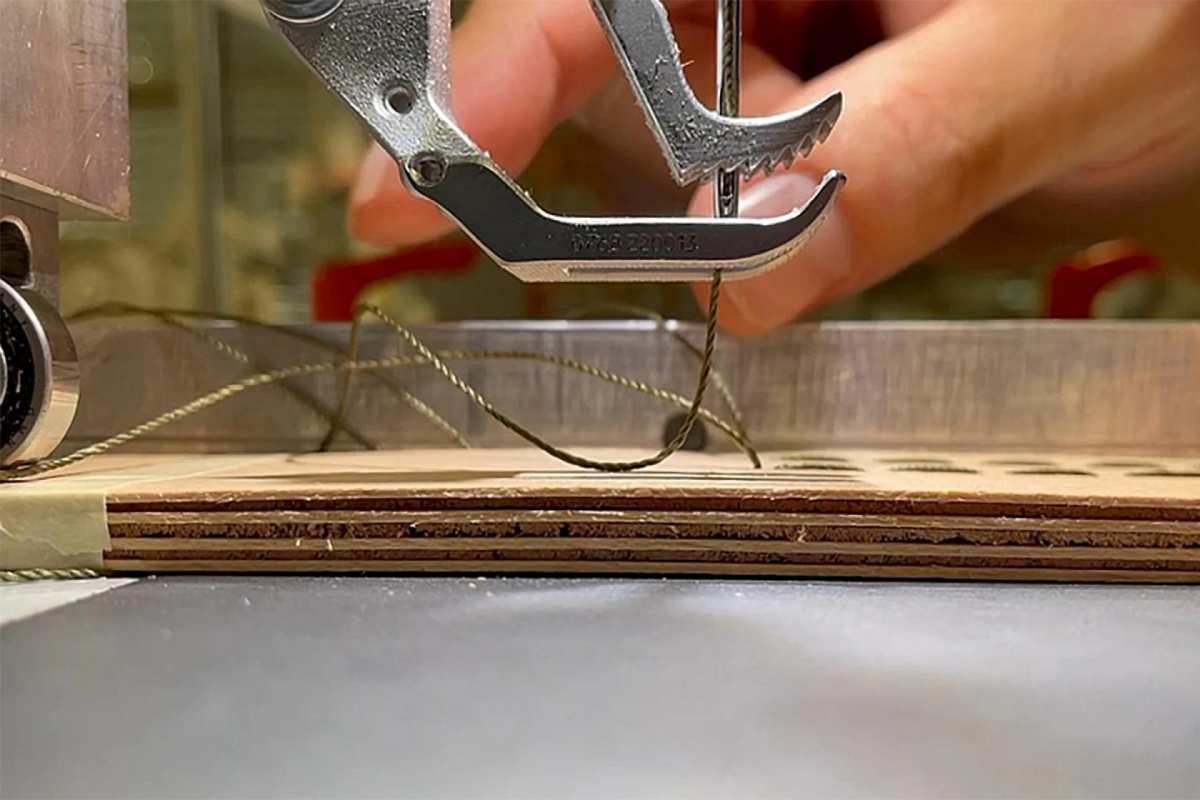
A simple stitch in wood with nylon thread can reduce adhesives, speed up production, and make sheets up to 4 times stronger and 14 times more difficult to break.
-
The gigantic steel shell built to contain Chernobyl for a century has been pierced by a drone, exposing a critical system and creating a hole that could cost over 500 million euros to repair.

-
Brazilian Navy reaches a new level by taking over an airport with a 1,600-meter runway used by 1,800 military personnel and autonomous attack drone testing.

-
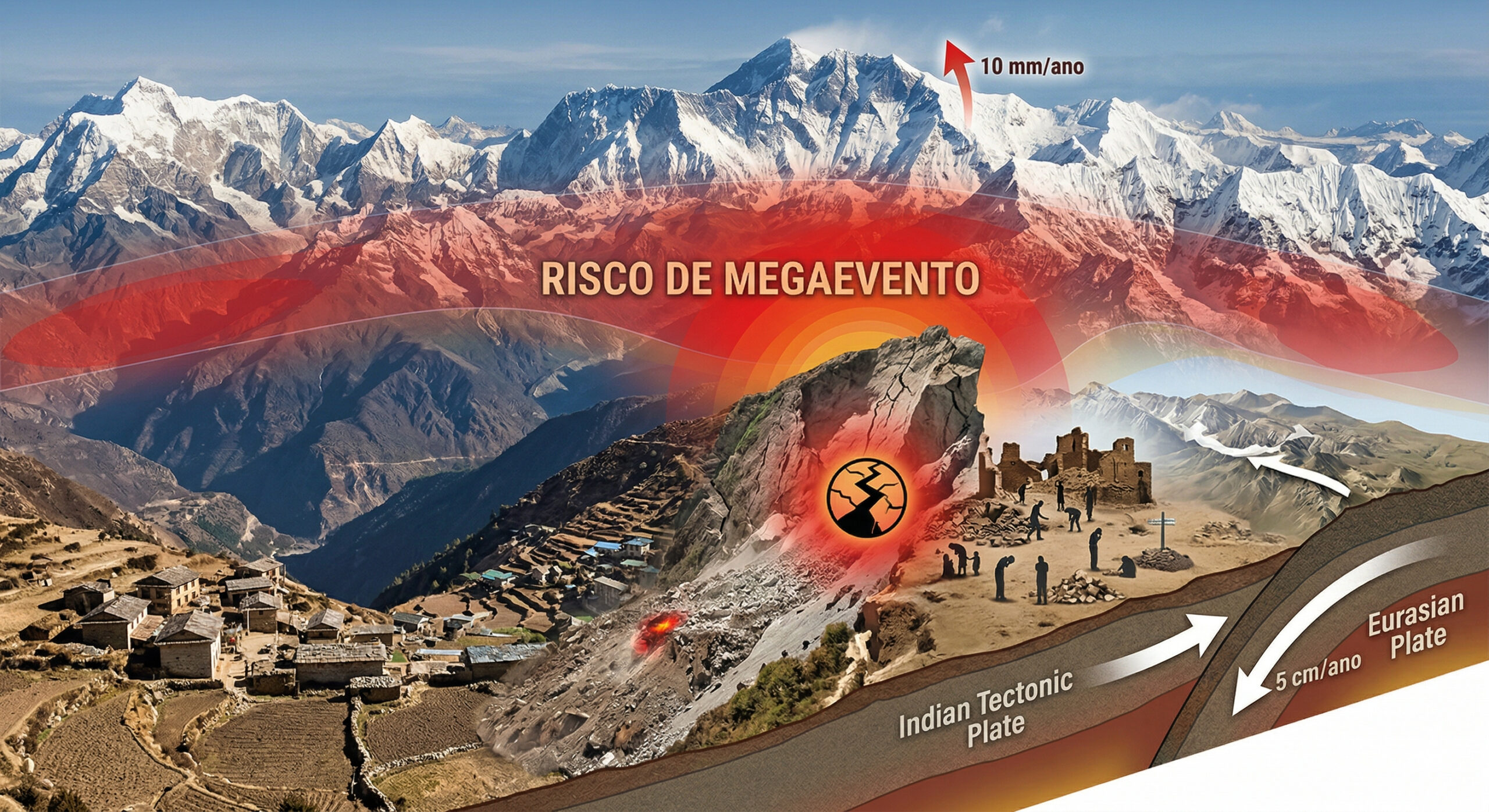
The Himalayas continue to grow to this day, with tectonic plates advancing 5 cm per year, mountains rising up to 10 mm annually, and the 2015 earthquake that killed 9,000 people may have increased the risk of an even larger seismic mega-event.

From that point on, the farmer from Michigan had to swap his role as a machine operator for that of a leading figure in a scientific excavation.
An Ordinary Morning That Turned Into a Mammoth Discovery
On that day, James Bristle had a simple plan: to dig a new ditch in part of his soybean field, a piece of land he knew by heart.
He called two friends to help, and by around 7:30 AM, the three were already working, joking, and imagining the beer they would have at the end of their shift.
About 20 minutes after starting, the routine that seemed like any other was interrupted. The machine hit something hard, the dirt didn’t yield as it should, and James decided to investigate.
As soon as the mud began to be removed, it became clear that the farmer from Michigan had not found a rock, but a gigantic bone buried just a few feet below the surface.
At first, nobody knew what it was. One of the friends joked that it could be a dinosaur and ran across the field with the bone in his arms, shouting that they had found a “prehistoric monster.”
But the size of the piece, the curved shape, and the visual impact left everyone silent for a few moments. The suspicion was obvious; this did not belong to any common farm animal.
From the Field to the University of Michigan

Not knowing how to identify the origin of that gigantic bone, James and his friends decided to seek out someone who could.
The farmer from Michigan contacted paleontologists from the University of Michigan and told them that he had found something “too big” buried on his land.
The response was swift. A team from the Department of Paleontology was sent to the site, including Dan Fisher, professor and director of the university’s Museum of Paleontology.
As soon as they saw the first cleaned rib, the specialists realized they were facing something very rare.
Before making any conclusions, Fisher made a direct request to the farmer from Michigan, asking for permission to turn the soybean field into an emergency excavation site for an entire day.
The idea was simple in theory and complex in practice: to open the soil in a controlled manner and check if there were more bones, and if they formed an articulated skeleton. James agreed, even with the very human fear that it might all be a mistake.
On the day of the excavation, about 15 team members from the University of Michigan, along with a local excavator operator, gathered on the land.
The farmer’s soybean field suddenly transformed into a scientific construction site, filled with academics, heavy machinery, and a lot of mud surrounding bones that no one wanted to damage.
The Giant Skeleton That Emerged from the Soil
As the hours passed and layers of earth were removed, new pieces began to appear.
First, a huge tusk emerged, confirming that a complete tusk was buried there. Then came parts of the skull, more ribs, vertebrae, the shoulder blades, and the animal’s large pelvis.
By the end of the workday, the team had an impressive picture. On the farmer’s land, the paleontologists had found a virtually intact mammoth skeleton, missing only the hind legs, feet, and some smaller bones.
Dan Fisher classified the discovery as one of the ten most important in Michigan’s history. There was more than just a set of bones; there was context.
Marks on one of the ribs suggested that the mammoth may have been hunted and butchered by prehistoric hunters.
The hypothesis raised by Fisher was intriguing; the animal may have died around 10,000 to 15,000 years ago and was placed in a type of pond or shallow lake, a primitive technique to preserve meat for longer.
Another detail caught the researchers’ attention. Based on the characteristics of the bones, there was a possibility that it was a Jeffersonian mammoth, a hybrid type between the woolly mammoth and the Colombian mammoth, theoretically mixing traits of two different species.
For paleontology, this represents a rare opportunity to study in detail an animal that lived at the end of the last Ice Age, in a region where such records do not appear every day.
The Public’s Reaction and the Farmer’s Decision


The news that a farmer from Michigan had found a mammoth in his field spread quickly.
Curious onlookers, teachers, parents with young children, and even people in delicate health situations began to arrive, wanting to see the bone at least once.
Cars came from other cities in the state, locals asked along the way where the farm was located and headed straight for the soybean field that had become an improvised tourist spot.
The previously tractor-traveled dirt ground now welcomed whole families taking pictures next to the mammoth fragments, witnessing up close something usually only seen in museums.
At the center of all this movement was the farmer from Michigan, who had to make a difficult decision: what to do with that skeleton.
He could try to sell it, keep part of it on the farm, or leave it all to the university. In the end, James chose to donate the set of bones to the University of Michigan so that the mammoth could be studied with the utmost scientific rigor and preserved for future generations.
The choice transformed a private find into public heritage. By relinquishing direct ownership of the skeleton, the farmer from Michigan ensured that the discovery officially entered the history of the state’s science, rather than becoming just a curiosity lost in a private collection.
Why This Discovery Is So Important for Science
Finding isolated fossils, such as a tooth or a bone fragment, is relatively common in many parts of the world.
What makes the case of the farmer from Michigan special is the collection of factors gathered in the same site, the extent of the skeleton, its state of preservation, the context of deposition, and the possibility of evidence of human interaction with the animal.
Having a mammoth skeleton with a skull, tusks, ribs, vertebrae, pelvis, and scapulae still articulated provides a much greater volume of information than loose pieces.
The position of the bones, the marks on the surface, the type of sediment around, and even microtraces in the material can help reconstruct how this mammoth lived, how it died, and how it was handled by prehistoric humans.
Paleontologically, the discovery in the farmer’s field serves as a time capsule, holding clues about the environment of the region thousands of years ago, the animals that inhabited it, and the hunting and food storage techniques of human groups from that time.
Moreover, the case shows how great scientific discoveries do not only happen in large expeditions funded by institutions; often, they are born from the ordinary activities of ordinary people who have the curiosity to look twice at something that seemed like “just another rock.”
And you, if you were in the place of this farmer from Michigan, would you have donated the mammoth skeleton to the university or would you have tried to keep part of the discovery for yourself? What would you do with such a find in your backyard?







-

-

-

-

5 pessoas reagiram a isso.