





 Portuguese
  English
  Spanish
  4 min of reading
  0 comments



India Built More Than 90 Million Toilets Between 2014 And 2019 And Declared More Than 600 Thousand Villages Free Of Open Defecation.
On October 2, 2014, the Government of India officially launched the Swachh Bharat Mission, a national sanitation program aimed at eliminating open defecation and drastically increasing access to toilets in rural and urban areas. The initiative was announced with ambitious targets and a set deadline: by October 2019, the 150th anniversary of Mahatma Gandhi, the country was to achieve near-universal sanitation coverage.
The numbers released by the Indian government and international organizations are impressive. Between 2014 and 2019, more than 110 million individual toilets were built in rural areas. Rural sanitation coverage jumped from approximately 38% in 2014 to over 98% in 2019, according to official data. More than 600 thousand villages were declared free of open defecation.
The impact was structural. This is one of the largest sanitation infrastructure campaigns ever recorded on a national scale.
-
Friends have been building a small “town” for 30 years to grow old together, with compact houses, a common area, nature surrounding it, and a collective life project designed for friendship, coexistence, and simplicity.

-
This small town in Germany created its own currency 24 years ago, today it circulates millions per year, is accepted in over 300 stores, and the German government allowed all of this to happen under one condition.

-
Curitiba is shrinking and is expected to lose 97,000 residents by 2050, while inland cities in Paraná such as Sarandi, Araucária, and Toledo are experiencing accelerated growth that is changing the entire state’s map.

-
Tourists were poisoned on Everest in a million-dollar fraud scheme involving helicopters that diverted over $19 million and shocked international authorities.


The Sanitation Crisis In India: Understand Why So Many Toilets
Before the program, India had the largest population in the world practicing open defecation. Estimates from the early 2010s indicated that hundreds of millions of people lacked access to adequate sanitation facilities.
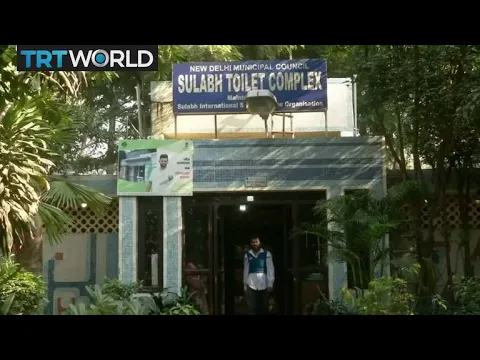

The practice was associated with serious public health problems, including childhood diarrhea, water contamination, malnutrition, and the transmission of infectious diseases. The lack of adequate sanitation also directly affected women and girls, who faced risks of violence and insecurity when using open areas.
In addition to the sanitary dimension, there was an economic impact. The loss of productivity associated with diseases related to the lack of sanitation represented significant costs to the country. The Swachh Bharat Mission was conceived as a structural response to this scenario.
Implementation Strategy And Mass Mobilization
The program was not limited to the physical construction of toilets. There was a strong component of social mobilization and behavior change.
The government provided financial subsidies for low-income families to build toilets in their homes. At the same time, large-scale awareness campaigns were conducted to encourage the effective use of facilities.
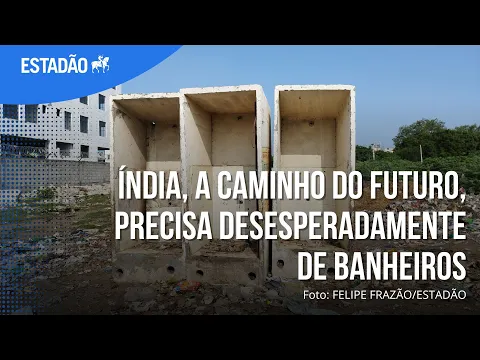
Local authorities were held responsible for meeting targets. States and districts began to be monitored for progress.
The strategy combined public investment, administrative oversight, and community engagement. Millions of workers, engineers, community leaders, and volunteers participated in execution.
Structural Scale Of Transformation
Building more than 90 million toilets in five years represents an average of over 60 thousand units per day. The volume of materials, transportation logistics, and labor coordination required continuous planning.
Rural sanitation coverage nearly doubled during the period. In 2014, less than half of rural households had a toilet at home. By 2019, the official rate exceeded 98%.
More than 600 thousand villages were declared “open defecation free,” a term used by the government to indicate that all residents had access to toilets.
The territorial scale of the program is comparable to large national infrastructure projects, but with a direct impact on public health.
Impact On Health And Social Indicators
Studies conducted after implementation indicate a significant reduction in the practice of open defecation in several regions. Research also points to improved quality of life and greater security for women.
International organizations recognized the program as one of the largest sanitation initiatives in the contemporary world.
However, independent evaluations highlight that the challenge does not end with construction. Maintenance, proper use, and waste management remain critical factors.
Despite Significant Official Numbers, The Program Faced Questions
Some researchers pointed out discrepancies between administrative data and actual use of the facilities. In certain regions, there were reports of toilets built without adequate access to water or sewage.
The change in habits also takes time. Physical construction does not automatically guarantee cultural transformation. Furthermore, managing the sludge and waste generated by millions of new installations has become a new structural challenge for local governments.
The Indian government subsequently launched the second phase of the program, focused on consolidation and sustainability of the system.
A Historic Scale Mobilization
Regardless of the debates, the magnitude of the Swachh Bharat Mission is unquestionable.
Constructing more than 90 million toilets in five years changed the sanitation infrastructure of a country with over 1.3 billion inhabitants.
The program represented a paradigm shift in public sanitation policy in India. What was once considered a chronic problem became a national priority agenda.
By providing sanitation facilities to hundreds of millions of people, the initiative redefined basic standards of health and dignity.
The Indian sanitation mobilization demonstrates that, on a national scale, basic infrastructure can become an instrument of profound social transformation when combined with clear goals, continuous investment, and community mobilization.
The largest sanitation campaign in modern history was not just a construction of concrete and plumbing. It was a structural reorganization of the relationship between the population, public health, and basic infrastructure.










-

-

3 pessoas reagiram a isso.