





 Portuguese
  English
  Spanish
  5 min of reading
  0 comments


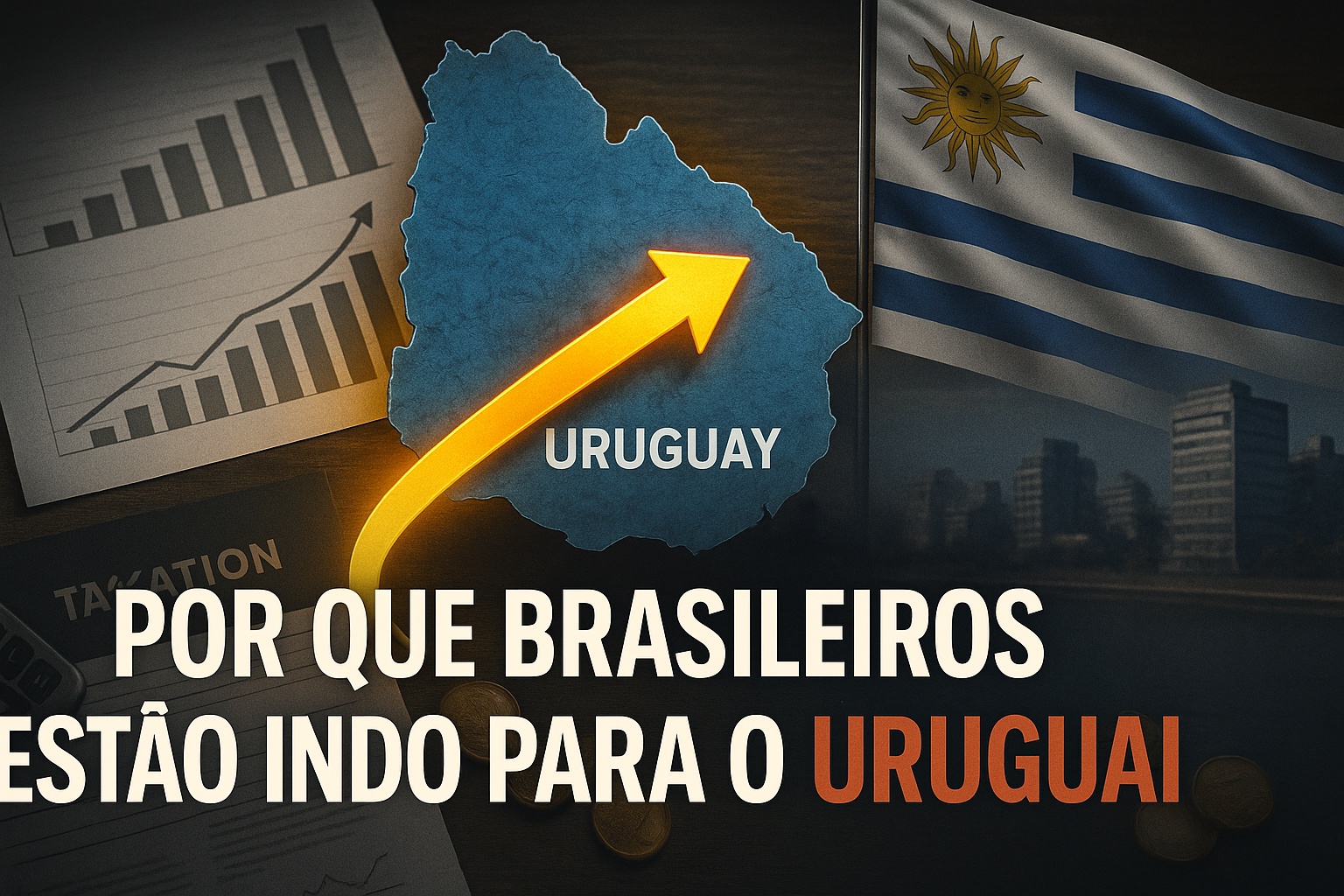
More and More Brazilians Are Moving to Uruguay Attracted by the “Tax Holiday,” Economic Stability, and Fiscal Predictability That the Country Offers.
The silent movement of Brazilians transferring their residency to Uruguay has ceased to be just a rumor and is now reflected in official statistics. In a search for financial predictability, lower tax burdens, and a more stable economic environment, the neighboring country has become a strategic route for self-employed professionals, investors, business owners, and entire families who want to reorganize their tax lives without giving up geographic proximity and quality of life.
The numbers confirm the trend. Between 2022 and 2024 alone, the total number of Brazilians who formalized fiscal residency in Uruguay increased from 21 to 101, a rise of 381%, according to data cited by Uruguayan and Brazilian media. Although the absolute volume is still small, the speed of growth has caught the attention of tax consulting firms and immigration offices, which claim to receive more inquiries from Brazilians than from any other nationality in South America—something unimaginable just a few years ago.
At the center of the phenomenon is Uruguay’s most famous tax advantage: the tax holiday, a policy that grants up to 11 years of exemption from taxes on income derived from abroad. For those living off investments, financial assets, rental income from properties outside the country, global earnings, or remote administrative gains, this rule completely changes the dynamics of tax planning. By becoming a Uruguayan tax resident, a Brazilian no longer pays income tax on gains obtained outside the country, provided they meet the formal residency and stay criteria.
-
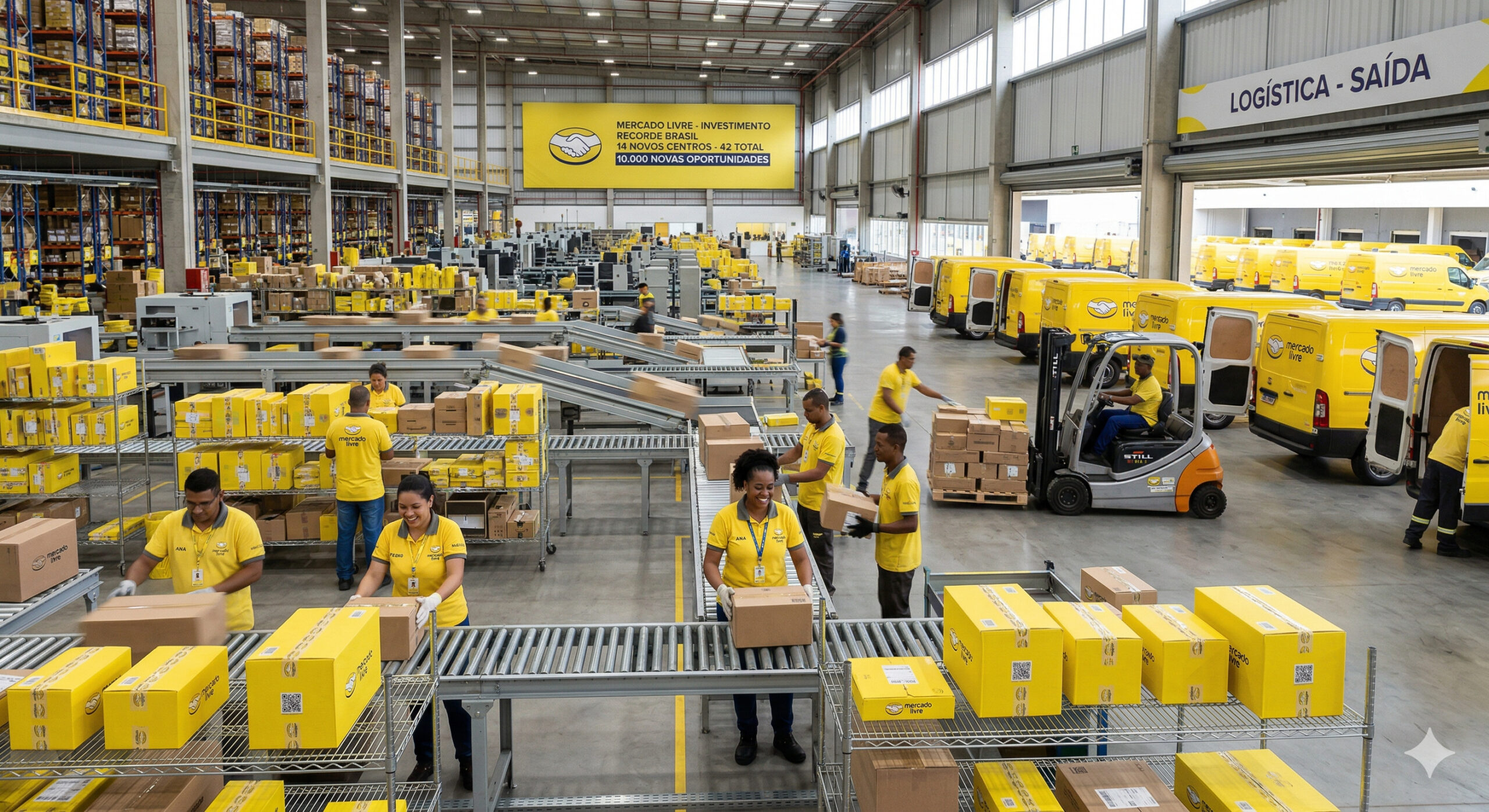
Mercado Livre “opens the vault” and announces a record investment of R$ 57 billion in Brazil in 2026, a value 50% higher than the previous year, with an expansion plan that includes 14 new logistics centers, totaling 42 units in the country and hiring an additional 10,000 employees.
-
How investment in technology can revolutionize the national economy and enhance industrial gains, according to a study that highlights the direct impact on productivity, innovation, and wealth retention within Brazil.

-
The largest food company on the planet, JBS, has just opened a 4,000 square meter laboratory in Florianópolis to develop customized proteins that modulate muscle mass gain, immune response, and metabolic performance.

-
After nearly 30 bids and competition among industry giants, a Spanish company purchases one of the largest airports in Brazil for almost R$ 3 billion and takes over the management of Galeão in a concession that will last until 2039.


The Combination That Makes Uruguay Irresistible: Lower Taxes, Legal Security, and Stability
In addition to the direct tax advantage, Uruguay has built a reputation over the past few decades for fiscal and institutional stability, which contrasts with the political volatility of several countries in the region. The tax system is predictable, simple, and rarely undergoes abrupt changes.
For those seeking legal security, this is an evident differential. It carries even more weight when compared to countries where sudden changes in tax rules create anxiety among business owners and investors.


Another attraction is the cost of living itself, which, although not necessarily cheap, is highly predictable, with no sharp price fluctuations, no accelerated inflation, and a robust banking system.
Uruguay operates as an “organized tax haven,” where the rules are clear and the bureaucracy, while present, is more straightforward than in Brazil. Adding to this is the geographic proximity: living in Montevideo, Punta del Este, or Colonia del Sacramento allows Brazilians to maintain ties with their home country, travel quickly, and keep business in Brazil without excessive distance.
The Interest of High-Net-Worth Brazilians and New Profiles of Migrants
In recent years, international media, including outlets such as Bloomberg Línea, has pointed out that Uruguay is becoming a favorite destination for Latin American billionaires and families with high net worth.
The country offers a calm environment, a solid financial system, good infrastructure, and one of the highest quality of life indexes in South America.
But the recent Brazilian migration is not limited to the very wealthy. The movement includes:
- Self-employed professionals who work remotely
- Business owners seeking to simplify the taxation of holdings
- Families wishing for stability for school-aged children
- Retirees living off income from abroad
- Investors focused on wealth preservation and fiscal predictability
The diversity of this group reveals that the phenomenon is broad and not restricted to a specific niche. The combination of predictable tax rules, stable currency, and low urban violence makes Uruguay offer something rare on the continent: the feeling of “normal life,” without jolts.
The Economic and Social Impact of the New Migration Flow
The movement, while still modest in numbers, is already beginning to shape sectors of the Uruguayan economy. Accounting and tax planning offices are reporting increased demand for consultations from Brazilians.
Real estate developers and agencies have observed greater demand for properties in Montevideo and Punta del Este. Restaurants, private schools, and even gyms report noticing more Brazilian accents circulating in everyday life.
The Uruguayan government, for its part, sees the “global resident hub” as a strategic opportunity: more residents mean more internal consumption, more services contracted, and more circulation of capital.
Even with exemptions on external income, new residents contribute to the local economy in virtually every segment, from education to everyday tourism. This explains why the country invests so much in policies to attract residents and in tax simplification campaigns.
Why Uruguay Became a Symbol of Stability in South America
The secret of Uruguay’s success lies in the combination of low corruption, institutional clarity, and a moderate political environment.
Unlike other countries in the region, changes in power rarely mean abrupt breaks or complete rewrites of fiscal policies. This allows families, businesses, and investors to plan long-term—something the average Brazilian struggles to find within their own country.
Added to this is the public safety that is significantly superior to the Latin American average, well-structured education, good healthcare coverage, and cultural proximity.
The end result is a destination that offers peace, order, and predictability—three elements highly valued by those tired of the volatility of the last few decades in Brazil.

A Movement That Is Only Likely to Grow
With the continuation of the tax holiday, economic stability, and positive international perception, all indications suggest that the flow of Brazilians to Uruguay will continue to grow.
Consultancies assisting families in the process of moving report that inquiries have surged significantly in 2024 and 2025, and this is a pattern that often precedes larger migration movements.
What started as a tax strategy for small groups is now consolidating as a trend. Brazil sees relatives, business owners, remote workers, and even single young people changing their residence to the neighboring country in search of exactly what has always been lacking here: lighter taxes, predictable living, and a state that changes little but changes correctly.










-

-

-

-

-

14 pessoas reagiram a isso.