





 Portuguese
  English
  Spanish
  6 min of reading
  0 comments


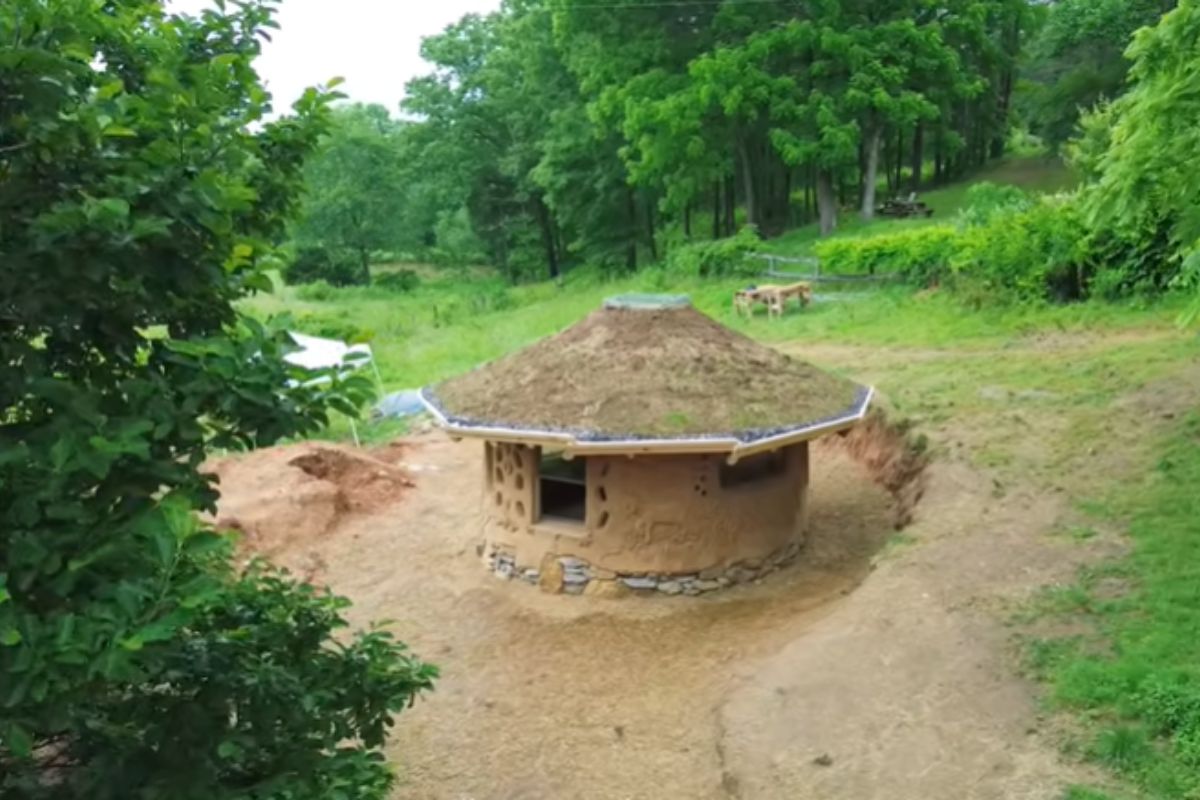
In A Workshop In The North Carolina Mountains, A Clay House Built From Scratch, With Earthen Floor, Clay Plaster, And Roof Designed To Last, Shows An Ancestral Method That Defies Traditional Construction.
When the first images of the clay house built from scratch began to appear in time-lapse video, it seemed just another rustic project in the mountains. In just a few weeks, however, the scene turned into a spectacle: a group of people transforming earth, sand, water, and straw into organic, curved walls full of details, erected on a solid stone base and completed with a vibrant green roof.
More than raising a structure, the workshop demonstrated how a clay house built from scratch can function as an outdoor laboratory for sustainable architecture, uniting technique, physical effort, and creativity. In five weeks, what was raw land turned into a complete refuge, with an earthen floor, sculpted walls, clay plaster, and a roof that acts as a small suspended garden.
Clay House Built From Scratch: From Drainage To The First Level Of Wall


Before any walls, the group started with the foundation, respecting the golden rule of natural construction: earth walls only survive with good foundation and good drainage.
-
The section of Serra da Rocinha on BR-285 is now open in Timbé do Sul: 50 m tensioned curtains and top-down technique stabilize the slope, with a stairway duct controlling the water.

-
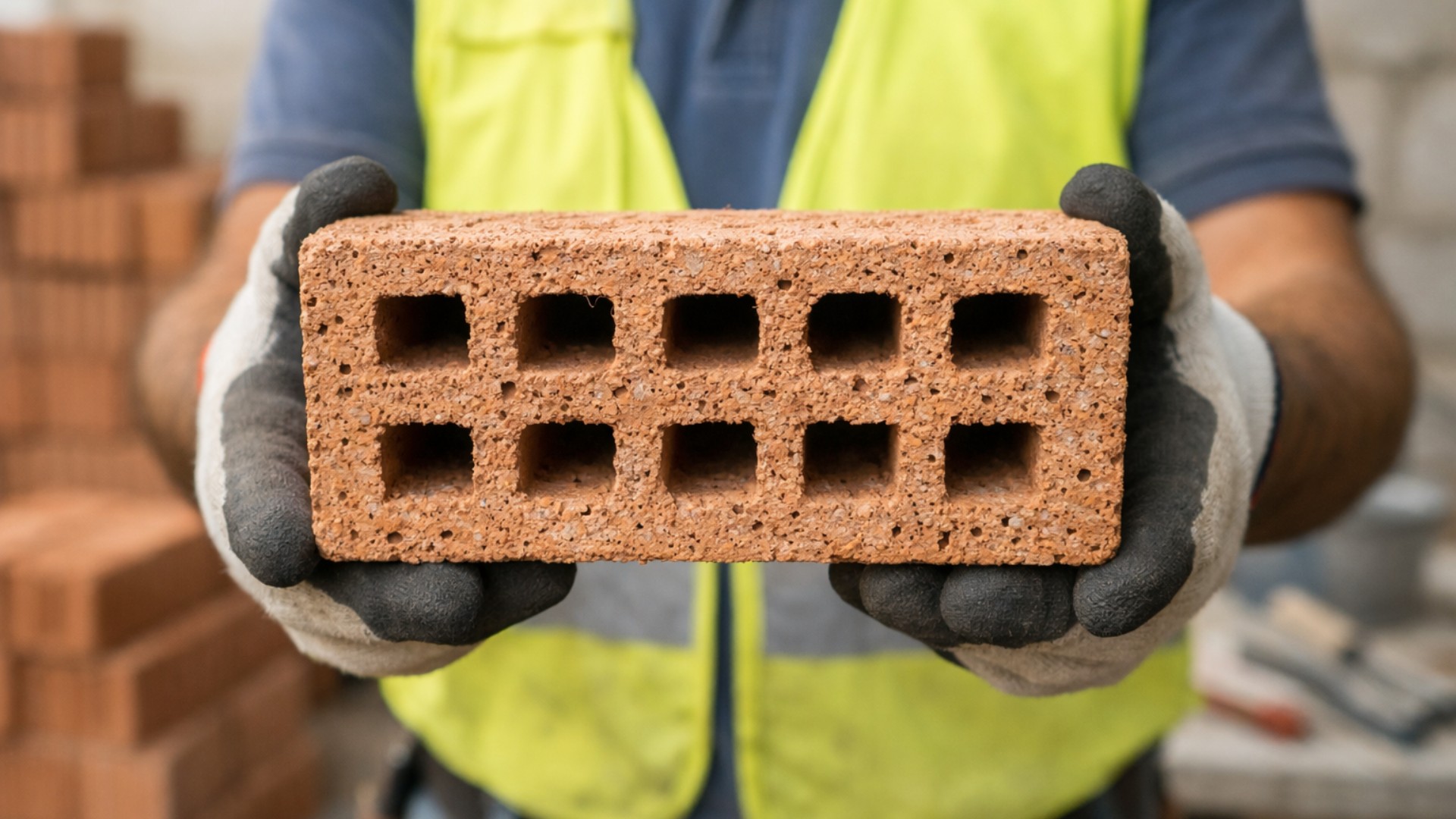
Scientists use sawdust mixed with clay to create a lighter brick, promising efficient thermal insulation and impressing by transforming waste into a solution for construction.
-
With a DNA shape, this bridge in Singapore draws attention in modern architecture and surprises tourists by transforming a simple crossing into an unforgettable visual experience in the urban heart.

-
Giant underwater pipeline begins to take shape with a R$ 134.7 million project at the Port of Santos: the 1.7 km structure uses 12-meter and 700 mm pipes to supply water to 450,000 people in Guarujá.


The first step was to dig a slightly sloped trench that directs water away, filling it with compacted gravel over a protective mat.
On top of this drainage, a foundation of stones was created to elevate the construction and prevent moisture from the soil from rising through the walls.
This ring of stones supports the weight of the clay house built from scratch and ensures that, even on days of heavy rain, the raw earth walls remain protected and stable.
With the foundation completed, came the floor. First, a layer of compacted gravel for drainage. Then, a simple insulation layer made with repurposed cardboard covered by a clay slip.
On top of that, a base of earthen floor with a mixture of clay, sand, gravel, and straw, poured to about 10 centimeters thick and carefully leveled.
Mixing Earth, Sand, And Straw Until It Becomes Architecture
From there, the heart of the technique begins: making cob, the mixture of clay, sand, straw, and water that will shape the clay house built from scratch.
The mixture is made on the ground, over a tarpaulin, with feet. First, dry clay and sand are mixed, then water is added until everything becomes a homogeneous mass.
Only then does the straw enter, which creates a kind of natural frame within the mixture, increasing resistance to tensile stress.
When the mixture reaches the ideal point, the group molds large loaves of clay and begins to lay them on the stone foundation.
Each portion is pressed with hands, stitching one block to another until the entire layer transforms into a single body, with no visible seams.
The goal is to create a monolithic, dense, cohesive wall without internal cracks, which functions as a continuous block.
As the walls grow, one team prepares new batches of cob, another transports loaves in a human chain, and another molds, smooths, and levels the surfaces, always checking plumb and alignment.
The result is a construction rhythm that is almost choreographed, where each person understands their position in the workflow of the site.
Windows, Doors, And Sculptures That Emerge From The Wall

As a certain height is reached, the door and window frames come into play.
These wooden elements are fixed within the cob mass, and the walls continue to grow around them, always stitching the new layers to the previous ones.
It is at this moment that the clay house built from scratch starts to take on the appearance of a habitable house, with defined openings and clear circulation routes.
After the rough structure, comes the more artistic part. Using practically the same mixture of clay, sand, and straw, but more refined, the group creates volumes sculpted on the surface of the walls.
The house becomes a life-sized canvas, with niches, shelves, organic shapes, small reliefs, and even figures inspired by nature. Before the final plastering, the builders lightly perforate some details to aid the adhesion of the plaster.
These sculpted elements make the clay house built from scratch completely escape the straight logic of brick and concrete block.
Instead, everything flows in curves, rounded corners, and surfaces that appear to have been shaped by hand, like a giant ceramic piece.
Clay Plaster: Finishing That Breathes And Protects
When the walls and sculptures are ready, it’s time to test and apply the plaster. Several small samples are made with different proportions of clay soil, coarse sand, fine sand, and even manure, until the most adhesive, firm, and least crack-prone combination is found.
With the chosen recipe, the group lightly moistens the walls and begins to plaster the entire house, from top to bottom, using rigid and flexible trowels.
The clay plaster functions both as a protective skin and as a filter that allows the wall to breathe, regulating internal humidity and contributing to thermal comfort. In the more delicate details, spoons and even yogurt lids help refine corners, curves, and edges.
Inside, the plaster is also used to better align niches, define the contours of glass bricks, and fit perfectly against door and window frames.
Some sections receive ceramic and marble mosaics, giving contrast between the rustic earth and the shine of polished stone.
Living Roof And Earthen Floor: The House Interacts With Its Surroundings
With the plastered walls, the clay house built from scratch needs a hat to match. The team then assembles a structural ring connected to metal pieces embedded at the top of the walls.
On top of this ring, a reciprocal roof is created: each beam rests on the next, forming a circle in which all support each other without needing a central pillar.
Next come the secondary battens, the ceiling boards, shims for leveling, and preparation for the living roof: a sequence of layers with a waterproof membrane, sand, straw, and local soil.
In the end, the top of the house becomes a fertile garden bed, ready to receive vegetation and function as additional thermal protection.
On the ground, the earthen floor receives a final, thinner layer made of clay, sand, and manure, carefully leveled and smoothed with strips and trowels.
The result is a continuous floor, warm to the eye and pleasant to the touch, reinforcing the feeling of being in a house that originates from the very ground.
Ancestral Method In A Full Course Format
The entire experience of the clay house built from scratch was documented in video and turned into a series of episodes, detailing each step, from the first furrow in the soil to the installation of the main door.
What could have been just an isolated work transformed into teaching material for those dreaming of applying natural techniques in their own homes or in professional projects.
By using only local materials with low impact, such as clay, sand, straw, stone, and raw wood, the method shows that it is possible to rethink traditional construction with ancestral solutions adapted to the present, reducing dependence on cement, steel, and energy-intensive systems.
More than that, it rescues the sense of community on the construction site, where each participant literally puts their hands in the clay to see the house come to life.
In the end, what remains is not just the finished structure, but the realization that building can be a slower, manual, and conscious process, without sacrificing comfort, beauty, and technique.
And you, would you dare to learn practically and participate in a clay house built from scratch if you had the opportunity to experience a course like this?








-

-

-

-

-

-

54 pessoas reagiram a isso.