





 Portuguese
  English
  Spanish
  4 min of reading
  0 comments


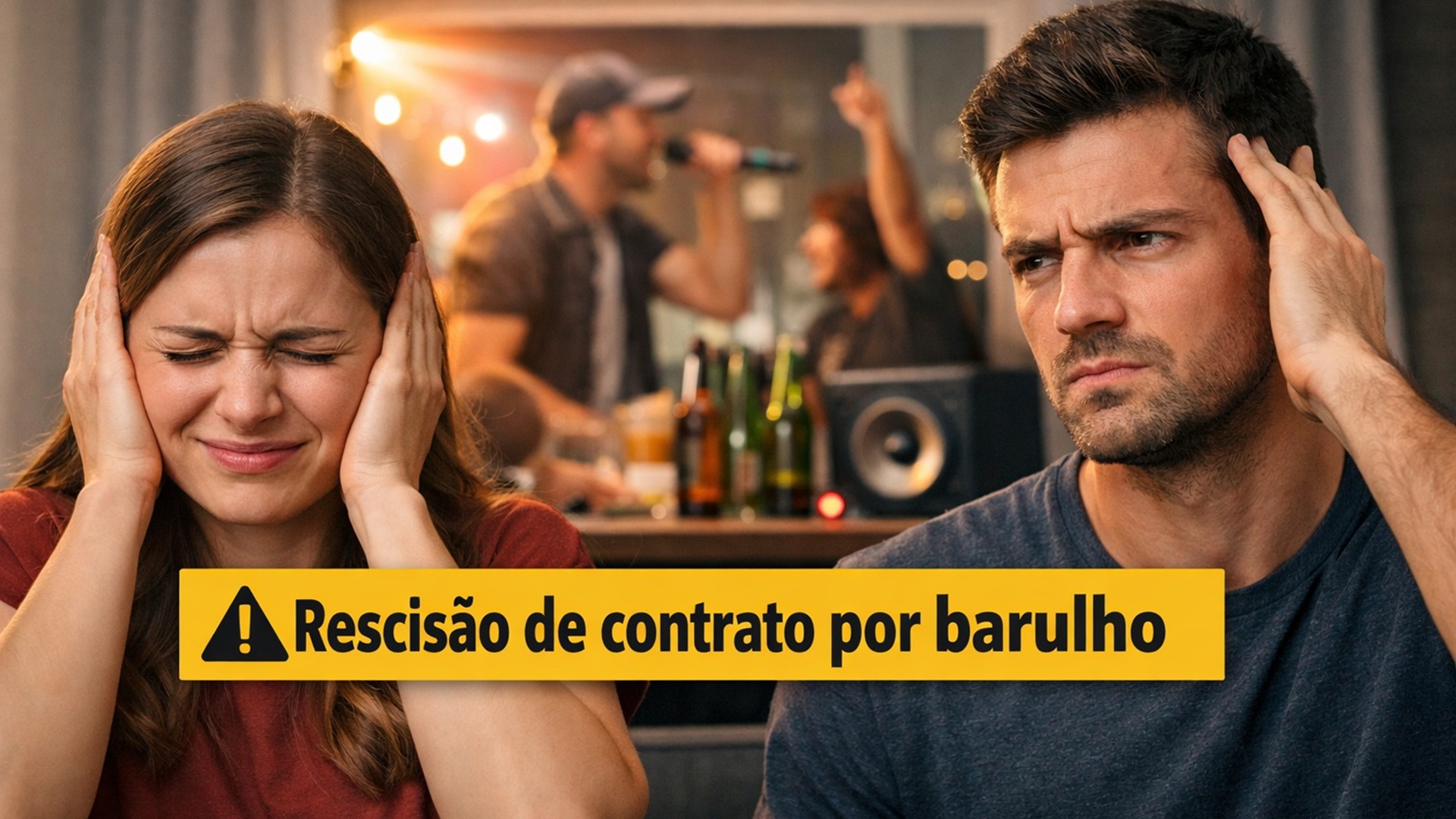
Discover How the Tenancy Law Can Help Those Who Suffer from Excessive Noise from Neighbors to Terminate the Lease Without Paying a Fine.
Excessive noise caused by neighbors is a recurring problem in many rentals. In some cases, tenants may feel disturbed enough to decide to terminate the rental agreement. The big question is: is it possible to return the rented property without paying a fine due to the neighbor’s noise?
The answer, according to experts on the subject, is yes, but there are conditions that need to be met.
What Does the Tenancy Law Say About Noise from Neighbors?
Article 23 of the Tenancy Law, in its clause IV, determines that the tenant has the obligation to notify the landlord (property owner) of any damage or defect that needs repair and of disturbances caused by third parties.
-
The noise law will no longer be in effect at 10 PM starting in June with a new rule valid during the 2026 World Cup.

-
The Chamber opens a debate on driver’s licenses at 16 years old as part of a reform that includes around 270 proposals to change the Brazilian Traffic Code and may redesign rules for licensing, enforcement, and circulation in the country.

-
The new Civil Code could revolutionize marriages in Brazil with “express divorce” and changes that could exclude spouses from inheritance.

-
Banco do Brasil sues famous influencer for million-dollar debt and intensifies debate on delinquency, risks of seizure, and direct impact on Gkay’s credibility.


In the case of excessive noise, this “third party” is the neighbor. This article provides legal backing for the tenant to request termination of the contract if the noise is recurrent and causes discomfort.
The main issue is that the tenant must first inform the landlord about the problem. For the request for termination of the contract to be valid, it is necessary to have documentation proving that the noise is indeed constant and bothersome, such as police reports (BO) and recorded videos, for example.
How to Prove That the Neighbor’s Noise is Excessive?
Once the tenant realizes that the noise is affecting their quality of life, it is essential that they take some steps to document the problem. The first action should be to file a police report, detailing the situation.
Additionally, cellphone cameras can be great allies in capturing the excessive sound and, if possible, even identifying the person responsible for the noise.
It is important that the documentation is consistent, as a single complaint or an isolated event may not be sufficient to prove the problem.
The idea is for the tenant to gather evidence that the noise is happening repetitively and continuously, such as parties that extend into the early hours or sounds of objects being hit or thrown.
The Role of the Landlord in the Termination Process
When the tenant informs the landlord about the problem, the landlord has the obligation to act to resolve the situation.
If the landlord does not take any measures, whether by contacting the neighbor or seeking legal action, the tenant may seek a solution on their own. Ideally, the landlord should take the lead in the case, seeking an extrajudicial solution, such as a conversation with the neighbor, or even judicial action to stop the noise.
If the landlord does not resolve the situation, the tenant has the right to terminate the contract without paying the compensatory fine.
This decision may be difficult for the owner, as they will have their property unoccupied earlier than expected, but with the proper evidence, the landlord’s chances of succeeding in an action to collect the fine will be minimal.
The Importance of a Property Management Company
The presence of a property management company can be crucial in this type of situation. The management company, which has knowledge of the laws and procedures, can act as an intermediary between the landlord and the tenant, helping to resolve the impasse more quickly and efficiently. They can notify the landlord about the problem and guide them to take the appropriate steps.
In many cases, the management company may even go personally to the neighbor’s house, informing them about the problem and warning them to cease the behavior. The management company can even recommend legal action if the neighbor continues the conduct.
The Role of Contractual Clauses and the Challenges for the Landlord
In some cases, the rental agreement may specify that the tenant was aware of certain problems, such as excessive noise from neighbors.
In these cases, it is essential that the problem be clearly and objectively described in the contract to prevent the tenant from seeking termination without paying the fine.
The landlord may, for example, offer a rent discount for the tenant to accept living with the noise, but this clause must be very well drafted.
However, if the tenant was unaware of problems with neighbors when signing the contract, and the noise is significantly affecting their quality of life, termination without a fine may be considered valid. This especially occurs if there is clear evidence that the neighbor is causing constant disturbances.
Conclusion: How to Act in Cases of Excessive Noise
If you, as a tenant, are facing the problem of excessive noise from neighbors, the recommendation is to take the necessary legal steps. File police reports, record videos, and collect as much evidence as possible. With this, you can negotiate the termination of the contract with the landlord without paying the compensatory fine.
However, if you are a landlord, it is important to be aware of the legislation and the responsibility to act in the face of such problems. The solution may involve an amicable approach with the neighbor or even legal action, but in many cases, the simplest way is to act transparently and find a solution so that the tenant can continue living peacefully.
Whether as a tenant or landlord, it is essential to understand the rights and duties of both parties, and in case of doubts, always seek guidance from a lawyer specializing in real estate law to ensure that the actions taken are within the law.










-

2 pessoas reagiram a isso.