





 Portuguese
  English
  Spanish
  4 min of reading
  6 comments


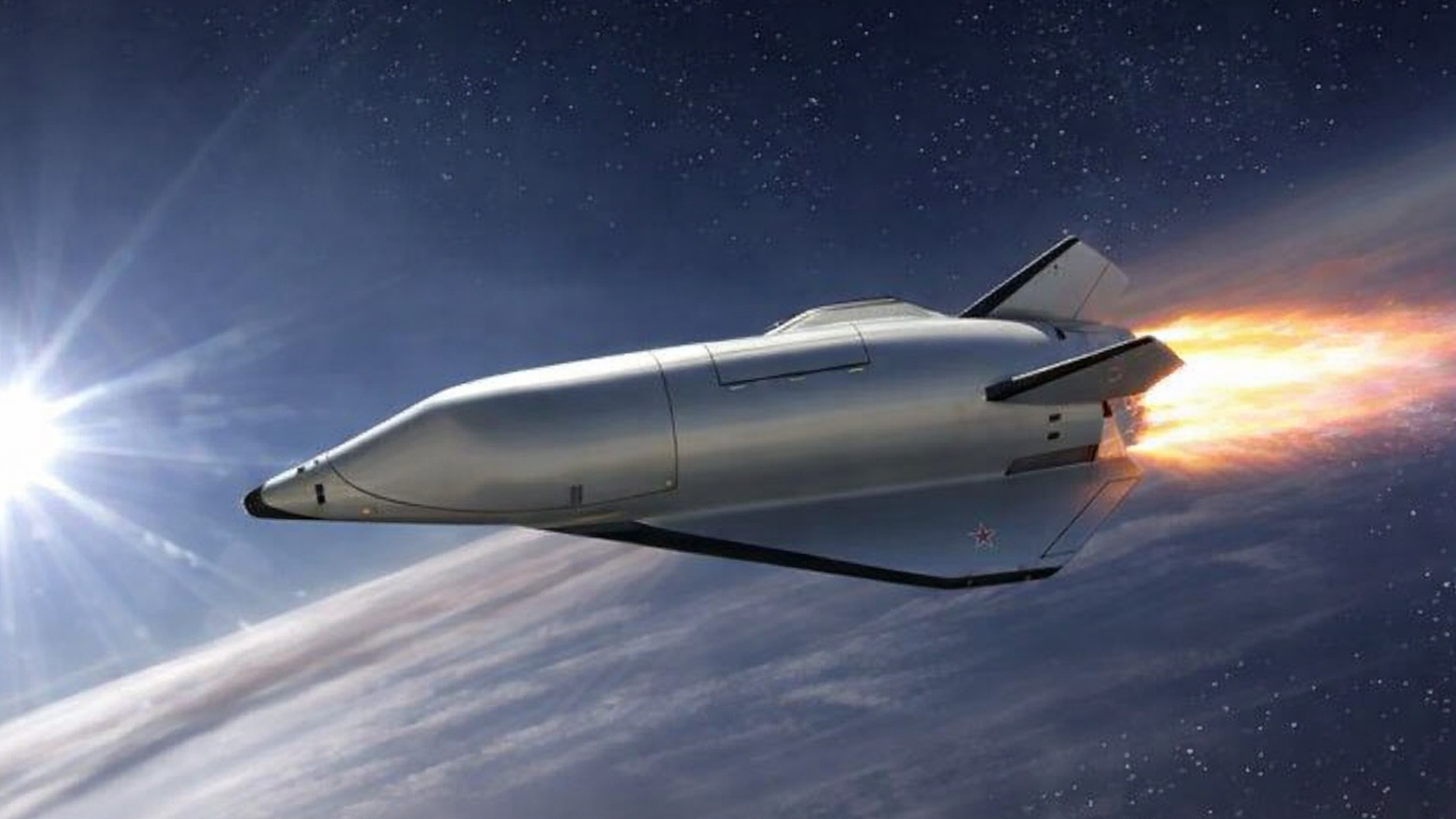


The Fourth Launch of the Experimental Spaceplane Shenlong, Conducted from the Jiuquan Center by Long March-2F Rocket, Confirms the Consolidation of a Chinese Reusable Spacecraft Program Started in 2020, Marked by Increasingly Longer Orbital Missions and Direct Comparisons with the X-37B of the United States
The Chinese Shenlong program advanced with the launch on Saturday of another reusable experimental spaceplane in orbit, the fourth mission of its kind since 2020, from Jiuquan, reinforcing the technical consolidation of the Shenlong and its strategic relevance in the debate over reusable orbital systems.
Advance of the Shenlong in Reusable Orbital Missions
Beijing has intensified its testing of reusable orbital systems with the new mission of the Shenlong, frequently compared to the U.S. Space Force’s X-37B.
The vehicle was placed in orbit on Saturday, marking the fourth Chinese mission since 2020, all launched from the Jiuquan Satellite Launch Center.
-
Motorola launched the Signature with a gold seal from DxOMark, tying with the iPhone 17 Pro in camera performance, Snapdragon 8 Gen 5 that surpassed 3 million in benchmarks, and a zoom that impresses even at night.

-
Satellites reveal beneath the Sahara a giant river buried for thousands of kilometers: study shows that the largest hot desert on the planet was once traversed by a river system comparable to the largest on Earth.

-
Scientists have captured something never seen in space: newly born stars are creating gigantic rings of light a thousand times larger than the distance between the Earth and the Sun, and this changes everything we knew about stellar birth.

-
Geologists find traces of a continent that disappeared 155 million years ago after separating from Australia and reveal that it did not sink, but broke into fragments scattered across Southeast Asia.

The four flights of the Shenlong utilized Long March-2F rockets, indicating a standardized launch architecture.
The repetition of the same vector suggests a process of technical maturation focused on reliability and regularity of operations, with no public disclosure of the spacecraft’s specifications.
Although Chinese authorities have not confirmed the official name, the space enthusiast community has adopted the designation Shenlong, or Divine Dragon.
The term has come to identify the vehicle in open analyses, reflecting both the secrecy of the program and its perceived strategic importance.
Mission Presented as Technology Verification
The most recent mission of the Shenlong was officially described as a “technology verification mission.” Beijing reiterated that the flight does not represent an operational deployment, maintaining neutral and limited public communication about the reusable spacecraft program.
According to the Xinhua News Agency, the experiment aims to provide technical support for the peaceful use of outer space. No additional data on payload, expected duration, or orbital profile has been disclosed by the Chinese authorities.
The first reusable experimental spacecraft of China flew on September 4, 2020. Remaining in orbit for two days, the Shenlong safely returned to the designated landing site, establishing the operational bases of the program, as reported by the South China Morning Post.
Chinese authorities classified that inaugural flight as a milestone in reusable spacecraft research. The experiment was presented as an initial step for cheaper and more efficient access to orbit, a narrative that has since accompanied the ongoing development of the Shenlong.
Extended Durations Reinforce Program Maturity
The second vehicle of the Shenlong program was launched on August 5, 2022, and remained in orbit for 276 days. The landing occurred on May 8 of the following year, demonstrating the capacity for extended stay in the space environment.
The third mission took off on December 14, 2023, and returned in September of the same year, after 268 days in space. This flight highlighted advances in thermal protection and long-duration power systems, essential elements for more complex reusable operations.
With four missions conducted over a span of four years, the Shenlong has progressed from short-duration tests to extensive orbital stays. The progression indicates a continuous learning curve, even without official disclosure of detailed technical parameters.
Detected Signals Raise Dual Use Hypotheses
Independent tracking networks in the United States reported the detection of radio signals associated with the third flight of the Shenlong over North America. The observations raised the possibility of use as a mobile signals intelligence platform.
Beijing has not commented on the reports. Nevertheless, the data collected by trackers reinforced external suspicions of military dual-use applications for the Shenlong, in addition to its declared civilian purpose, expanding the international debate on transparency in reusable space programs.
Comparison with the X-37B Maintains American Leadership
Despite China’s progress with the Shenlong, the United States continues to lead the development of reusable orbital spacecraft.
The X-37B spaceplane of the U.S. Space Force initiated its eighth mission on August 21, launched by a Falcon 9 rocket from SpaceX from the Kennedy Space Center.
In the eighth mission, the X-37B transported a quantum inertial sensor described by American authorities as the highest-performing one ever used in space. The equipment enables precise navigation in GPS-denied environments, enhancing operational autonomy in orbit.
The spaceplane also tested high-bandwidth inter-satellite laser communications, a technology considered more resistant to interference than conventional radio links.
Amateur observers further reported the release of a small secondary satellite after orbital insertion, broadening the experimental scope of the mission.







Alguien está paranoico
Favio , vos crees que en la NASA están durmiendo la siesta,
Espera, que fue lo primero que dijeron sobre los cohetes reutilizables de gran tonelaje de spaceX???