





 Portuguese
  English
  Spanish
  4 min of reading
  0 comments


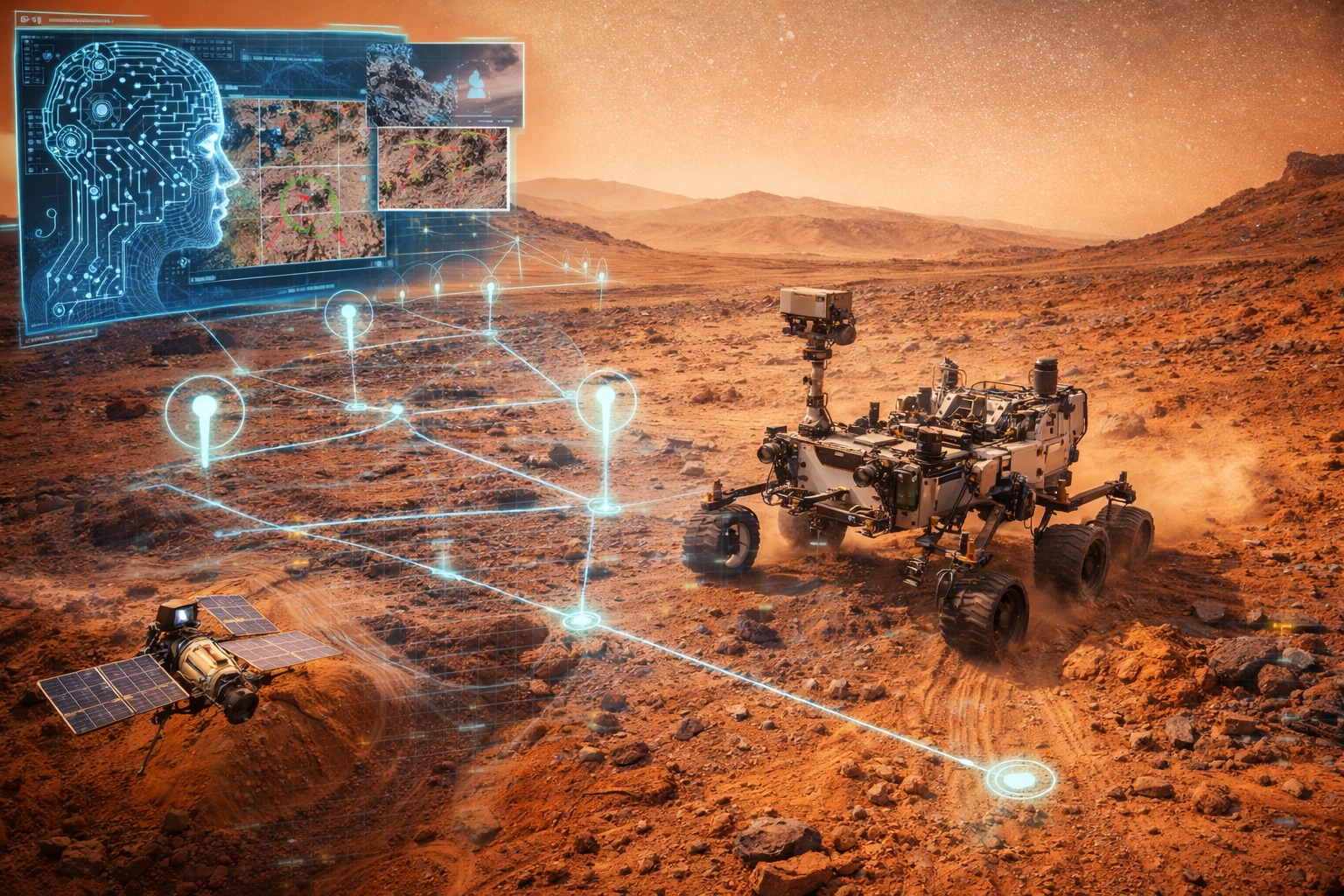
An Unprecedented Demonstration by NASA Used AI With Computer Vision to Create a Safe Route With Landmarks, Reducing Dependence on Human Planning and Increasing Scientific Gain When Earth’s Distance Becomes a Bottleneck.
NASA’s Perseverance Makes the First Route on Mars Planned by AI! The idea of “driving” a rover on Mars seems simple until reality hits with enormous communication delays. It’s not possible to pilot in real time. Therefore, for decades, each movement on another world has been a puzzle solved by people: looking at images, measuring risks, choosing a path, defining landmarks, reviewing everything under a microscope, sending commands, and hoping the terrain doesn’t play tricks.
But this has truly begun to change. The Perseverance rover has just completed its first travels on another planet with route planning done by artificial intelligence, using models capable of interpreting images and transforming Martian terrain into practical navigation instructions.
The point here is not that “AI drove by itself” in the Hollywood sense. The leap was different: AI took over a tedious and critical part that consumes time and hinders productivity, which is generating landmarks and the continuous path that would connect those points safely. In missions where every command sending window matters, shortening this step is invaluable.
-
A cold front advances through the South this Saturday and reaches the Southeast on Easter Sunday with heavy rain and a drop in temperature, while the North and Northeast face the risk of storms and flooding throughout the holiday.

-
Brazil is about to inaugurate the largest maritime surveillance system in its history, with radars, infrared cameras, and autonomous sensors installed on Ilha Grande to monitor the entire Brazilian coast in real time.

-
Archaeologists discover in China a 5,000-year-old tomb with over 350 artifacts, nearly 200 jades, and signs of intentional destruction, in a discovery that could be the gateway to a lost prehistoric kingdom.

-
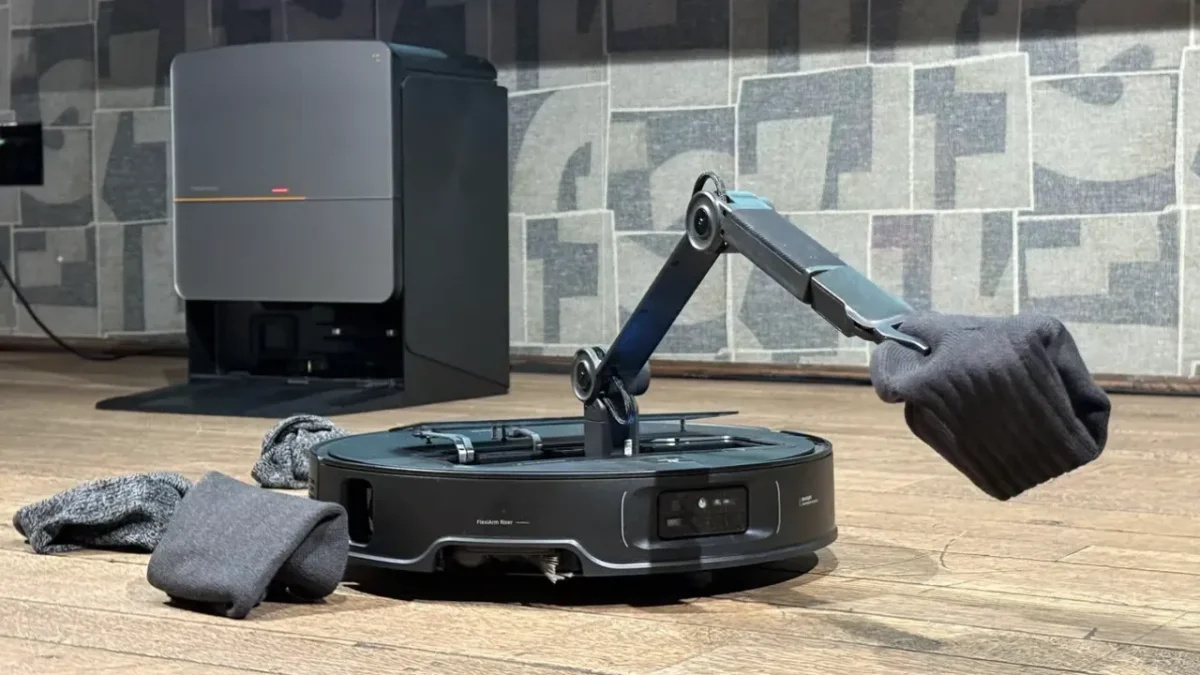
A vacuum robot with a five-axis mechanical arm capable of picking up objects from the floor, avoiding obstacles in real time, and continuing to clean on its own inaugurates a new generation of appliances that see, think, and act within the home.

Why This Is a Milestone and Not Just a Pretty NASA Demo
Mars is far away. Very far. And that detail changes everything. Instead of a joystick, there is an operational cycle: a human team plans, validates, sends, the rover executes, the team analyzes the feedback, and starts again. To avoid the robot getting “stuck” in a dangerous stretch, these plans are often broken into short segments, with landmarks usually spaced a maximum of about 100 meters apart.
What the demonstration did was take that planning work and delegate part of it to a generative AI of the vision and language type. It analyzed high-resolution orbital images, combined them with terrain slope models, and looked for classic signs of trouble: irregular rocky beds, outcrops, fields of stones that can jam wheels, sand ripples, and zones where risk grows rapidly.
From there, instead of delivering a “guess,” the AI generated a complete route, with a continuous path and organized landmarks for the rover to receive packages of instructions and proceed safely.
What Was Used for AI to “See” Mars the Right Way
The planning didn’t come from nowhere. AI worked on the same type of material that human planners use: orbital images and terrain data. The process included images from the HiRISE camera aboard the Mars Reconnaissance Orbiter, along with digital elevation models that help understand inclines and terrain traps.
And there’s an important detail: before any command leaves Earth, engineers need to ensure it won’t break the rover’s flight software rules. So the team treated the instructions generated by AI as if they were human instructions: everything was run through a “digital twin,” a virtual replica of Perseverance used to simulate and validate what will happen out there. In this check, over 500,000 telemetry variables were verified, basically a thorough review to ensure compatibility and operational safety.
This part is the system’s “emergency brake.” It’s what prevents AI from becoming a blind bet. The logic was: AI proposes, systems validate, the mission executes responsibly.
NASA’s Field Test and the Numbers That Showed It Worked
In practice, the demonstration took place over two specific Martian days of the mission, known as sols. On December 8, Perseverance traveled 210 meters using AI-generated landmarks. Two days later, it repeated the process and covered another 246 meters.
It may seem small, but that’s precisely the point: when the terrain is “rough,” the human cost of safe planning rises. Automating part of this work not only makes the rover move faster but also frees up team time, accelerates decision-making cycles, and increases the chance of reaching scientifically interesting areas more quickly.
In this shift, it’s worth noting that the Jet Propulsion Laboratory team at NASA described the demonstration as a practical step to expand autonomy in perception, location, and trajectory planning, without treating it as a total replacement for human control, but rather as operational gain with strict validation.
What Changes From Here On
The most obvious gain is efficiency: fewer human hours spent on route design and more time for science. But there’s a more strategic gain, which is preparing the ground for missions where the “back and forth” of commands is even more costly, such as operations in more dangerous areas, in regions with less predictable soil, or in future missions that require longer displacements.
If AI can help the rover see what matters, decide where to go, and put together a coherent plan, the mission tends to move toward a scenario where the vehicle carries out kilometers of travel with less detailed intervention. And this doesn’t mean leaving the rover alone. It means reducing repetitive burdens and allowing the human team to focus on what truly needs human brain power: scientific prioritization, risk decisions, and interpretation of findings.
In the end, this demonstration places an important piece on the table: autonomy applied with caution, in a real mission, with heavy validation and concrete results. It’s not a vague promise. It’s engineering working, the way space missions thrive.







-

-

-

4 pessoas reagiram a isso.