





 Portuguese
  English
  Spanish
  3 min of reading
  0 comments


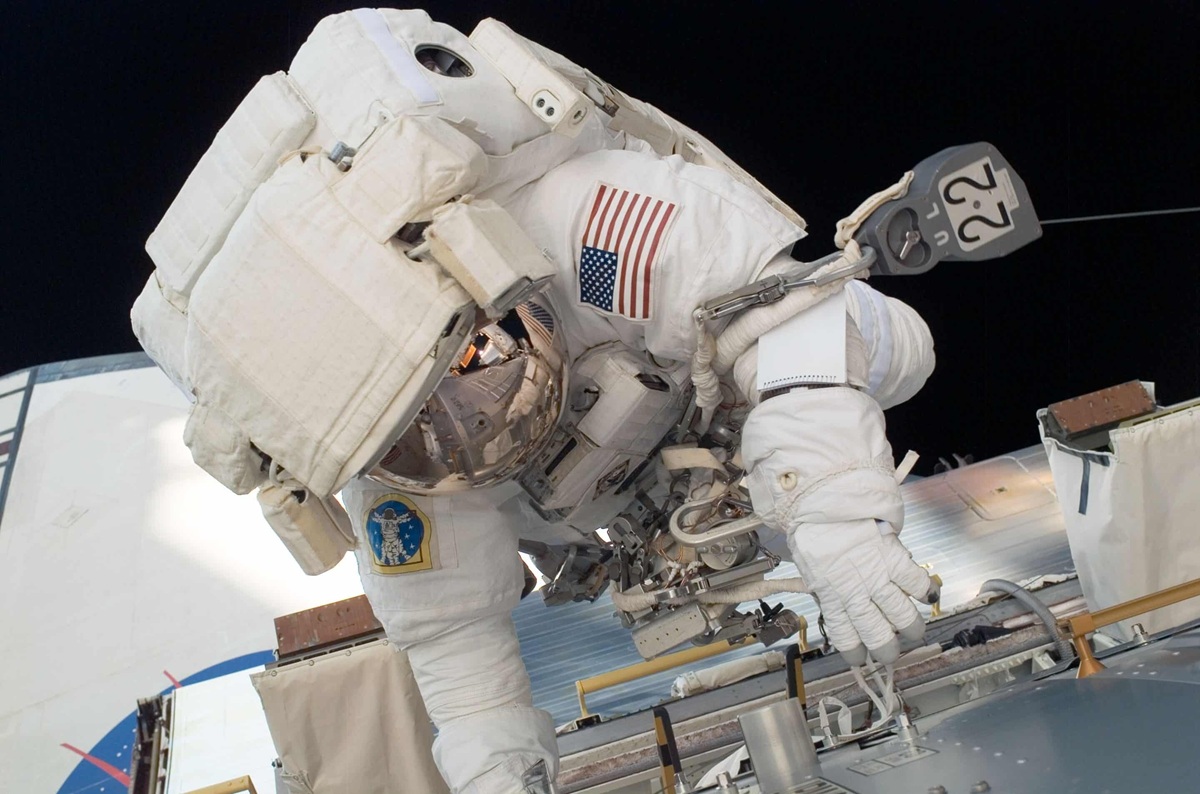
After 178 Days in Space Aboard the International Space Station, NASA Astronaut Reports Impact of the “Overview Effect,” Describes the Visualization of the Illuminated Border Between India and Pakistan and Claims That Humanity Prioritizes Economy Over the Extremely Thin Biosphere That Sustains Life
A NASA astronaut who spent 178 days in space stated that the experience led him to conclude that we are “living a lie,” after observing Earth from the International Space Station and reflecting on how humanity organizes its systems.
NASA and the 178 Days in Space
Ronald Garan, 62, was selected as a NASA pilot in 2000 and participated in various space missions, accumulating 178 days in space. The extended stay outside Earth had a profound impact on his perception of the planet.
The NASA astronaut was aboard the International Space Station, where he experienced the so-called “overview effect.” The phenomenon is described as the unexpected and overwhelming emotion felt when observing Earth from space.
-
Motorola launched the Signature with a gold seal from DxOMark, tying with the iPhone 17 Pro in camera performance, Snapdragon 8 Gen 5 that surpassed 3 million in benchmarks, and a zoom that impresses even at night.

-
Satellites reveal beneath the Sahara a giant river buried for thousands of kilometers: study shows that the largest hot desert on the planet was once traversed by a river system comparable to the largest on Earth.

-
Scientists have captured something never seen in space: newly born stars are creating gigantic rings of light a thousand times larger than the distance between the Earth and the Sun, and this changes everything we knew about stellar birth.

-
Geologists find traces of a continent that disappeared 155 million years ago after separating from Australia and reveal that it did not sink, but broke into fragments scattered across Southeast Asia.

According to his account, the experience provided a rare perspective available only to a limited number of people who reach the stratosphere. For most, it is a distant dream.
Visible Border Between India and Pakistan
During one of his observations, Garan spotted a long winding line of lights stretching across Asia. He realized that this line represented the artificial border between India and Pakistan.
“I always said you can’t see borders from space; apparently, I was wrong,” he stated in a TED talk in 2016. He noted that Earth almost always looks beautiful and peaceful when viewed from space.
However, he emphasized that this luminous line was an example of human alteration of the landscape, visible from low Earth orbit. This realization marked his experience on the International Space Station.
The Realization About the Biosphere
In 2022, the NASA astronaut stated that he was struck by an alarming realization when observing the extremely thin biosphere surrounding the planet. He described seeing an iridescent biosphere full of life.
“I didn’t see the state of the economy,” he declared to Big Think. According to him, the view from space did not reveal financial systems but rather the fragility of life support systems.
Garan stated that the systems created by humans treat everything, including the planet’s vital systems, as integral subsidiaries of the global economy. From an orbital perspective, he said it is obvious that we are living a lie.
Proposed Shift in Focus
The NASA astronaut advocated for changing the priority from “economy, society, planet” to “planet, society, economy.” For him, this reorganization is the only way to continue the evolutionary process.
The experience accumulated during nearly 200 days outside Earth shaped this vision. The reflection was described as heavy, but central to his understanding of humanity’s place on the planet.
At the end of his statements, Garan reiterated that the perspective gained in space revealed a reality different from that which governs current systems, reinforcing his critique of how global priorities are structured.








-

-

-

-

-

14 pessoas reagiram a isso.