





 Portuguese
  English
  Spanish
  6 min of reading
  42 comments


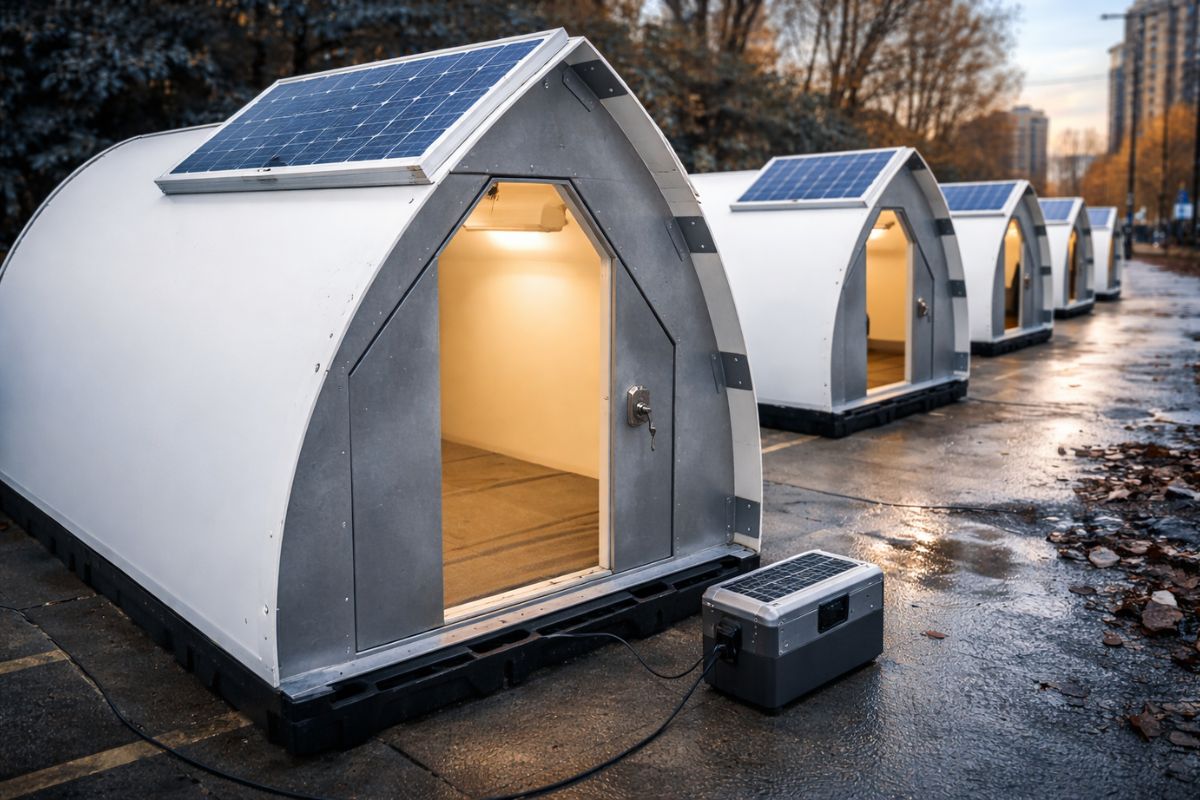


A Harbor of Hope, led by Homer Williams, has begun distributing rigid tents made of corrugated plastic to homeless residents in Portland and surrounding areas. With an insulated floor, space for two people and a pet, a lamp, and a solar charger, six units are already in initial community testing at this stage.
The tents that Harbor of Hope is bringing to the streets of Portland arose from a basic and repeated problem: constant rain turning shelter into soaking, clothes into dead weight, and nights into a test of physical endurance. When even the sleeping bag turns into a sponge, the street changes from a distant threat to an everyday risk.
The proposal is straightforward: replace common tents with rigid tents made of corrugated plastic, warmer, waterproof, and durable, with practical improvements such as an insulated floor, a lamp, and a solar charger for phones. It is not a “magic solution,” but a concrete attempt to reduce harm while a permanent solution is not available.
Rain as a Trigger and the Urgency of Basics

Portland and neighboring communities face a volume of rain that, for those sleeping outdoors, is not a weather detail, but a routine that invades everything.
-
Friends have been building a small “town” for 30 years to grow old together, with compact houses, a common area, nature surrounding it, and a collective life project designed for friendship, coexistence, and simplicity.

-
This small town in Germany created its own currency 24 years ago, today it circulates millions per year, is accepted in over 300 stores, and the German government allowed all of this to happen under one condition.

-
Curitiba is shrinking and is expected to lose 97,000 residents by 2050, while inland cities in Paraná such as Sarandi, Araucária, and Toledo are experiencing accelerated growth that is changing the entire state’s map.

-
Tourists were poisoned on Everest in a million-dollar fraud scheme involving helicopters that diverted over $19 million and shocked international authorities.


Harbor of Hope had already been distributing thousands of tents and sleeping bags to meet immediate needs, but the water repeated the same outcome: what should protect turned into moisture retention, and “shelter” became part of the problem.
It was in this scenario that Homer Williams described the chain effect: soaked clothes, soaked sleeping bags, and feet that “rot,” in his words.
The point is not just discomfort; it is health and survival in the short term, because keeping the body dry and minimally warm is what separates a tough night from progressive deterioration.
Who Is Behind the Tents and Why It Matters

The tents emerge from a larger mission: to help homeless people find a way back to housing.
Williams works for Harbor of Hope, a nonprofit organization that addresses the basics, and decided to look for an alternative when he realized that the traditional response, while necessary, was not addressing the main local enemy: water.

To turn the idea into a real object, he teamed up with the LIT workshop. This detail changes the tone of the project: it is not just an emergency donation; it is a process of creation and adjustment, aiming to solve a specific pain of the territory.
When the problem is recurring, the solution needs to be repeatable and adaptable, and it is precisely here that practical experience and partnership come into play.
What Changes in a Rigid Corrugated Plastic Tent
The basis of the design is corrugated plastic, a material with a “channel” structure that tends to gain rigidity without relying on complex frames like traditional tents.
In practical terms, this points to a firmer shell, less prone to collapsing with wind and rain, and with a lower chance of absorbing water like fabrics do over time.
The tents are also described as warmer and more durable than common tents. It is important to read this carefully: it does not mean full comfort nor replacement of a home, but indicates a leap in minimum protection.
For those living exposed, “a little better” can mean “I endured one more day”, and this kind of difference, on the street, is often decisive.
From Feedback on the Streets to Insulated Floor, Light, and Energy
Before “finalizing” the model, the inventors took the tents to the streets and asked residents directly what worked and what failed.
This point is central: instead of assuming needs, the project was shaped by those living the reality outside, where every detail becomes routine, from where to store belongings to how to deal with moisture, cold, and safety.
With this feedback, the floor became insulated, and the interior was designed to fit two people, their belongings, and a pet.
Additionally, there is a lamp and a solar charger for phones. Energy, here, is not a luxury: it is connection, it is guidance, it is a chance not to lose information, and a functioning cell phone can be the difference between getting help or becoming invisible.
Six Units in Testing and the Idea of Managed Shelter
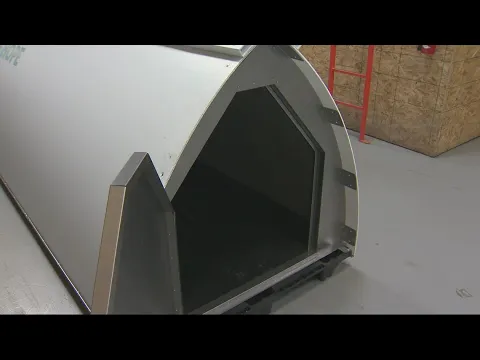

So far, six tents of this type are being tested in the community, with plans to make more available.
The test is small by choice and limit: when something new is introduced, it is possible to observe real performance, reactions, the need for adjustments, and impacts on daily life without turning the entire city into a laboratory.
Williams also points to a sensitive point: he believes that the tents and the people will perform better in a protected and managed installation. This statement shifts the focus from the object to the context.
An isolated tent, alone, does not solve what the street imposes; a shelter with management tries to reduce the chaos around, creating an environment where a person can rest, organize, and think about the next step with less immediate risk.
The “Exit from the Streets” as a Path, Not a Leap
The stated goal is not to keep someone on the street in a “neater” structure. Williams’ expectation is that the tent functions as a transitional step, an initial exit that allows for moving on to alternatives such as a small house, a renovated motel, or an apartment that would still need to be built. He does not sell a straight line; he describes a journey.
The logic is simple and harsh: to take people to a safe place so they can stay healthy. Without minimum safety and health, any plan becomes theory, because a person begins to exist in permanent survival mode. And, for him, success begins when the first step, no matter how small, reduces risk and opens space for continuity.
The rigid corrugated plastic tents, with insulated floors, light, and solar chargers, appear as a pragmatic attempt to address a specific problem in Portland: the rain that turns shelter into continuous moisture.
At the same time, the project relies on something that rarely gets highlighted: listening to those living on the street and adjusting the solution based on that feedback. When the design emerges from real use, it tends to err less in what matters.
Still, the inevitable debate goes beyond the material: what is the role of a better tent in a city that needs permanent exits?
It can be a bridge, can be relief, can be part of a larger strategy, as long as it does not become a final destination. The point of tension is precisely this: to protect now without normalizing the street as housing.
And, looking at your city: if the problem were rain, cold, and belongings always wet, would you support the adoption of rigid tents in managed areas, or do you believe this pushes the crisis under the rug?
For you, what should come first in a temporary shelter: waterproofing, privacy, security, or access to energy to keep the phone running?










Isso pode funcionar lá fora mas aqui no Brasilis, os viciados vão vender para comprar a pedra
Não entendi? O viciado lá fora não vendem as coisas pra comprar droga também? achei que viciado tinha esse problema no mundo todo, não só no Brasil
Eu vim pra falar isso mas alguém já falou sim vão vender e ainda que haja seleção e só libere pra quem não é alcoólatra ou usuário porque sim existem famílias dividindo espaço com Eles porque não tem teto..estes estarão em risco.
Abrir espaços onde essas casas possam servir de abrigo sob vigilância e cuidado faz todo sentido ..é um caminho podendo servir de começo pra outros novos comportamentos e o resgate desses indivíduos se reunidos receberem algum tipo de ajuda psicológica não sei …….mas a esperança está em que eles voltem a suas famílias ou as integridade de suas próprias vidas.
Gerar conforto para que permaneçam nas ruas não faz nenhum sentido .
Teria como dispor para cão comunitário??
Solução enxuga gelo. O certo é criar projetos que ajudem essas pessoas a sair das ruas, não a sobreviver nelas.
Muitas não têm ensino médio ou fundamental, o que só dificulta para conseguir emprego.
Por isso, é importante investir em educação e não focar somente nos auxílios, como Bolsa Família. Caso contrário, as pessoas podem até não passar fome, mas vão continuar pobres.
Notícia dos EUA e você misturando bolsa família. Pelo menos leia a matéria