





 Portuguese
  English
  Spanish
  5 min of reading
  1 comment


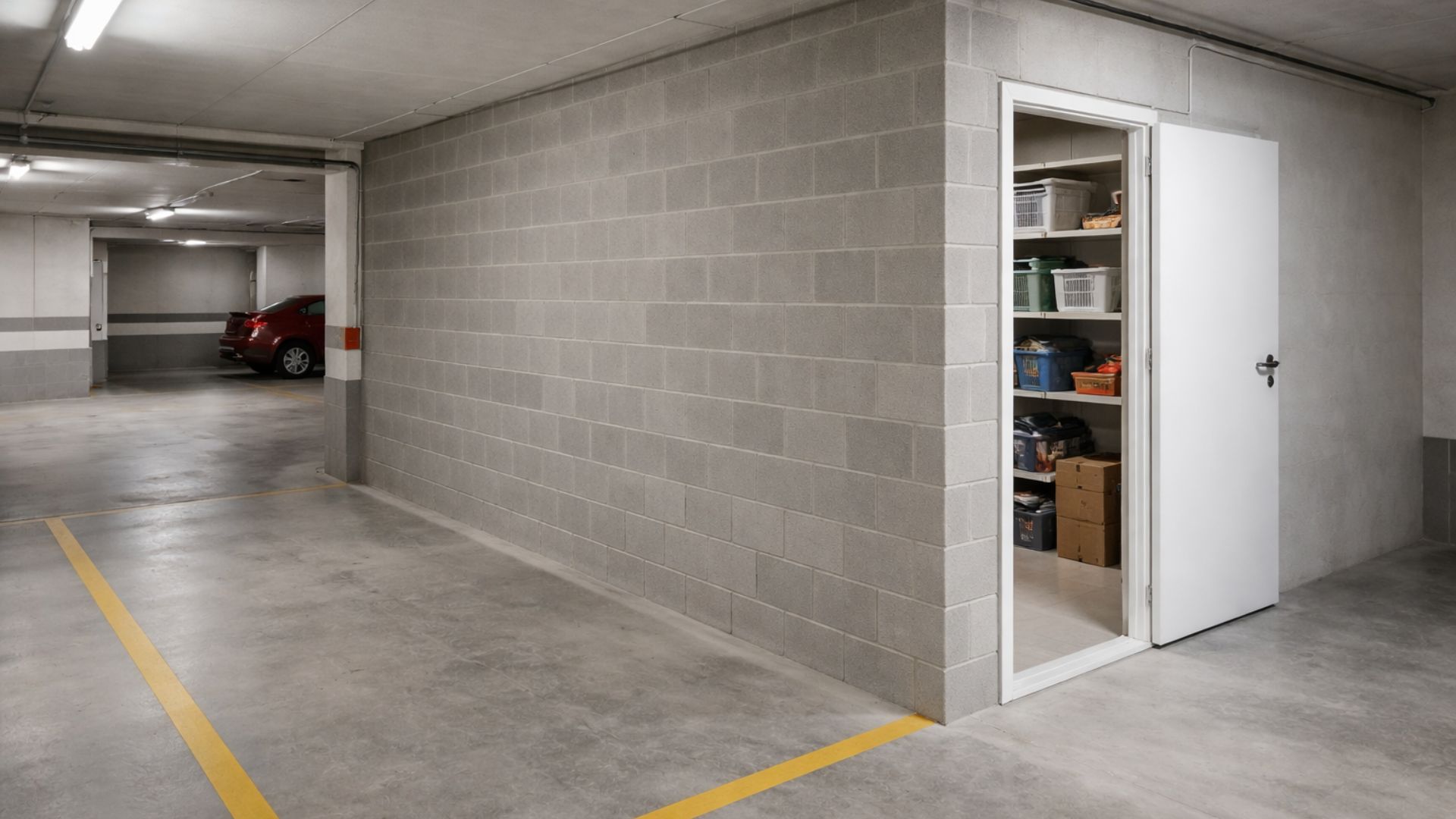


Court Decision in Spain Reinforces Limits for Work in Condominiums, Highlights Impact of Unauthorized Renovations and Dismisses Claim of Unequal Treatment Among Neighbors by Confirming Validity of Assembly Deliberation and Rigorous Application of the Horizontal Property Law.
A resident of a condominium in Málaga, Spain, was ordered by the court to demolish a wall built without authorization between her parking space and the storage room linked to her unit.
The decision, issued by the Provincial Court of Málaga on July 2, 2025, upheld the validity of what had been deliberated by the condominium assembly and recognized that the intervention resulted in a practical enlargement of the owner’s usable area, impacting the building’s original configuration.
During the trial, the court also dismissed the claim that the resident had been subjected to unequal treatment after she cited renovations carried out by other neighbors.
-
The noise law will no longer be in effect at 10 PM starting in June with a new rule valid during the 2026 World Cup.

-
The Chamber opens a debate on driver’s licenses at 16 years old as part of a reform that includes around 270 proposals to change the Brazilian Traffic Code and may redesign rules for licensing, enforcement, and circulation in the country.

-
The new Civil Code could revolutionize marriages in Brazil with “express divorce” and changes that could exclude spouses from inheritance.
-
Banco do Brasil sues famous influencer for million-dollar debt and intensifies debate on delinquency, risks of seizure, and direct impact on Gkay’s credibility.


For the judges, the cases mentioned were not comparable, as the interventions had undergone prior authorization from the community, which was a different situation from the one analyzed in the case.
Assembly Decision and Start of Judicial Dispute
The controversy began in January 2020, when the homeowners’ association called an extraordinary assembly to address a construction project carried out in the storage room without communication or formal authorization.
At the meeting, the majority of the owners approved the requirement to remove the wall within one week, with the provision of legal action should the determination not be fulfilled.
At the time, the owner’s partner, who represented her, acknowledged that the work had been done without prior authorization request.

According to the records, he even agreed to the removal of the structure.
Subsequently, however, the resident filed a lawsuit seeking to annul the assembly deliberation.
The request was reviewed by the First Instance Court No. 4 of Torremolinos, which rejected the claim.
The ruling considered relevant the admission that there was no authorization and understood that the assembly acted within the competencies provided by law.
This decision was ultimately upheld on appeal.
Alteration of Layout and Application of the Horizontal Property Law
When examining the appeal, the Provincial Court concluded that the construction could not be classified merely as an internal renovation.
According to the ruling, closing the space between the parking space and the storage room resulted in the incorporation of area and the effective modification of the building’s layout, even though the change was restricted to the interior of the unit.
Based on this finding, the court applied Article 7.1 of the Horizontal Property Law, which conditions such interventions on the express authorization of the homeowners’ community.
The rule establishes limits on the right to renovate when the work affects the configuration, structure, or rights of other condominium owners.
The judges also clarified that the assembly decision did not impose an immediate sanction on its own.
What was approved, according to the ruling, was the authorization for the condominium to take legal action should the resident not voluntarily undo the work within the established timeframe.
Unequal Treatment Among Neighbors Not Proven
Among the arguments presented by the defense was the assertion that other condominium owners had carried out similar interventions without facing consequences.
The Provincial Court analyzed this assertion and concluded that there was no proof of equivalent works executed without authorization.

Moreover, the ruling noted that the interventions cited as examples had been previously reviewed and authorized by the community’s governing bodies.
In the court’s assessment, this point ruled out the thesis of discriminatory treatment.
The difference in procedure was deemed crucial to the case’s outcome.
Abuse of Rights and Limits of Condominium Action
The decision also addressed the accusation of abuse of rights by the condominium.
To analyze this point, the judges referred to Article 7.2 of the Spanish Civil Code and the jurisprudence of the Supreme Court.
These understandings require evidence of abnormal exercise of the right, deviation of purpose, and unjustified harm to characterize abuse.
In the collegiate’s understanding, these requirements were not proved.
The community’s action was interpreted as a regular exercise of management responsibilities and the preservation of the collective interest, with no evidence of intent to cause undue harm to the owner.
The ruling also noted that the sentence did not definitively resolve the controversy.
According to the court, there still existed the possibility of appeal to higher instances, as provided by Spanish procedural law.
Reflections of the Case on Condominium Conflicts in Brazil
Cases involving the closure of parking spaces, annexation of storage rooms, or expansion of private areas are also common in Brazilian condominiums.
In these situations, the analysis typically focuses on the condominium convention, internal regulations, and the rules of the Civil Code and the Law No. 4,591/1964.
The focus especially falls on interventions that impact common areas, structure, safety, or the purpose of the building.
Court decisions in Brazil often assess whether the work resulted in a significant alteration or in the unauthorized appropriation of space originally included in the project.
When the intervention occurs without authorization and this modification is proven, it is common for the condominium to seek judicial nullification of the work.
On the other hand, claims of unequal treatment usually depend on concrete evidence of identical and equally irregular situations.
In the absence of such demonstration, it prevails the understanding that the requirement for demolition arises from compliance with collective rules, rather than arbitrary conduct.
In disputes like the one analyzed in Spain, the exact point at which a renovation ceases to be internal and requires express approval from the community remains under debate in residential condominiums.









E…. Já vi tudo…. Já vi que vai surgir outra lei proibindo construção nos prédios pois pode acabar com designer 🤦🏻♀️ AFF 😅 agora vai vir uma lei fazendo derrubar todas as construções que tenham sido feita sem autorização nos prédio oxente. Se isso acontecer já vi tudo. Kkkkkkkkkkk 🤣😂😂🤣🤣😂