





 Portuguese
  English
  Spanish
  4 min of reading
  0 comments


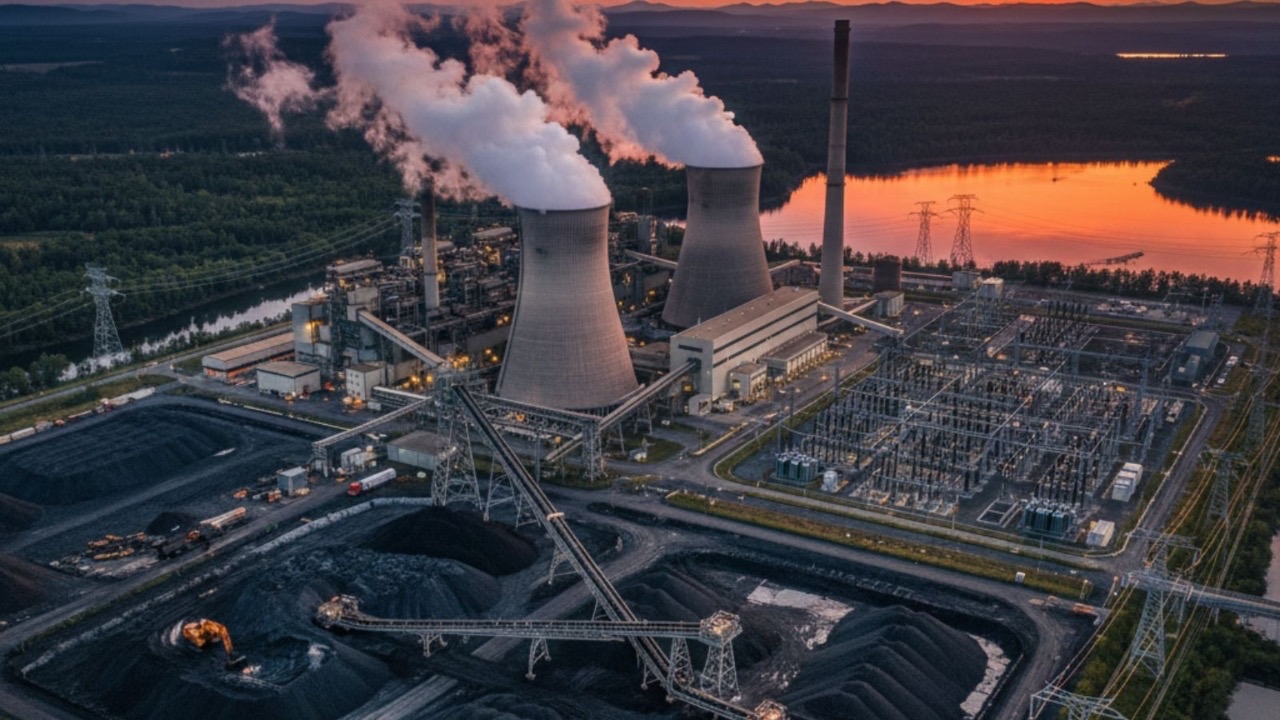
From Detecting Invisible Failures to Restoration in 0.1 Seconds, Chinese Innovation Shows How Artificial Intelligence and Smart Grids Are Changing the Way the World Handles Energy
Chinese Technology has become the center of a historic shift in the energy sector as, in recent years, China began using artificial intelligence systems capable of detecting nearly invisible faults in the electrical grid and restoring supply in just 0.1 seconds, preventing blackouts that used to last for hours.
The innovation emerged within the world’s largest electric system, developed by Chinese universities and state-owned enterprises, and gained momentum as the country faces accelerated energy consumption growth driven by unstable renewable sources and the need to prevent cascading failures that could paralyze entire cities.
This solution began to be tested on a large scale in the Asian country starting in 2015, was applied to the largest urban grids in China, and emerged as a direct response to the fear of prolonged blackouts in an increasingly complex and electricity-dependent system.
-
With a cost per shot close to zero, the DragonFire laser could change naval warfare in 2027 and provide British ships with nearly unlimited defense against drones.

-
A British startup creates tires that generate electricity in electric vehicles when passing over potholes, speed bumps, and cracks.

-
Scientists have created robots made with living cells that have their own nervous system, swim on their own, explore the environment, and self-organize without any genetic engineering, and now they want to do the same with human cells.

-
Students create a solar-powered ambulance that operates without a plug, without fuel, and still keeps medical equipment running in remote areas.


In practice, this represents a radical change. Previously, an urban blackout could take six to ten hours to resolve. Today, in many Chinese regions, the time has been reduced to mere milliseconds, nearly imperceptible to those at home.
Why the Modern Electric Grid Has Become So Fragile Despite More Technology
The consumption of electricity is growing at an accelerated pace worldwide. According to the International Energy Agency, electric demand is growing twice as fast as total energy consumption, driven by electric vehicles, data centers, air conditioning, and the digitalization of services.
At the same time, renewable sources like solar and wind, essential for reducing emissions, are intermittent and dependent on weather conditions.
This scenario creates a silent problem. Small failures, once tolerable, now trigger cascading reactions. A local overload can take down entire substations in seconds.
That’s why energy operators have begun treating milliseconds as critical units of time.
This is where Chinese technology comes in as a strategic, not just technical, response.
The Challenge of 100 Milliamperes and the Race to See What No One Could See
One of the biggest advancements has been the ability to identify microcurrents of just 100 milliamperes. These are nearly invisible faults, impossible to detect with traditional systems, but capable of causing blackouts if ignored.
The development of this solution involved universities such as Tianjin and Shandong, the state-owned utility State Grid, and industrial automation companies.
The main source of this innovation is a study published in the scientific journal Energy Informatics, detailing how intelligent algorithms can anticipate failures before they become critical.
This system allows the electric grid to evolve from being merely reactive to self-recovering, correcting problems on its own.
At the heart of this Chinese technology are two complementary algorithms.
How the Fault Location Algorithm Operates in Seconds
The Fault Location Algorithm uses artificial intelligence to analyze data such as voltage, line impedance, and even weather conditions.
As a result, it can identify the exact point of the fault with over 90 percent accuracy. This analysis happens in fractions of a second.
The Automatic Isolation That Prevents the Domino Effect
Meanwhile, the Fault Isolation Algorithm assesses the severity of the problem. If the risk is high, the system automatically isolates the affected section and redirects electricity through alternative pathways, without human intervention.
This combination explains how the Chinese grid can recover in 0.1 seconds, something that redefines the concept of blackout.
China in a Silent Competition That Goes Beyond Energy
The world’s largest power grid, with consumption expected to exceed 10 trillion kilowatt-hours per year, has become a living laboratory.
China is already exporting this technology to over 12 countries, expanding its influence in energy security.
While other countries compete for critical minerals, Beijing is advancing in standardizing and controlling the digital infrastructure that will support the low-carbon economy. It’s not just about energy, but about who sets the rules for the future.
The ability to prevent blackouts in milliseconds has ceased to be a technical achievement and has become an economic pillar.
In an increasingly electrified world, keeping the lights on means keeping hospitals, industries, transportation, and communication functioning without interruptions.
technology, energy, china, electrical infrastructure, chinese technology








Seja o primeiro a reagir!