





 Portuguese
  English
  Spanish
  5 min of reading
  0 comments


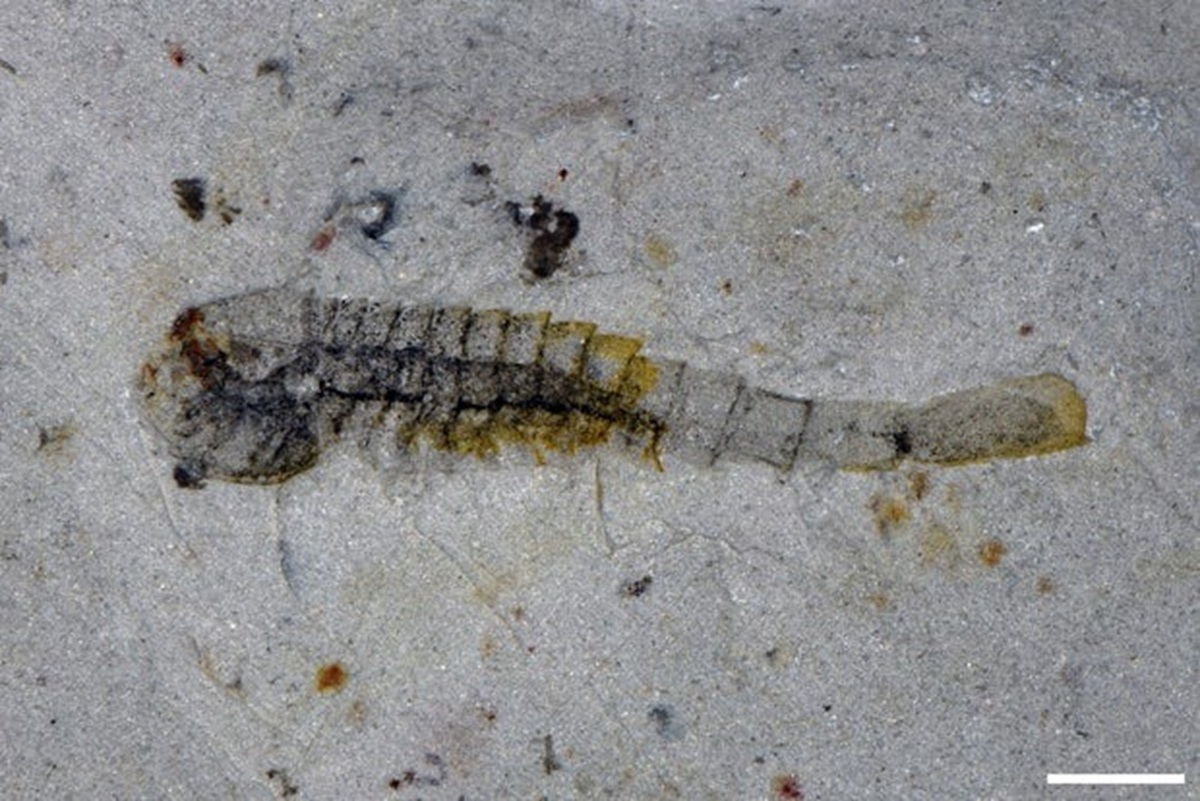
The Identification of 91 New Species Among More Than 150 Life Forms Found in a Quarry of Just 12 Meters High in Southern China Reveals How Marine Ecosystems Reorganized Immediately After the Sinsk Extinction Event About 513 Million Years Ago
Scientists have identified nearly a hundred new animal species in a quarry in Hunan Province, southern China, with fossils dated to about 512 million years ago, revealing how marine life recovered after a mass extinction that wiped out up to half of the animals of the Cambrian period.
Discovery in Small Quarry Gathers Exceptional Volume of Fossils
The discovery occurred in a quarry considered extraordinary by researchers, located in Hunan Province, China. The site measures 12 meters high, 30 meters long, and eight meters wide, dimensions reduced given the amount of material recovered.
Between 2021 and 2024, the team collected over 50,000 fossil specimens in a single spot. Within this limited space, more than 150 distinct species were identified, of which 91 were unknown to science until then.
-
With a cost per shot close to zero, the DragonFire laser could change naval warfare in 2027 and provide British ships with nearly unlimited defense against drones.

-
A British startup creates tires that generate electricity in electric vehicles when passing over potholes, speed bumps, and cracks.

-
Scientists have created robots made with living cells that have their own nervous system, swim on their own, explore the environment, and self-organize without any genetic engineering, and now they want to do the same with human cells.

-
Students create a solar-powered ambulance that operates without a plug, without fuel, and still keeps medical equipment running in remote areas.

The study was led by Han Zeng from the Chinese Academy of Sciences and published in the journal Nature. According to the researcher, the fossils were literally embedded in the rock of the quarry.
Han described the collection process as a series of continuous discoveries, with the repeated identification of organisms preserved in detail.
The density and diversity of the material made the site one of the most relevant ever documented for this geological interval.
Preservation of Soft Tissues Enhances Understanding of the Cambrian Period
One of the most significant aspects of the discovery is the state of preservation of the fossils. Many specimens exhibit preserved soft tissues, including gills, intestines, eyes, and even nervous structures, something rare in such ancient records.
Among the documented fossils is a marine arthropod from the fuxianhuiid group, with a preserved intestine, dated to approximately 512 million years ago. The size of the specimen indicates dimensions of only a few millimeters.
The researchers also identified ancestral relatives of worms, sponges, and jellyfish, in addition to numerous arthropods. This group includes spiny organisms with stalked eyes known as radiodonts, considered top predators during that period.
The presence of soft tissues allows for more detailed analyses of the anatomy and lifestyle of these animals. According to scientists, this level of preservation helps reconstruct food chains and survival strategies after the mass extinction.
Fossils Record Period Immediately After the Sinsk Extinction Event
The animals found date to about 512 million years ago, just one million years after the Sinsk extinction event, which occurred about 513 million years ago. This episode eliminated up to half of the existing animals on the planet.
The Sinsk extinction abruptly ended the Cambrian explosion, a phase during which most of today’s major animal groups emerged. This period is often described as the “big bang” of animal evolution.
It is believed that the Cambrian explosion was driven by an increase in atmospheric oxygen levels. Meanwhile, the Sinsk extinction is associated with a drop in those levels, drastically altering marine ecosystems.
The fossils from the Chinese quarry represent the first major discovery of soft-bodied organisms that lived immediately after this event.
The biota has been named the Huayuan Biota, in reference to the county where the site is located.
Global Comparisons Indicate Early Dispersion of Marine Life
The researchers were surprised to identify species in the Huayuan biota that are also known from the Burgess Shale site in Canada, dated to the early Cambrian explosion.
Among the shared taxa are the arthropods Helmetia and Surusicaris, previously recorded only in the Burgess Shale. The coincidence suggests a broad capacity for dispersion among primitive marine animals.
According to Han Zeng, the most plausible explanation involves larval stages capable of spreading via ocean currents.
This mechanism is common among current marine invertebrates and would have been operational since the dawn of animal life.
The presence of the same species in locations separated by large distances indicates that, even in the Cambrian, the oceans allowed for efficient global connections. This data enhances the understanding of biological mobility at the beginning of animal history.
External Assessments Highlight Impact on Shallow Water Environments
Michael Lee, an evolutionary biologist at the South Australian Museum, stated that the fossils show that the Sinsk event affected shallow water life forms more severely.
According to Lee, deep-water environments tend to be more stable over geological time. He compared this stability to a basement protected from daily and seasonal temperature variations.
As an example of survival in deep environments, Lee cited the coelacanth, a deep-sea fish that survived a much later mass extinction that killed off non-avian dinosaurs.
These comparisons reinforce the hypothesis that habitat depth played a crucial role in species survival during extinction events. The data from the Chinese quarry offers a focused contrast in shallow waters.
Broader Context of Extinctions Throughout Earth’s History
The Sinsk event is not among the five most well-known mass extinctions. Still, Han Zeng emphasized that there is evidence of 18 or more mass extinctions over the last 540 million years.
The researcher advocated for greater scientific attention to these lesser-known episodes, which were also extremely destructive. According to him, understanding these events helps reconstruct recurring patterns in the history of life.
Similar debates occur concerning the extinction of the dinosaurs 66 million years ago. Recent studies indicate that populations were still thriving before the asteroid impact.
A study published in 2019 pointed out that the impact triggered fires, earthquakes, and tsunamis on a global scale, followed by a prolonged cooling period. These parallels emphasize the relevance of studying events like Sinsk, even if they are less famous.
This article was based on information released by the AFP agency, Reuters, and data from the study led by researchers from the Chinese Academy of Sciences published in the journal Nature, as well as statements from involved and independent scientists cited in the original reports.







-

2 pessoas reagiram a isso.