





 Portuguese
  English
  Spanish
  4 min of reading
  12 comments


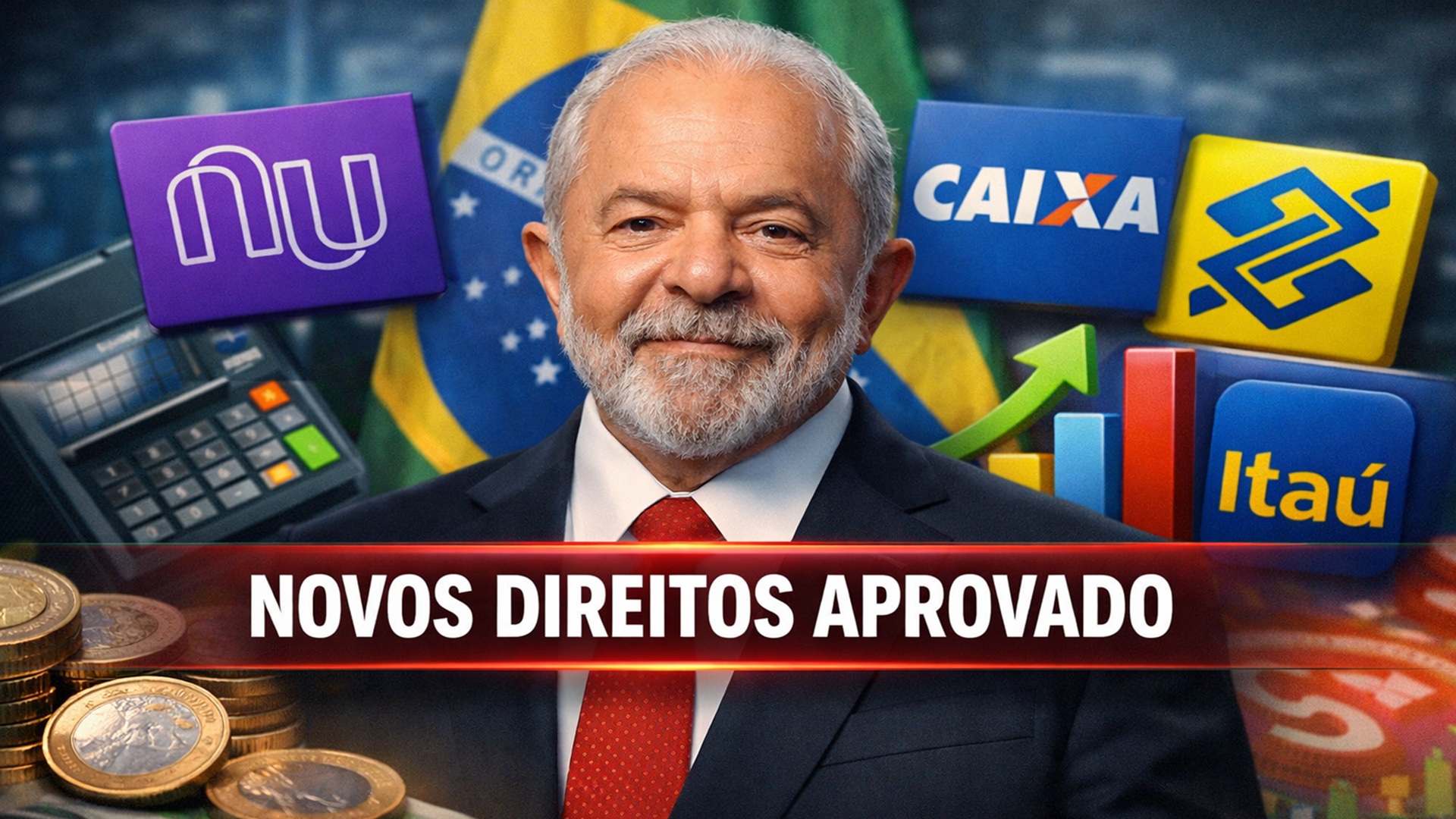


Law No. 15,252, Signed in November 2025, Expands Rights of Financial Consumers by Ensuring Automatic Salary Portability, Debit Between Banks, Greater Transparency in Credit Operations, and a New Modality with Reduced Interest, Redefining Banking System Rules
The Law No. 15,252 signed by President Lula last month, is seen as a way to expand the rights of financial consumers, ensures automatic portability, reinforces transparency, and creates credit with reduced interest.
It was signed on November 4, 2025, and published in the Official Gazette of the Union on November 5, 2025, expanding the rights of financial consumers, ensuring automatic portability, reinforcing transparency, and instituting credit with reduced interest.
We will highlight some points seen as very positive to further ensure your banking security.
-
The noise law will no longer be in effect at 10 PM starting in June with a new rule valid during the 2026 World Cup.

-
The Chamber opens a debate on driver’s licenses at 16 years old as part of a reform that includes around 270 proposals to change the Brazilian Traffic Code and may redesign rules for licensing, enforcement, and circulation in the country.

-
The new Civil Code could revolutionize marriages in Brazil with “express divorce” and changes that could exclude spouses from inheritance.

-
Banco do Brasil sues famous influencer for million-dollar debt and intensifies debate on delinquency, risks of seizure, and direct impact on Gkay’s credibility.


Legal Framework and Scope of the New Legislation
The regulation represents an advance in the protection of individuals who use financial services, consolidating rights related to banking mobility, access to information, and the contracting of credit under clearer conditions.
The legal text seeks to increase competition among financial institutions, expand the consumer’s freedom of choice, and stimulate more efficient practices, with direct impacts on salaries, social benefits, and personal credit operations.
Upon its publication, the law takes effect immediately, subject to subsequent regulation of certain provisions, respecting the competencies defined for the organs of the national financial system.

Automatic and Digital Salary Portability
The law ensures the right to automatic salary portability for salaries, pensions, and similar earnings, eliminating the need for individual requests whenever there is a new employment relationship or a change in the paying source.
The transfer will be carried out digitally, with data sharing between financial institutions, allowing the consumer to concentrate their resources in their bank of choice, without additional operational barriers.
This system expands user autonomy, reduces dependence on accounts linked to the employer, and creates a more competitive environment, where banks compete for clients by offering better conditions and services.
What Does § 2 of Art. 4 Say?
It is mandatory to offer the option to join the automatic salary portability through the digital channels of all financial institutions or institutions authorized to operate by the Central Bank of Brazil, which may be implemented using an open financial system, in order to provide, indiscriminately, free access to the beneficiary and their free choice.
Automatic Debit Between Financial Institutions
Another relevant point of the legislation is the authorization for automatic debits between accounts held at different financial institutions, overcoming existing limitations in recurring interbank operations.
The measure facilitates the payment of loans, financing, and other contractual obligations, even when the client chooses to maintain accounts in different banks, reducing the risks of late payments and defaults.
With this integration, the consumer gains greater flexibility in financial organization, while institutions begin to operate with more efficient and predictable payment flows.
What Does § 1 of Art. 7 Say?
§ 1 In the automatic debit referred to in the head of this article, the recipient institution is authorized to debit, in the name of the borrower, from one or more accounts, previously indicated or not, in deposit-taking institutions, the amounts corresponding to installments of contracted credit operations.
Reinforcement of the Right to Information in Credit
The new law reinforces the right to information by requiring financial institutions to disclose clearly the total effective cost and the interest rates applied in credit contracts and in digital service channels.
It is also prohibited to automatically increase credit limits without the prior and express consent of the user, a practice that previously increased indebtedness without the consumer’s direct manifestation.
Additionally, the user now has the right to receive objective information about more advantageous credit options, strengthening transparency and reducing abusive practices in the granting of financing.
Special Credit Modality with Reduced Interest
The law establishes a special credit modality aimed at reducing defaults, providing for the application of a percentage discount concerning the rates practiced in similar existing modalities in the market.
This line will be regulated by the Central Bank of Brazil, which will define criteria, conditions, and parameters for its granting, observing the objectives established in the legislation.
The expectation is that the mechanism will contribute to a more sustainable renegotiation of debts, expanding access to credit under more financially balanced conditions.
Presidential Vetoes and Limits of the Final Text
Despite the advances, the presidential sanction occurred with relevant vetoes that altered the original scope of the project approved by Congress, restricting some provisions.
The rules that expanded the concept of salary account to include prepaid accounts were excluded, as well as the maximum period of two business days for implementing portability.
It was also vetoed the assignment to the Central Bank to define transfer deadlines, arguing that this competence belongs to the National Monetary Council.
Regulation and Institutional Deadlines
It will be the responsibility of the National Monetary Council to establish the general guidelines for the implementation of the law, while the Central Bank will be responsible for the operational regulation of the approved provisions.
Both agencies will have a maximum period of 180 days to complete this process, ensuring the uniform application of the new rules throughout the national financial system.
Until the issuance of complementary norms, institutions must gradually adapt.
Respecting the current legal text and the rights already guaranteed to consumers, even with small adjustments pending definition.
Read the full text of Law No. 15.252/2025 on the Planalto website.










só presidente LUIZ INÁCIO LULA da SILVA e ministro HADDAD para nós dar qualidade de vida
Qual vai ser o golpe agora desse descondenado…. Mostras as contas dele e da cuidadora de idoso
Jorge