





 Portuguese
  English
  Spanish
  5 min of reading
  1 comment





Chamber Commission Approves Proposal That Provides for Immediate Cancellation of Services With Automatic Renewal, Notice Requirement for Long-Term Contracts, and Suspension of Future Credit Card Charges. The Text Still Needs to Go Through Other Stages.
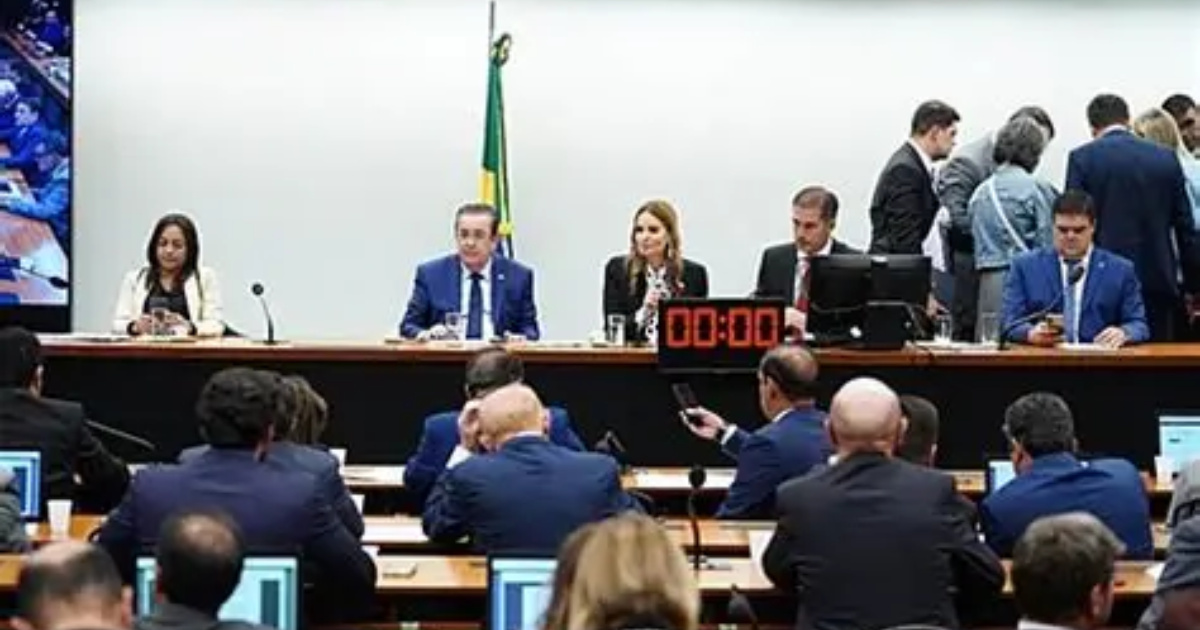
The Consumer Defense Commission of the Chamber of Deputies approved a proposal that requires providers of goods and services to offer customers immediate and simplified cancellation of contracts with automatic renewal, directly impacting future charges.
The text also provides that when payment is made by credit card, the administrator must be immediately notified to stop subsequent charges.
The measure amends provisions of the Consumer Defense Code (CDC).
-
The largest food company on the planet, JBS, has just opened a 4,000 square meter laboratory in Florianópolis to develop customized proteins that modulate muscle mass gain, immune response, and metabolic performance.

-
After nearly 30 bids and competition among industry giants, a Spanish company purchases one of the largest airports in Brazil for almost R$ 3 billion and takes over the management of Galeão in a concession that will last until 2039.

-
The Federal Revenue Service now automatically cross-references everything you declare with data from banks, credit cards, brokerage firms, and insurance companies, and any discrepancy between your income and your expenses triggers an alert in seconds.

-
Amid global tensions, Brazil blocks the United States’ proposal at the WTO and paves the way for a trade crisis and possible retaliations.


What Changes in Practice for the Consumer
From the cancellation request made by the user, future charges related to the service or product are suspended.
The rule applies to digital subscriptions, phone plans, and other contracts that renew without customer intervention.
In situations of a fixed-term contract, previously provided charges may apply, such as loyalty fines, as long as they are included in the instrument and comply with current legislation.
In the case of payment by card, the obligation falls on the provider: they must contact the card issuer immediately after cancellation to prevent new charges.
The intention is to reduce disputes and challenges in invoices, avoiding the consumer having to bear costs after the termination of the relationship.
Advance Notice in Long-Term Contracts
In addition to swift cancellation, the text establishes safeguards for longer contracted periods.
In contracts with automatic renewal of 12 months or more, the provider must notify the consumer at least 30 days in advance about the renewal.
This notification needs to include a clear and simplified cancellation option, ensuring an informed decision before the service continues.
Legal Basis and Objective of the Change in the CDC
The proposal amends the CDC with a focus on transparency and facilitation of the exercise of the right of regret or termination.
By tying procedures and deadlines, the text aims to curb practices that hinder cancellation, such as restricted channels, excessive steps, or delayed responses from the provider.
The immediate communication to card issuers intends to make the cancellation effective, ending the billing chain at the same moment the consumer expresses the desire to exit.
Who Signs the Text and How It Was Consolidated
The approved opinion is a substitute presented by the rapporteur, Deputy Márcio Marinho (Republicans-BA).
The document gathers and replaces the content of Bill 4734/24, authored by Deputy Adriana Ventura (New-SP), and other related texts that dealt with the same topic.
By unifying the proposals, the rapporteur aimed to adjust wording, harmonize commands, and close possible operational gaps so that the new rules have uniform application.
According to the rapporteur, automatic renewal is frequent in sectors such as digital services and telecommunications, and the absence of a simple cancellation process can generate frustration and imbalance in the consumer relationship.
As the parliamentarian stated to justify the vote: “This practice, although widely used in various sectors such as digital service subscriptions and telephony plans, can cause frustrations, especially when the cancellation process is complicated or when the consumer is not fully informed about the terms of renewal.”
Procedures for Cancellation: Simplicity as a Rule
The project determines that the cancellation procedure be immediate, bureaucratic-free, and accessible.
In practice, the consumer should be able to terminate the contract through the same channels used to sign and manage the service, without hidden steps or disproportionate demands.
The logic is to mirror the ease of enrollment in the exit process, ensuring balance between the parties and respect for the principle of objective good faith.
By providing for suspension of future charges as an automatic effect of the cancellation request, the text eliminates the gray area that often occurs between the customer’s request and the actual cessation of billing.
In parallel, the order to notify the card administrator reduces the risk of improper charges and subsequent consumer efforts to dispute amounts.
This is a flow adjustment that attempts to solve the problem at its source.
Fixed-Term Contracts and Provided Charges
The substitute preserves the possibility of charging fees when there is a defined contractual term and express provision for penalties, such as fines for breaking loyalty.
The exception seeks to reconcile the right of cancellation with obligations assumed under specific conditions, provided the consumer has been adequately informed at the time of hiring and that the clauses comply with the CDC.
Next Steps in Congress
The project now goes to the Commission on Constitution, Justice and Citizenship (CCJ), for final consideration.
At this stage, the deputies analyze the constitutionality, legality, and legislative technique of the text.
If approved, the substitute concludes processing in the Chamber of Deputies and will subsequently be sent to the Federal Senate.
For the changes to take effect as law, the text must pass through both Houses of Congress, according to the legislative procedure.
Why the Topic Gained Relevance
Cases of difficulty in ending subscriptions, especially in the digital environment, have become recurring with the expansion of subscription services.
The project seeks to respond to this reality by defining clear rules, objective deadlines, and specific responsibilities in the billing chain.
At the same time, it aims to prevent improper charges and reduce administrative and judicial conflicts, preserving the consumer’s income and the operational predictability of companies.
Expected Impact on Subscription Sectors
Streaming companies, software with recurring licenses, gyms, benefit clubs, and telecommunications operators are likely to adjust internal processes to comply with the new requirements if the project becomes law.
Adjustments include standardizing cancellation channels, automating advance notice in long-term contracts, and integrating with card administrators to cease charges quickly.
Adapting processes tends to reduce complaint rates and improve customer experience, without eliminating the possibility of compensation for services already rendered or legitimate penalties in fixed-term contracts.
Rights and Duties Preserved
While strengthening the right to choose and terminate by the consumer, the text maintains space for contractual obligations when these are clear, proportional, and compatible with the legislation.
Thus, it seeks to prevent imbalances while reinforcing transparency as a central axis of consumer relations.
The guideline is to reconcile freedom of contract with protection against abusive practices, one of the pillars of the CDC.
How can consumers and companies prepare for a potential new law on immediate cancellation and suspension of credit card charges?









Já esta tarde mas, mesmo assim, que venha logo.
É quase umpossivel cancelar serviços, principalmente coem comunucacoea e internet.