





 Portuguese
  English
  Spanish
  5 min of reading
  0 comments


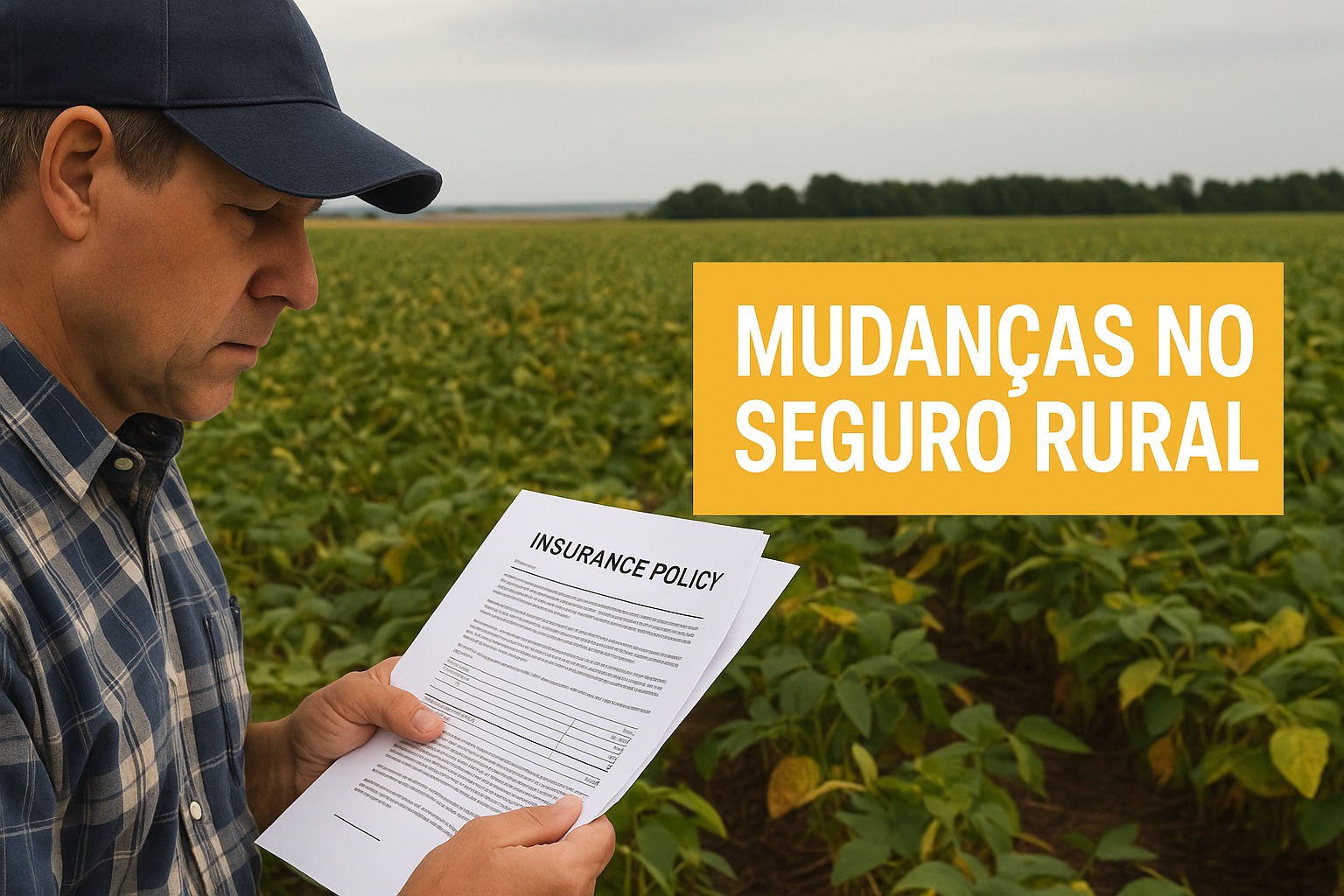
Law 15.040 Redefines Rural Insurance Rules, Establishes Mandatory Responses within Fixed Deadlines, Prevents Cancellations During Harvest, and Creates Clear Criteria for Claims Analysis, Reinforcing Legal Protection and Predictability for Producers Across the Country
Rural producers have struggled for years with difficulties in their relationship with insurers because lengthy processes and negative responses based on unclear clauses have always created insecurity. However, starting in December 2025, a new legal framework will change this dynamic and seeks to rebalance responsibilities.
Law 15.040 of 2024 will come into effect on December 11, 2025. It redefines how private insurance contracts, including rural insurance, must be formed, interpreted, and terminated.
Additionally, it establishes transparency criteria aimed at preventing recurring conflicts in the field.
-
The noise law will no longer be in effect at 10 PM starting in June with a new rule valid during the 2026 World Cup.

-
The Chamber opens a debate on driver’s licenses at 16 years old as part of a reform that includes around 270 proposals to change the Brazilian Traffic Code and may redesign rules for licensing, enforcement, and circulation in the country.

-
The new Civil Code could revolutionize marriages in Brazil with “express divorce” and changes that could exclude spouses from inheritance.

-
Banco do Brasil sues famous influencer for million-dollar debt and intensifies debate on delinquency, risks of seizure, and direct impact on Gkay’s credibility.


The new rules apply only to contracts signed or renewed after the law comes into effect. Older policies remain under the previous system, so each producer needs to verify which regime their contract falls under.
Scope and Limits of the New Framework
The law does not alter technical aspects of agricultural zoning, premium subsidies, or regulatory definitions from Susep and the Ministry of Agriculture. This will remain the same. The focus is solely on the contractual relationship between the insured and the insurer.
Because of this, good practices remain essential. Reading the policy, understanding exclusions, and checking deadlines continue to be indispensable, even with greater protection guaranteed by the legislation.
Ambiguous Clauses Are No Longer Valid
The legal text requires that coverage exclusions be clear and specific. When the wording is generic or ambiguous, the insurer cannot use it to deny compensation. This change addresses a frequent problem reported by producers.
This requirement reduces the scope for arbitrary interpretations. However, the responsibility of choosing an appropriate policy remains. A poorly defined contract can still compromise the financial security of the harvest.
Cancellation During the Harvest Is Restricted
There were cases where insurers unilaterally canceled contracts, leaving producers uncovered in critical moments. The law prohibits such isolated cancellations during the harvest.
Suspensions due to non-payment, fraud, or legal grounds remain possible, but now with clear deadlines and notifications. Therefore, producers will have greater predictability regarding the coverage’s validity.
This predictability is very important in agricultural insurance. Losing coverage between planting and harvesting can lead to severe losses, and the new rule reduces this risk.
Defined Deadlines for Proposal Analysis
Previously, the producer would submit the proposal, wait without a response, and could miss the planting window. From now on, the insurer has 25 days to approve or reject the proposal. If there is no response, acceptance occurs automatically.
In the event of a refusal, the justification must be clear. This allows for quick adjustments and an opportunity to seek another insurer within the ideal contracting period.
Claims Assessment with Time Limits
When a claim occurs, the producer submits documents and waits for the analysis. The law establishes a standard period of 30 days. In agricultural insurance, this period can extend to 120 days due to the technical complexity involved.
The insurer may request additional documents up to twice, suspending the deadline. However, it must justify each request. The intention is to prevent artificial requirements created solely to buy time.
Once coverage is recognized, payment must be made within 30 days. Delays incur a penalty of 2%, interest, and adjustment. This additional cost creates an incentive for the insurer to meet the deadline.
Mandatory Communication About Changes in Risk
When the producer changes relevant aspects of the crop, they must inform the insurer. Change of variety, falling outside the planting window, or presence of pests are examples. Reporting helps avoid later conflicts.
The insurer has 20 days to respond. It may recalculate the premium or terminate the contract with 30 days’ notice if the risk is uninsurable. However, it can only deny compensation if it proves a direct relationship between the change and the damage.
The recommendation is to document everything. Photos, reports, and expert opinions facilitate proof in case of discrepancies regarding the claim. This documentation serves as evidence, and evidence reduces litigation.
Portfolio Transfer Does Not Eliminate Obligation of the Original Insurer
If the insurer transfers its portfolio to another company, it remains responsible if the new institution faces insolvency during the policy term or up to 24 months after the assignment. This creates an additional safety net.
Producers are not left unprotected if the company assuming the contract encounters later problems. The joint liability reinforces market stability.
Clearer Judicial Deadlines
If there is a formal and justified denial, the producer has 1 year to take the case to court. Beneficiaries and third parties have a deadline of 3 years from the triggering event.
The deadline is suspended while the insurer assesses the reconsideration request, but this only occurs once. Keeping the denial without taking action may result in a permanent loss of rights.
Points That the Law Does Not Address
The legislation improves the contractual environment but does not alter technical fundamentals. Agricultural zoning, subsidy requirements, specific Susep regulations, and criteria by crop remain in effect.
The producer needs to continue paying attention to the technical requirements of the crop. Following planting, management, and documentation procedures is an essential part of rural insurance. Details matter and can influence coverage.
How to Prepare for the New Phase
Even before the law comes into effect, producers can review policies, identify potential conflicts, and strengthen document organization. Keeping records updated, communicating changes, and retaining protocols help when discrepancies arise.
It is also advisable to seek specialized guidance at the first sign of trouble. Although the law strengthens the insured, sound decisions depend on careful reading and constant monitoring.
In an environment of increasing risks, information and planning remain fundamental defenses. The new law adjusts the balance but does not eliminate the need for ongoing attention in the field.
With information from Compre Rural.









-

Uma pessoa reagiu a isso.