





 Portuguese
  English
  Spanish
 5 min of reading
  0 comments


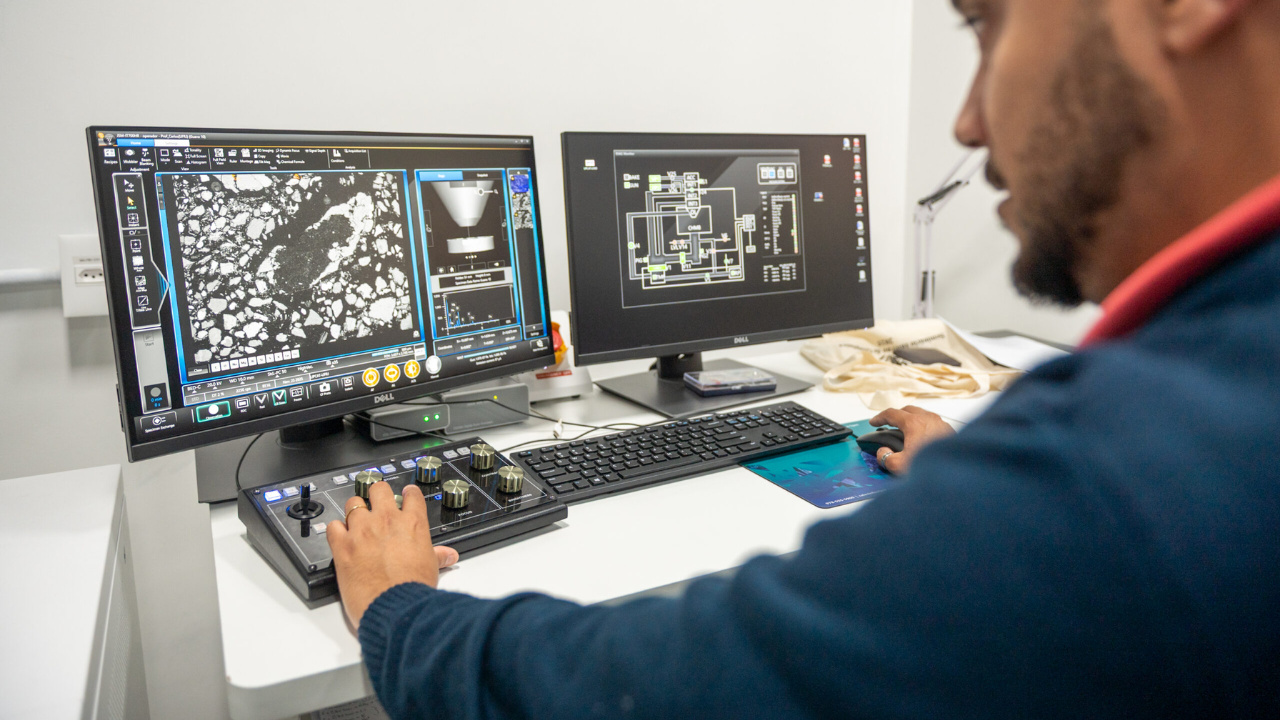
With an Investment of R$ 100 Million, Galp Inaugurates a Technological Center Focused on Oil, Innovation, and Decarbonization in Rio, Strengthening Brazil as a Strategic Axis of the Energy Industry.
Brazil has assumed a new role in Galp’s international strategy with the inauguration of Id.Lab, a research and technology center created to strengthen the company’s oil operations in the country.
The project represents an investment of R$ 100 million and also marks an unprecedented moment for the Portuguese company, which now has a large-scale technological center on Brazilian territory for the first time.
Located in the Technology and Research Center installed at LIPCAT, at the School of Chemistry of the Federal University of Rio de Janeiro (UFRJ), on Fundão Island, Id.Lab was established with the mission of integrating innovation, operational efficiency, and decarbonization.
-
The rise in oil prices could ensure an extra revenue of R$ 100 billion for the Federal Government, indicates a recent economic study.

-
Naturgy begins an investment of R$ 1.6 million to expand the gas network in Niterói and benefit thousands of new residences and businesses.

-
A major turn in the Justice system suspends tax increases and directly impacts oil and gas companies in Brazil by affecting costs, contracts, and financial planning, leaving uncertain what could happen to the sector if these costs had increased.

-
Brava Energia begins drilling in Papa-Terra and Atlanta and could change the game by reducing costs in oil while increasing production and strengthening competitiveness in the offshore market.


According to the company, this is a historic step that can transform Brazil into one of the main technological development hubs for the group.
Dedicated Infrastructure Strengthens Oil and Refining Operations
Unlike previous initiatives, the new laboratory was designed to test solutions in an integrated manner. It features its own infrastructure, dedicated equipment, and specialized teams.
Thus, the scope of action covers the entire oil value chain, from upstream to refining, focusing on optimizing production, unlocking offshore assets, and reducing the carbon intensity of industrial operations.
At the same time, the laboratory will play a central role in the development of low-carbon fuels.
This approach reflects the energy industry’s need to respond quickly and efficiently to the technological challenges imposed by increasingly complex offshore projects.
Pre-Salt Experience Guides New Technological Solutions
The relevance of innovation in the oil sector is not new in Brazil. In 2006, when the first pre-salt reserves were discovered at around two thousand meters deep, there was no technology available to enable extraction.
The advancement of this productive frontier, now one of the most significant in the world, occurred alongside the development of new technological solutions.
Many of these innovations emerged from collaboration among companies, universities, and research centers.
In this context, Id.Lab arises as a continuation of a successful journey, now at a larger scale, with governance integrated into Galp’s global innovation network and a focus on concrete industrial results.
Partnership with UFRJ Gains New Dimension
Even before the creation of Id.Lab, LIPCAT was already acting as a scientific partner of Galp in research and development projects.
With the move to the UFRJ Technology Park, the space has gained expanded infrastructure and a management model aligned with the company’s global strategy.
Currently, about 70 researchers, engineers, and specialists are working on projects directly funded by Galp. Furthermore, the Brazilian laboratory is now officially part of the Id.Lab – Laboratory for Innovation and Decarbonization by Galp network, which has a sister unit at the Sines refinery in Portugal.
This international connection facilitates knowledge exchange and accelerates the validation of technologies in different industrial contexts.
Initial Projects Target Decarbonization and Efficiency in Oil
Id.Lab begins its operations with six ongoing projects. Among them are co-processing in refining units, direct CO₂ capture for synthetic fuel production, and development routes for sustainable aviation fuels, known as SAF.
Additionally, the agenda includes CO₂ management and separation technologies in upstream assets. These solutions are considered essential for unlocking reserves that have not yet gone into production while keeping Petrogal Brasil, a joint venture between Galp and Sinopec, among the industry’s lowest carbon intensity portfolios.
The technological planning is already moving beyond the short term. Starting in 2026, initiatives such as pre-treatment and co-processing of biogenic raw materials are on the radar, crucial for increasing the production of low-carbon fuels with higher added value. The expansion of biofuel pathways and the implementation of an integrated program for unlocking reserves, developed in collaboration with consortium partners, are also planned.
Cutting-Edge Structure Supports Industrial-Scale Innovation
The Id.Lab infrastructure in Brazil occupies an area of approximately 5,000 square meters. The space includes specialized laboratories, high-resolution electron microscopy areas, and 3D printers aimed at rapid prototyping.
It also features catalytic reactors for CO₂ capture and use, hydrogen, mass spectrometers, and complete pilot plants for hydrotreatment and Fluid Catalytic Cracking (FCC).
This combination of advanced technology and industrial scale makes the economic impact of innovations potentially significant.
As a result, Galp sees strong incentives to increase investments in research and development, particularly in projects directly applicable to oil and refining operations.
Concrete Results Already Achieved Through Scientific Collaboration
The partnership between Galp and UFRJ, built over more than a decade, has already yielded significant results. In upstream, inspection and integrity tools were developed for pre-salt assets. Among them, RovScan stands out, created by a university spin-off and currently in advanced industrialization.
In refining, the synthetic fuel project achieved an important milestone in 2024, producing the first drops of the product at the laboratory scale. This advancement validated technological pathways that will serve as a basis for future company decisions.
Another example is Project Phoenix, which uses oxygen from electrolysis to optimize combustion in FCC units, contributing to emissions reduction.
Research Connected to Current and Future Businesses
For Professor João Monnerat, scientific leader of Id.Lab, the maturity of collaboration is a strategic differentiator. “Here we develop technologies that directly drive current businesses, from upstream to refining, and open paths for new energy vectors, such as green hydrogen and sustainable aviation fuels. The laboratory allows us to go from bench to pilot, always focusing on efficiency and emissions reduction,” he states.
This vision is shared by Marco Ferraz, Head of Upstream and Industrial Innovation Center at Galp and responsible for Id.Lab. According to him, “technological development done in Brazil is strategic not only for the country but for the entire energy industry. Id.Lab is born to accelerate this delivery.”
Ferraz also emphasizes that many reserves previously considered economically unviable become viable when there is validated and scalable technology. In this sense, the Brazilian laboratory enhances Galp’s ability to reduce costs, emissions, and operational risks. Additionally, the connection with Sines creates a flow of technological transfer with potential for licensing to other companies.
Innovation as a Competitive Axis in the Oil Sector
Galp’s innovation director, Ana Casaca, reinforces the importance of the initiative in the context of transforming the energy sector. “The strength of Id.Lab lies in its ability to transform research into applicable solutions quickly enough to keep pace with the speed at which the energy sector is changing.
By bringing Galp closer to UFRJ and the teams in Sines, we create an ecosystem where academic knowledge, industrial demand, and future vision intersect,” she states.
According to the company, the new structure consolidates an innovation hub model based on close collaboration with academic and industrial partners. Among the established goals are more than 20 scientific publications per year, the registration of five new patents annually, and the continuous expansion of technological pathways for sustainable fuels, keeping oil integrated into an energy transition and industrial innovation strategy.









-

Uma pessoa reagiu a isso.